2027 Mercedes-Benz S-Class First Drive: Tuning Out the Noise
Despite internet skepticism and controversial screens, Stuttgart's updated flagship remains the undisputed benchmark of luxury.

Online discourse surrounding Mercedes-Benz has reached a fever pitch. In the court of public opinion, every product launch, corporate announcement, and social media clip is instantly dissected, with observers frequently concluding that the Stuttgart automaker has lost its way. Sometimes, public backlash serves as a necessary corrective—the widely criticized four-cylinder C63, for instance, was ultimately dropped. But the internet is not infallible, and when it comes to the facelifted 2027 Mercedes-Benz S-Class, the online skeptics have missed the mark. To find out if the flagship has truly lost its luster, we traveled to Germany to drive it. The verdict? It remains exceptionally good.
For the 2027 model year, the S-Class receives a mid-cycle refresh. Visually, the updates are subtle but distinct: a redesigned front grille featuring integrated three-pointed stars, alongside updated headlights and taillights that incorporate the brand’s star motif. Some may find these details a bit ostentatious for a vehicle that has historically traded on understated elegance. It seems Mercedes-Benz is aiming to capture some of the “look at me” demographic currently targeted by the BMW 7 Series. Even so, the updated S-Class is far from an aesthetic misstep. While a quieter design might please traditionalists, it is a minor offender in an era of increasingly polarizing automotive styling. When finished in Patagonia Red, the sedan commands an undeniable, sophisticated road presence.
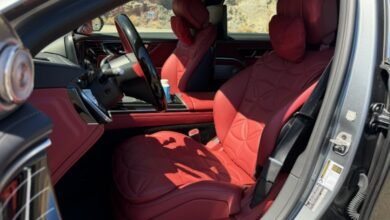
Step inside, however, and some of the criticisms leveled against modern Mercedes cabins begin to feel justified. Before addressing the digital real estate, the choice of materials in certain areas warrants scrutiny. For a vehicle of this caliber, finding plastic circular air vents on the dashboard is disappointing. Similarly, the extensive use of Piano Black lacquer trim feels less premium than the brand’s traditional wood options—a recurring issue in modern Mercedes-Benz vehicles that persists here.
Then there is the technology. The updated S-Class features the Mercedes Superscreen, an evolution of the brand’s Hyperscreen. Despite its updates, it inherits several familiar drawbacks. The dedicated front passenger screen feels largely redundant, offering little functionality that cannot be replicated by a smartphone, unless one frequently conducts Microsoft Teams meetings or utilizes the cabin’s integrated camera. Visually, the Superscreen is marred by thick piano black bezels separating the center and passenger displays. While the smaller GLC utilizes a single, continuous glass panel—a design that comes with its own set of compromises—the S-Class setup reveals prominent gaps that become highly visible under direct sunlight.
Despite these material and interface shortcomings, the cabin remains a masterclass in assembly, particularly in the rear. The second row is the undisputed highlight of the S-Class experience. Whether configured as a standard bench or with the optional four-seat layout featuring a fixed center console, passenger comfort is exemplary. Opting for the individual rear seats equips passengers with heated, ventilated, and massaging chairs, as well as total control over every window in the vehicle. Entertainment is handled by two iPad-style screens mounted to the front seatbacks. While less theatrical than the massive fold-down screen in the BMW i7, this dual-screen configuration allows individual passengers to enjoy their own media or play games like Angry Birds independently.
For the United States market, the updated S-Class lineup consists of three distinct models. The range starts with the six-cylinder S500, followed by the six-cylinder plug-in hybrid S580e, and culminates in the V8-powered S580. (Other global markets, including Europe, receive a diesel-powered S450d, which we sampled and found to be incredibly potent). Under the hood of the S580 sits an all-new flat-plane V8 engine, replacing the previous V8 architecture. This new powerplant produces 530 horsepower and 553 pound-feet of torque, enabling an electronically limited top speed of 155 mph—though our high-speed testing on the Autobahn saw the speedometer climb to 158 mph. The six-cylinder powertrains remain unchanged from the pre-facelift models, with the standard 3.0-liter turbocharged inline-six producing 442 horsepower and 443 pound-feet of torque, while the S580e hybrid pairing utilizes a 22.0 Kilowatt-Hour battery to deliver a combined 576 horsepower and 553 pound-feet of torque.
Ultimately, the defining characteristic of any S-Class is not its material choices or screen layouts, but how it behaves on the road. It is not meant to be evaluated like a Porsche 911—though it manages its substantial curb weight remarkably well—but rather by how effectively it isolates its occupants from the outside world. In this regard, the S-Class has lost none of its traditional charm.
The ride quality across all drive modes and trims is sublime. Even when encountering construction zones, Belgian cobblestones, or an accidental curb strike, the suspension isolates the cabin with remarkable poise. The driving experience delivers a pleasant sense of detachment from the road surface. At high speeds on the Autobahn, the chassis feels incredibly planted, secure, and composed. If there is a dynamic flaw, it lies in the braking system. The pedal exhibits a significant amount of play during initial travel, requiring a firmer press than expected to bring the heavy sedan to a halt, which can occasionally lead to jerky stops in stop-and-go traffic.
Despite its imposing physical footprint, the S-Class is surprisingly maneuverable. Thanks to its 10-degree rear-wheel steering, the sedan can execute tight U-turns that would challenge much smaller vehicles. While its size is apparent on narrow city streets, the car shrinks around the driver when pushed. Equipped with standard 4Matic all-wheel drive, the S-Class maintains absolute composure, exhibiting an E-Class spirit when hustled through twisting back roads without any threat of losing rear-end traction.
As the technological flagship for the Mercedes-Benz brand, the 2027 model serves as a showcase for the company’s latest driver assistance systems, with a heavy emphasis on autonomy. The vehicle features Level 2 autonomous driving, with Mercedes highlighting its urban capabilities. Among its advanced features is a reverse assist system: if you find yourself in a tight spot, the car records the last couple of hundred meters of forward travel and can automatically recreate those steering inputs in reverse to back you out safely. On the highway, the system performs admirably, maintaining traffic intervals, slowing for construction zones, and adapting to unrestricted Autobahn speeds, though we did experience occasional hesitation when trying to engage the automatic lane-changing feature.
The updated 2027 model may not go down in history as the absolute greatest S-Class ever built. Indeed, a back-to-back drive in a pristine, V12-powered W140 from 1991 left us feeling confident that the early 1990s represented the high-water mark for the nameplate. Yet, despite the controversial screen layouts and the abundance of star branding, the S-Class remains a deeply satisfying luxury machine. The ride is peerless, the power is effortless, and the rear passenger compartment remains a sanctuary you will not want to leave. The internet may grumble, but the S-Class remains the gold standard of its class.
2027 Mercedes-Benz S-Class Specifications
- Engine: 3.0-Liter I6 / 3.0-Liter I6 Hybrid / 4.0-liter V8
- Battery: 22.0 Kilowatt-Hour (S580e)
- Output: 442 Horsepower / 443 Pound-Feet (3.0-liter I6); 576 Horsepower / 553 Pound-Feet (3.0-liter I6 hybrid); 530 Horsepower / 553 Pound-Feet (4.0-liter V8)
- Transmission: Nine-Speed Automatic
- Drive Type: Rear-Wheel Drive / All-Wheel Drive
- 0-60 MPH: 3.9 – 4.4 Seconds
- Maximum Speed: 130 MPH – 155 MPH (Tested to 158 MPH)
- Weight: 4,681 Pounds – 5,016 Pounds
- Base Price: TBA