Honda HR-V Prioritizes Interior Versatility Over Raw Cargo Capacity
Balancing Magic Seats with cargo volume deficits.
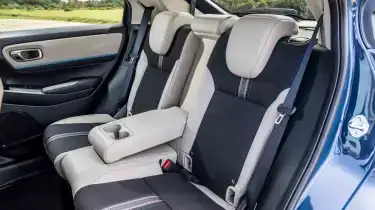
The Honda HR-V continues to position itself as a specialist in interior flexibility, prioritizing its proprietary Magic Seats system over the raw cargo capacity and towing utility offered by many of its subcompact crossover rivals.
According to manufacturer specifications, the Honda HR-V provides a 319 litres boot, a figure that falls short of the 326-litre capacity in the Renault Captur and the 400 litres available in the SEAT Arona. For consumers opting for the higher-tier Advance Style or Advance Style Plus trims, the cargo capacity is further reduced by a 15-litre space penalty.
The vehicle’s design emphasizes a completely flat load space of up to 1,289 litres when the rear seats are folded. This configuration, enabled by the folding mechanism, allows for easier transport of longer items compared to competitors with stepped or inclined boot floors.
However, this focus on interior modularity comes with ergonomic trade-offs. The sloping roofline impacts rear headroom, particularly for taller passengers, and the middle seatbelt must be retrieved from a roof-mounted storage point when needed.
In a segment where multi-purpose utility is often a primary selling point, the HR-V is notably not rated to tow. This lack of towing capacity contrasts sharply with the Volkswagen T-Roc and the Skoda Karoq, which are capable of hauling braked trailers weighing between 2,000kg and 2,100kg. Such capabilities are often a deciding factor for owners of trailers or caravans, who must adhere to specific towing regulations regarding vehicle weight and stability.
The seats fold in a 60/40 split, which is typical for the small SUV class.