Tesla Faces Renewed Scrutiny as Fatal Model 3 Crash Triggers Federal Investigation and Lawsuit
Federal investigators and grieving family target Autopilot and FSD performance following fatal Houston-area collision.
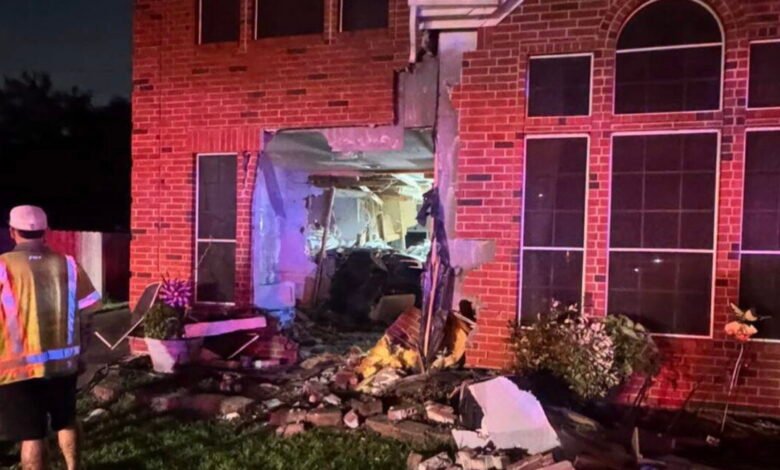
The intersection of high-tech driver assistance and real-world safety is once again under the microscope as Tesla faces a significant legal and regulatory challenge following a fatal accident involving a Model 3. The family of the victim, the Barbours, has initiated a lawsuit that takes aim at the core of Tesla’s software-driven identity, alleging that the vehicle’s semi-autonomous systems are fundamentally flawed.
The National Highway Traffic Safety Administration (NHTSA) confirmed this week that it has opened an official investigation into the crash. This federal involvement provides a layer of high-stakes oversight that could validate the Barbour family’s claims regarding the technical shortcomings of Tesla’s most famous features. The lawsuit specifically alleges that Tesla failed to properly design its Autopilot and FSD (Full Self-Driving) suites, particularly in the areas of obstacle detection and the prevention of Sudden Unintended Acceleration, often referred to in industry circles as SUA.
While local law enforcement in the Houston area initially reported finding no evidence of a mechanical malfunction, the legal team representing the family is digging deeper into the digital architecture of the car. Attorney Chris Adkins stated that the family is determined to hold the automaker accountable, noting that they are “focused on getting to the truth and figuring out what happened” to prevent similar tragedies from recurring.
The technical heart of the complaint centers on what the plaintiffs describe as a “well-established inability to properly detect stationary objects.” This is a known hurdle for camera-based vision systems, which must distinguish between actual hazards and non-threatening environmental elements. The lawsuit highlights a troubling track record, noting that the National Highway Traffic Safety Administration has previously received more than a dozen reports of Tesla vehicles striking parked emergency vehicles while Autopilot was engaged. This history of performance gaps in obstacle detection remains a primary concern for safety advocates and regulators alike.
Furthermore, the lawsuit points to a 2023 Washington Post analysis of government data, which linked at least 17 fatal incidents to the use of Tesla’s Autopilot. These figures underscore the ongoing debate regarding driver-engagement monitoring. Critics and plaintiffs argue that Tesla has failed to implement adequate driver-engagement monitoring to ensure that operators remain attentive when the systems are active, a necessity in Level 2 automation where the human driver remains legally responsible for the vehicle’s actions.
To build their case, the Barbour family has demanded that Tesla preserve an exhaustive list of digital and physical evidence. This includes all component parts of the involved Model 3, its onboard “black box” recorder, and the granular telemetry and logs generated by the Autopilot and FSD systems. In the modern era of the “software-defined vehicle,” this sensor and camera data is the equivalent of a digital forensic trail, potentially revealing exactly what the car saw—and how it reacted—in the seconds leading up to the impact.
As Tesla continues to iterate on its FSD software, this case serves as a stark reminder of the legal and ethical complexities inherent in deploying beta-stage technology on public roads. For the Model 3, a vehicle that has otherwise been praised for its crashworthiness and efficiency, these allegations regarding its active safety systems represent a critical challenge to the brand’s reputation for innovation.