BYD Qin Max Debuts: A Tech-Forward Mid-Size Sedan Built for Ultra-Fast Charging
BYD’s latest mid-size sedan targets youth with 630km range and 9-minute charging.
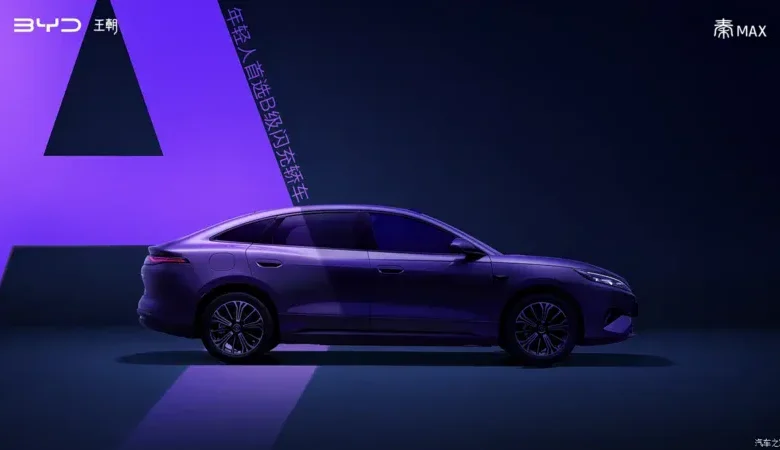
BYD is continuing its aggressive expansion of the Qin dynasty, officially announcing the upcoming launch of the Qin Max. This new mid-size sedan is positioned as a more premium, tech-heavy sibling to the existing Qin L, aiming to capture a younger demographic with a blend of sharp styling and industry-leading battery performance. While the Qin family is already a familiar sight in various global markets through models like the Qin Plus DM-i, BYD has yet to confirm whether this new flagship variant will see a wider international release beyond its domestic market.
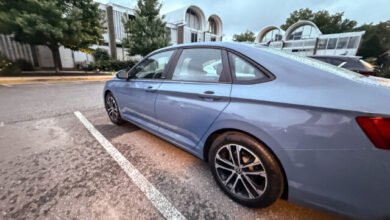
First appearing in regulatory filings this past December, the Qin Max represents a subtle but significant step up in scale compared to its stablemates. Measuring 4.866 meters (191.6 inches) in length, 1.880 meters in width, and 1.495 meters in height, the Max is approximately 3.6 centimeters longer than the Qin L. More importantly for interior volume, the 2.820-meter (111-inch) wheelbase offers a 30mm stretch over the L, pushing it firmly into the heart of the mid-size sedan segment where rear legroom is a primary competitive metric.
Visually, the Qin Max adheres to BYD’s contemporary design language, characterized by sharp, swept-back headlights and a clean, closed-off front fascia on the electric models. The aesthetic is punctuated by a three-part lower air intake system and semi-hidden door handles that contribute to a streamlined profile. At the rear, the lighting signature features intricate, ribbon-like patterns that have become a hallmark of BYD’s high-end offerings.
Under the hood, BYD is offering a dual-track powertrain strategy. The Plug-in Hybrid (PHEV) variant utilizes a 1.5-liter naturally aspirated gasoline engine producing 74 kW, paired with a potent 175 kW (235 hp) electric motor. This setup relies on a lithium iron phosphate battery, a chemistry favored by BYD for its thermal stability and cycle life.
For those ready to go fully electric, the BEV version offers two distinct performance tiers. The entry-level electric motor produces 120 kW (161 hp), while the high-output variant delivers a robust 240 kW (322 hp). Buyers can choose between two battery capacities—52.868 kWh and 64.315 kWh—delivering ranges of 530 km and 630 km, respectively, when measured on the CLTC Chinese cycle. While these figures are typically more optimistic than EPA estimates, they remain highly competitive for the segment.
The real headline, however, is the introduction of second-generation Blade batteries and the associated ultra-fast charging capabilities. BYD is marketing this as “flash charging” technology, and the preliminary data is staggering. In testing environments, the system can replenish the battery from 10% to 70% in just five minutes. A near-full charge of 97% can be achieved in nine minutes. Perhaps most impressively for owners in colder climates, the sophisticated thermal management system ensures that even at temperatures as low as -30°C (-22°F), the charging duration only increases by a mere three minutes. This focus on cold-weather performance addresses one of the primary pain points for EV adoption in northern latitudes, making the Qin Max a formidable contender in the evolving global EV landscape.