The ICE Porsche Macan’s Final Chapter, BMW’s Nürburgring Alchemy, and the V8’s Defiant Return at Mercedes-AMG
Porsche ends an era, BMW masters the Nürburgring, and Chinese hybrids shatter range records.
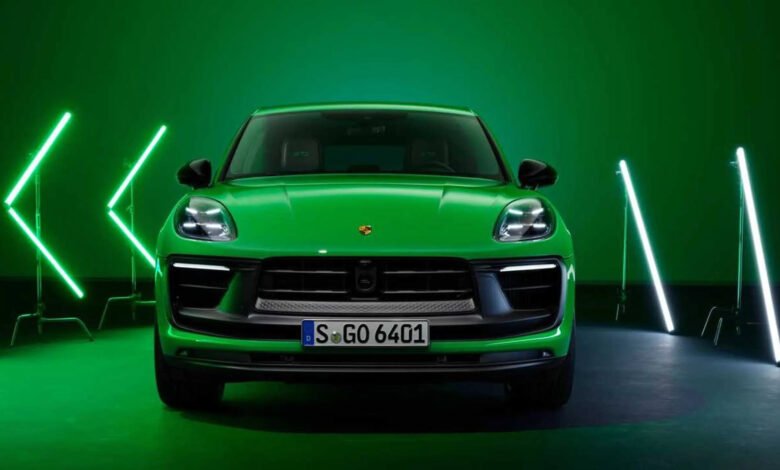
The global automotive landscape is currently navigating a complex intersection of legacy and leap-frogging technology. From the sunset of a German sales titan to the resurgence of the V8 and the staggering range records coming out of China, the industry is proving that the transition to electrification is anything but linear. This week’s developments highlight a market that is simultaneously clinging to internal combustion excellence while racing toward a high-voltage future.
### The End of an Era: Porsche Sets a Date for the ICE Macan
For over a decade, the Porsche Macan has served as the financial bedrock of Stuttgart’s operations, blending sports-car agility with crossover utility. However, Porsche has officially confirmed that production for the internal combustion engine (ICE) Macan will conclude by the end of July 2026. This decision marks the finale of a 12-year run for a model that redefined the compact performance SUV segment.
Interestingly, the announcement comes at a time when consumer behavior is complicating the brand’s roadmap. Despite the launch of the all-new electric Macan, the traditional gasoline-powered versions continue to see robust demand, actually outselling the EV variant during the first half of the year. Porsche leadership has candidly acknowledged that the global shift toward electric mobility has not progressed at the anticipated pace. While a new crossover featuring gasoline and hybrid powertrains is currently in development, it isn’t expected to arrive until 2028. Furthermore, that upcoming model will not carry the Macan nameplate, which Porsche intends to reserve exclusively for its electric future.
### BMW M2: Engineering Trumps Raw Output
While the industry often fixates on horsepower figures, BMW’s latest feat at the Nürburgring serves as a masterclass in chassis dynamics and aerodynamic efficiency. A standard BMW M2, equipped with the M Performance Track Kit, recently clocked a lap time that surpassed the previous-generation M2 CS. The coupe stopped the clock at 7 minutes and 25.068 seconds, a remarkable achievement considering the engine’s output remained untouched.
This performance gain was extracted entirely through hardware designed for the circuit. The kit introduces a massive rear wing and an adjustable front splitter, alongside a suspension setup tuned specifically for the rigors of the Nordschleife. By prioritizing high-speed stability and cornering balance over straight-line speed, BMW has demonstrated that aerodynamic alchemy and motorsport-derived components can yield a more significant performance dividend than a simple increase in boost pressure.
### Mercedes-AMG: The V8’s High-Tech Sanctuary
In a move that will delight enthusiasts wary of downsizing, Mercedes-AMG has reaffirmed its commitment to the eight-cylinder engine for its heavyweight contenders. The 2027 Mercedes-AMG GLE 63 and GLS 63 have broken cover, retaining the venerable 4.0-liter twin-turbo V8. Delivering a stout 603 horsepower, these engines are now augmented by a 48-volt mild-hybrid system that provides an electrified torque boost during initial acceleration.
While the GLE 63 maintains its position as the more agile, driver-focused athlete, the GLS 63 continues to define the pinnacle of three-row performance luxury. Both vehicles benefit from an updated MBUX infotainment suite featuring a triple-screen digital cockpit. Perhaps most notably, Mercedes has responded to vocal customer feedback by reinstating physical buttons on the steering wheel, moving away from the much-maligned capacitive touch sensors in a bid to improve tactile ergonomics at high speeds.
### The Chinese Technological Surge: BYD and Geely
While European manufacturers refine their existing formulas, Chinese automakers are pushing the boundaries of range and charging infrastructure. In a recent discussion regarding global strategy, BYD Vice President Stella Li emphasized that the Gulf region remains a critical theater for the brand due to a consumer base that prioritizes rapid innovation. BYD’s massive R&D engine, powered by 120,000 engineers, is currently finalizing a new generation of the Blade battery. This technology aims to revolutionize the ownership experience by allowing a charge from 10 to 97 percent in nine minutes, effectively closing the convenience gap between EVs and traditional refueling.
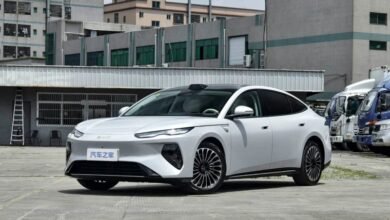
Simultaneously, Geely is making headlines by rewriting the record books for hybrid efficiency. The Geely Galaxy A7 EM recently secured a place in the Guinness World Records after traveling 2,608.360 kilometers on a single tank of fuel and a full battery charge. This five-day logistical gauntlet spanned four Chinese provinces, subjecting the vehicle’s 1.5-liter hybrid system to real-world variables including mountain passes, tunnels, and heavy urban congestion. With 235 horsepower and a dedicated electric range of 235 kilometers (CLTC), the Galaxy A7 EM represents a formidable challenge to the traditional long-distance cruising supremacy of diesel and gasoline engines.