SpaceX and Amazon Evolve Into Infrastructure Conglomerates as Market Values Converge
Market values hit $4.5 trillion as Elon Musk and Jeff Bezos compete for the underlying 'pipes' of the digital economy.
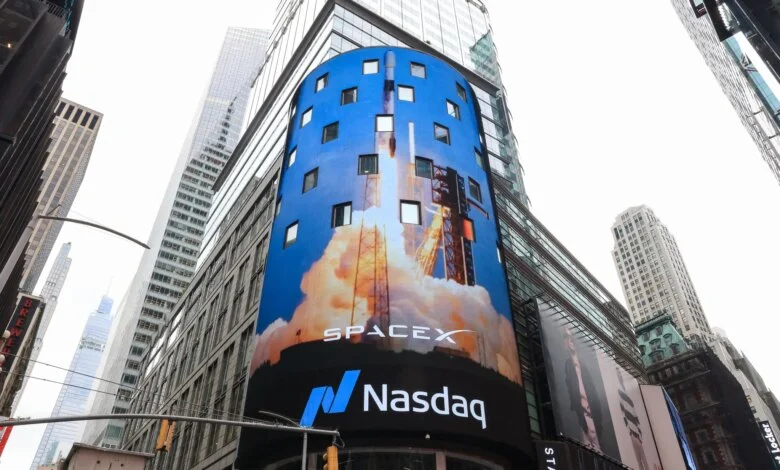
SpaceX and Amazon have emerged as structural look-alikes, increasingly competing for dominance in cloud computing, artificial intelligence infrastructure, and satellite connectivity. The two entities, founded by Elon Musk and Jeff Bezos respectively, now command a combined market value of approximately $4.5 trillion.
A new analysis indicates that the companies are evolving into converging infrastructure conglomerates. Both organizations are betting that ownership of the underlying “pipes”—ranging from orbital satellite networks to terrestrial hyperscale data centers—will secure long-term competitive advantages and pricing power. This strategic shift comes as investors assign Amazon-like valuation multiples to SpaceX, despite a significant disparity in their financial fundamentals.
Financial Disparity and Valuation
While the two companies share structural similarities, their current financial profiles remain worlds apart. According to data highlighted in a recent Fortune report, Amazon generated $716.9 billion in revenue in 2025 and $80 billion in operating income. In contrast, SpaceX reported $18.7 billion in revenue alongside a $2.6 billion operating loss.
The valuation of SpaceX reflects a growing gap between narrative-driven valuations and current financial performance. Markets appear to be pricing the optionality and platform economics of founder-led companies pursuing trillion-dollar opportunities well before significant earnings materialize. For finance executives, this raises questions regarding capital discipline and the durability of the current valuation premium placed on AI and infrastructure.
Executive Leadership Transitions
The corporate landscape also saw significant leadership changes this week. Klaviyo (NYSE: KVYO), an autonomous B2C CRM, announced the appointment of Erica Smith as Chief Financial Officer, effective September 1. Smith, who previously served as CFO at CyberArk, succeeds Amanda Whalen. Whalen will transition into an advisory role through November.
Additionally, CoStar Group, Inc. (Nasdaq: CSGP), a provider of online real estate marketplaces, promoted Robin Rossmann to CFO, effective July 31. Rossmann succeeds Christian Lown, who is departing the industry. Rossmann previously served as the company’s managing director for Europe.
The ‘Operating Gap’ in AI Adoption
New data regarding the implementation of artificial intelligence suggests a disconnect between individual productivity and organizational outcomes. The Work AI Index 2026 by Glean found that while 87% of digital workers use AI to save an average of 11 hours per week, only 13% of organizations report significantly better performance.
The report identifies a phenomenon termed “botsitting,” where employees spend excessive time providing context to AI, verifying outputs, and correcting errors rather than performing net-new work. Approximately 69% of surveyed workers admitted to submitting AI-assisted work that they had not fully verified or did not completely understand.
Corporate Strategy and C-Suite Collaboration
In the broader corporate sector, leadership methods are evolving to meet new infrastructure demands. Adobe’s chief marketing officer, Lara Balazs, emphasized the necessity of cross-departmental communication, stating that marketing now extends into enterprise-level decisions regarding data infrastructure and capital allocation. Meanwhile, Chipotle’s chief operating officer, Jason Kidd, has implemented a strategy of scouting high-potential leaders by hosting weekly dinners with staff to identify specific leadership traits.
Background: The Satellite and Cloud Race
The convergence of SpaceX and Amazon is most visible in the race for Low Earth Orbit (LEO) satellite internet. SpaceX’s Starlink currently operates the world’s largest constellation, providing high-speed internet to remote areas and moving into the enterprise and maritime sectors. Amazon is developing its own counterpart, Project Kuiper, which aims to deploy thousands of satellites to compete in the same connectivity market.
In the realm of cloud computing, Amazon Web Services (AWS) remains the global leader in market share. SpaceX’s move into AI infrastructure and satellite-linked cloud services places it in direct competition with the “hyperscale” model pioneered by Amazon, where the owner of the physical infrastructure dictates the terms of the digital economy.
Key Facts: Financial Comparison
- Combined Market Value: ~$4.5 trillion
- Amazon Revenue (2025): $716.9 billion
- SpaceX Revenue: $18.7 billion
- SpaceX Financial Status: $2.6 billion operating loss