Anchorage Digital Expands Institutional Services with Native TRX Staking
The digital asset bank integrates staking for the Tron network following its earlier launch of TRX custody services.
Digital asset custodian Anchorage Digital has introduced native TRX staking for institutional clients, deepening its integration with the Tron blockchain as demand for regulated access to yield-bearing services grows.
The launch follows the company’s introduction of institutional custody for TRX, the native token of the Tron network, earlier this year. Clients are now permitted to stake TRX directly through the Anchorage Digital custody platform or the Porto self-custody wallet. This integration allows institutions to earn protocol rewards for securing the blockchain without the necessity of moving assets outside their established regulated custody environment.
Growing Demand for Tron Ecosystem Access
Anchorage Digital stated that the expansion is a response to increasing institutional interest in the Tron ecosystem, which has become a primary network for USDt (USDT) settlement. Data provided by the company indicates that Tron processed approximately $2 trillion in USDT transfers during the first quarter of 2026. During that period, the network averaged 10.9 million daily transactions and 3.2 million active addresses. Tether transparency data further confirms that nearly $90 billion of USDT is currently in circulation on the network.
The rollout of TRX staking is part of a broader trend of Anchorage Digital expanding its staking capabilities. In November, the firm collaborated with Figment to launch HYPE staking, bringing custody-integrated support to the Hyperliquid ecosystem.
Industry Shift Toward Integrated Staking
Institutional crypto infrastructure providers are increasingly moving beyond basic storage to offer comprehensive staking services. In October 2025, Coinbase and Figment expanded their partnership to allow Coinbase Prime clients to stake various proof-of-stake assets, including Solana (SOL), Avalanche (AVAX), Sui (SUI), and Aptos (APT), directly from their custody accounts.
Ripple followed a similar path four months later by integrating Figment and Securosys into its institutional custody platform. This move allowed banks and traditional custodians to provide staking services to their clients without the operational burden of managing their own validator infrastructure.
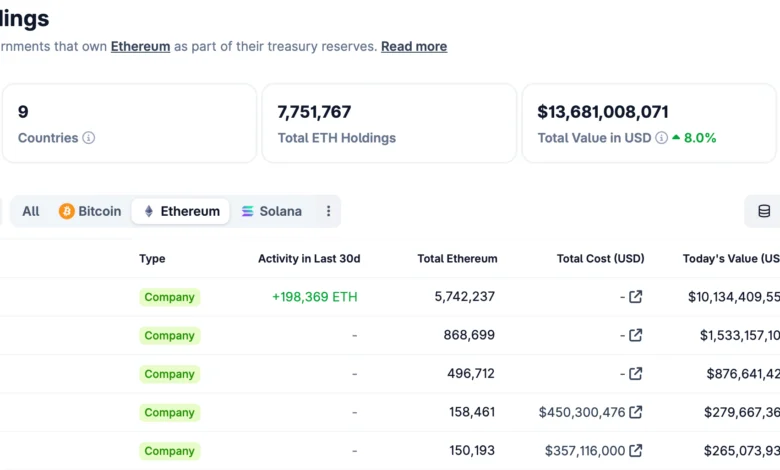
Asset managers and corporate treasuries have also adopted these integrated models. BitGo expanded its partnership with 21shares in February to provide regulated custody and staking for exchange-traded funds (ETFs) in the United States and Europe. Additionally, Bitmine launched its MAVAN staking platform in March, transitioning from managing its own Ether treasury to serving external institutions. Bitmine recently reported holding 5.77 million ETH, with 4.92 million ETH staked through its platform.
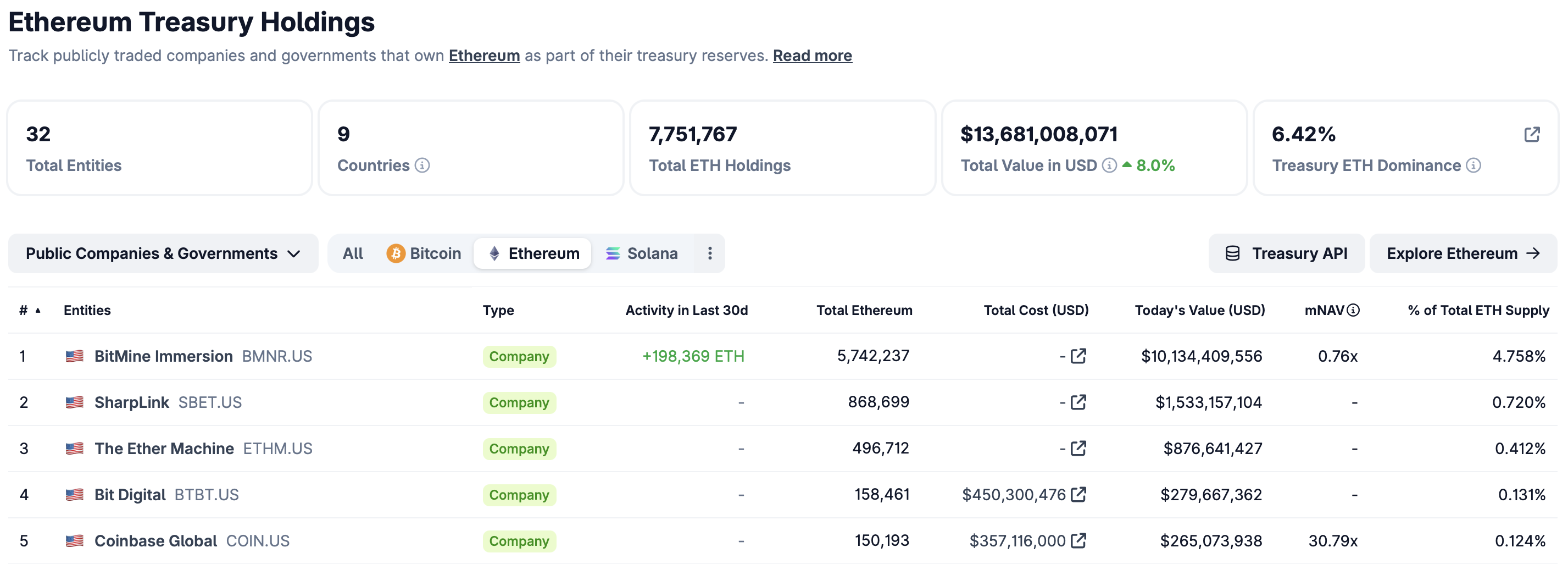
Top Ethereum treasury companies. Source: CoinGecko
Technical Overview: Staking and Network Security
Staking is a core mechanism of Proof-of-Stake (PoS) and Delegated Proof-of-Stake (DPoS) blockchains. In these systems, token holders pledge their assets to help validate transactions and maintain the integrity of the network. In exchange for this service, participants receive rewards in the form of newly minted tokens or transaction fees.
For institutional investors, native staking within a regulated environment addresses two primary concerns: security and compliance. By keeping assets within a regulated custody framework, institutions can avoid the counterparty risks associated with moving funds to third-party staking pools or external hot wallets. Anchorage Digital, as a federally chartered bank in the United States, operates under the supervision of the Office of the Comptroller of the Currency (OCC), providing a legal framework that meets the stringent requirements of large-scale financial entities.