

Ex-Meta Executive Testifies Instagram Safety Was ‘Afterthought’ Driven by Engagement Metrics
Former director tells California jury that internal incentives rewarded screen time over protecting teens
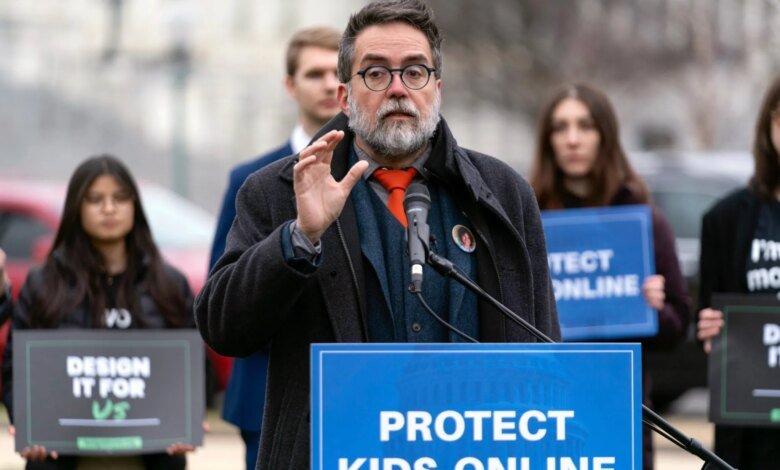
Meta’s internal compensation structures rewarded employees for maximizing user engagement while ignoring minor safety, a former executive testified Wednesday in a federal trial where he described a “don’t ask, don’t tell” corporate attitude toward children under 13 on Instagram.
In his second day on the witness stand, Arturo Béjar testified that Meta repeatedly prioritized revenue over user well-being during product development, focusing on maximizing time spent on its platforms even when aware of harms to mental health.
“If you step away from the product, they are not going to make any money,” he said.
The federal trial in Oakland, California, which opened Tuesday, pits Meta against California, Colorado, Kentucky and New Jersey in a proceeding projected to last six weeks. The four states belong to a coalition of 29 states that filed lawsuits against the social media giant in 2023 over youth safety and privacy, with 25 remaining states slated for later trials alongside state court actions like an ongoing case in Tennessee.
The state lawsuit alleges Meta deliberately fueled a youth mental health crisis by engineering addictive features while concealing platform risks from parents and the public. The legal filing further charges that Meta systematically gathered data from children under 13 without obtaining required parental consent, breaching federal standards.
Meta maintains that account creation requires users to be at least 13 years old, complying with federal requirements under the Children’s Online Privacy Protection Act, or COPPA.
Enacted by Congress in 1998, COPPA mandates that commercial websites obtain verifiable parental consent before collecting personal details from children under 13. However, enforcement across social platforms has long relied on age self-reporting during registration rather than mandatory identity checks.
“The attitude in particular on Instagram was ‘Don’t ask, don’t tell,’” Béjar said in response to a question about his perception of the company’s attitude towards users under 13.
Meta has denied all claims, contending that evidence presented during the trial will demonstrate its focus on protecting young users.
“You will hear over the course of this case a lot of important issues, issues like teen mental health, issues like social media, issues like how teens use social media,” Meta lawyer Paul Schmidt said Tuesday. “Those are important issues, and they’re issues where Meta believes that it has a responsibility. It has a responsibility to act on its own. It has a responsibility to try to work with teens and parents in partnership to try to address those questions.”
Plaintiffs’ witness says safety was an ‘afterthought’
Béjar worked at Facebook from 2009 to 2015, drawing national recognition for designing anti-cyberbullying tools, before returning as a contractor from 2019 to 2021 to address safety concerns. During a 2023 congressional hearing on social media and youth mental health, he informed lawmakers that executive leadership, including CEO Mark Zuckerberg, knew Instagram was causing harm but declined to enact meaningful remedies.
Testifying Wednesday, Béjar noted that employee evaluations and financial incentives for product teams were overwhelmingly tied to growing active user counts and increasing screen time.
“In that context, safety was an afterthought,” he said.
The coalition of states is seeking operational changes to Facebook and Instagram alongside substantial financial penalties that could reach billions of dollars. The California Attorney General’s Office noted in a written statement that any monetary penalties would be established by the judge if Meta is found liable.
“This case is about stopping Meta from offering a dangerous product to teens, and from lying to teens, families, and the public about the dangerousness of their platforms. The primary remedy under our state consumer protection law is an injunction,” the statement said.
Béjar pointed out specific product mechanics that he argued were engineered for adults and remain “inherently unsafe for teenagers.”
These features include automatic video playback, which forces teenagers to view harmful content without clicking, as well as public counters that track likes, views, comments, and follower metrics.
Child development experts emphasize that adolescents are uniquely susceptible to social comparison, making platforms that quantify social validation significantly more damaging to their psychological well-being.
Quantitative feedback systems like like counts and automated video playback stimulate dopamine pathways, reinforcing repetitive interaction patterns in developing brains that make youth populations especially vulnerable to compulsive social media use.
Age verification has been criticized for not going far enough
Despite assertions by Meta that it actively works to identify and remove children under 13, Béjar testified that his research identified “tens of thousands” of underage users on Instagram. He added that the presence of pre-teens on the app was “common knowledge” inside the company.
“Meta has one of the most sophisticated infrastructures in the world to detect fake accounts,” he said. Yet despite possessing those capabilities, he testified that leadership established “no goals, no metrics” to flag or verify account holders suspected of being under 13.
While Meta has introduced various youth safety settings over the years, Béjar stated that these measures proved ineffective in practice.
He cited the “Take a Break” feature introduced in 2021 as a tool “designed to fail” because it relies on opt-in activation. Based on his experience building platform settings, Béjar noted that few users take the initiative to turn them on, likening the setup to requiring drivers to manually activate a vehicle’s airbag before driving.
“A safety tool has to be on by default,” he said.
Because the alert can be dismissed with a single tap, Béjar testified that the feature fails to interrupt usage patterns, demonstrating that Meta did not construct the safeguard to meaningfully halt platform engagement.
___
AP Technology Writer Kaitlyn Huamani contributed to this story from Los Angeles.










One Comment