Zuckerberg Faces Federal Trial as States Target Meta in Landmark Youth Addiction Lawsuit
Four state attorneys general push multi-billion dollar claims in Oakland federal court as Mark Zuckerberg prepares to testify.
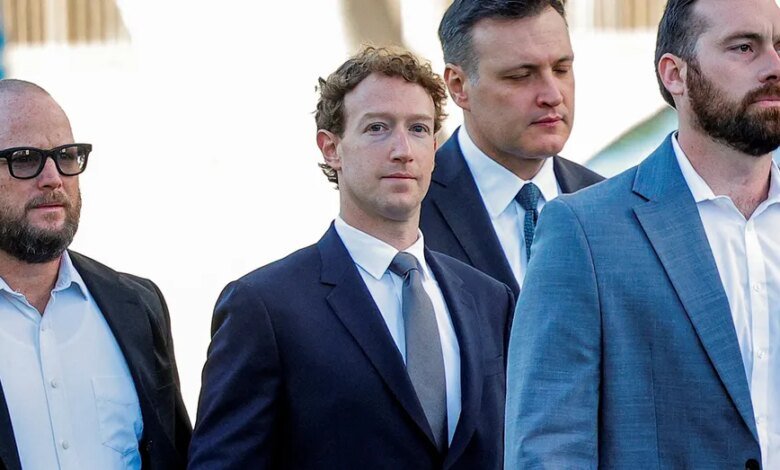
Monte Mann, a partner at Armstrong Teasdale, is monitoring the youth platform safety litigation as Meta faces state prosecutors in federal court.
Social media giant Meta faces a multi-state courtroom battle brought by state attorneys general alleging the tech company deliberately engineered addictive platform features while concealing mental health risks from the public.
Opening statements begin Tuesday in the U.S. District Court for the Northern District of California in Oakland after jury selection concluded last week and U.S. District Judge Yvonne Gonzalez Rogers turned down Meta’s request for the case to be dismissed, setting up a trial expected to last four to six weeks where Meta CEO Mark Zuckerberg is expected to testify.
Attorneys general from California, Colorado, Kentucky and New Jersey first filed the lawsuit in 2023 following a multistate investigation into the impact of Facebook and Instagram on young users, alleging Meta engineered addictive features, downplayed health risks, and violated federal law when it collected personal information from children.
Collecting personal data from minors under age 13 without verifiable parental consent violates the Children’s Online Privacy Protection Act, exposing technology platforms to civil penalties of up to $51,744 per statutory violation.
Meta, the parent company of Facebook and Instagram, denied wrongdoing and disputed claims that its social media platforms caused the alleged harm, arguing that “social media addiction” isn’t an officially recognized psychiatric diagnosis—a position that will serve as a primary point of contention at trial.
California Attorney General Rob Bonta issued a statement last week after Judge Gonzalez Rogers allowed the case to proceed, asserting that “Meta designed a dangerous product for young users, knew it to be dangerous, and then lied to children, families, and the community about how dangerous it was.”
A Meta spokesperson pushed back against the state claims, telling FOX Business in a statement that the “limited claims are unsubstantiated and their financial demands are vastly disproportionate.”
“The AGs offer no proof anyone in their states was misled, claim benign features like having an additional Instagram account somehow harmed their residents, and attempt to penalize Meta for industry-wide challenges like age verification. Rather than sticking to the facts or the law, the states have instead decided to chase an outlandish payout,” the company spokesperson said, adding that Meta stands by its “record of creating strong protections for teens, and look forward to making our case in court.”
Meta has argued that damages sought by state attorneys general could reach as high as $1.4 trillion—an amount nearly equal to the company’s entire market capitalization—though state AGs have not yet disclosed the exact figure they will seek at trial.
Monte Mann, a partner at Armstrong Teasdale, told FOX Business in an interview that the Oakland trial will serve as a “bellwether case” for the legal theory that social media platforms were designed to be addictive and inflict harm on young users.
Mann explained that internal corporate communications will likely overshadow witness testimony, stating that Meta internal documents “may be the star witness in the case.”
“I will be very interested to see what the internal Meta, Facebook, Instagram documents say about what they knew of the compulsive nature of these products and services; when they knew it; whether they tried to enhance their design elements to take advantage of those things, what they disclosed to the public,” Mann said.
Mann noted that Judge Gonzalez Rogers appointed an advisory jury in the case to offer recommendations on community standards regarding minor access to social media platforms.
Under Federal Rule of Civil Procedure 39(c), a district court judge can impanel an advisory jury to provide non-binding findings of fact on complex public standards, while ultimate judicial authority remains entirely with the presiding judge.
The trial in Oakland represents the newest landmark proceeding in a wave of litigation targeting major tech companies, with Meta confronting thousands of lawsuits filed by individuals, school districts and state governments over youth platform safety.
A separate state court ruling delivered earlier this month in New Mexico ordered Meta to pay $567 million and overhaul its teen safety protections on Facebook and Instagram.
That order built upon a prior March ruling requiring Meta to pay $375 million for violating state law, raising Meta’s total court-ordered liability in New Mexico to nearly $942 million.
Meta told FOX Business following the ruling that it disagreed with the decision and intends to appeal, adding that the company is “confident in our record of protecting teens online and will continue to defend ourselves against claims that misrepresent the facts.”