US Home Battery Deployments Hit Record 1.3 GWh as Energy Startups Build Distributed Power Grids
Driven by rising AI power needs and blackout risks, residential energy storage scales rapidly through virtual power plant models.
American homeowners installed a record 1.3 gigawatt-hours of battery storage in the first quarter of the year, driven by expanding state incentive programs, growing grid volatility, and a new wave of energy startups deploying distributed power systems at utility scale.
According to figures from the American Clean Power Association and Wood Mackenzie, residential installations accounted for over 15 percent of the 8.4 gigawatt-hours of total energy storage capacity added across the United States during the quarter. Energy Information Administration data shows that homeowners added 673 megawatts of storage capacity over the three-month period, led by rapid deployment in Texas, California, Arizona, and Hawaii.
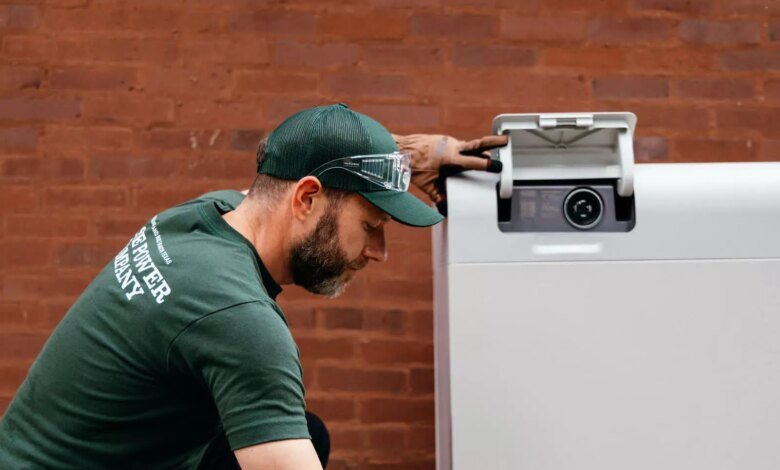
Driving the surge is Austin-based startup Base Power, co-founded by Chief Executive Officer Zach Dell—son of Dell Technologies founder Michael Dell—and former SpaceX executive Justin Lopas. The company is currently installing approximately 100 home batteries per day, each with a 39-kilowatt-hour capacity, and plans to double its installation velocity by the end of 2026. Base Power has deployed roughly 550 megawatt-hours of total capacity to date, matching the scale of a major utility-scale battery facility.
The company’s model leverages individual residential batteries—units roughly the size of a standard central air-conditioning compressor—to function as a virtual power plant. In Texas, where Base Power acts as a licensed retail electric provider, the startup controls energy discharge to profit from wholesale price spikes on the Electric Reliability Council of Texas (ERCOT) grid while supplying homeowners with lower fixed rates and 36 to 72 hours of emergency backup power during grid failures.
Early financial backers including SpaceX investor Antonio Gracias point to distributed storage as a critical solution for meeting immense new electrical loads from domestic manufacturing and artificial intelligence data centers, which are straining regional transmission networks. By charging batteries during daylight hours when power is abundant and cheap, residential systems relieve peak stress without requiring new fossil-fuel peaker plants.
The shift toward state-level performance incentives is reshaping residential energy economics. While federal policy shifts have altered tax credit dynamics, individual state programs are stepping in to compensate battery owners. Hawaii offers direct payments of $400 per kilowatt of installed capacity, while California provides recurring cash compensation to homeowners who export stored battery power back to the grid during tight energy supply windows.