Hedge Fund Situational Awareness Seeks Capital After AI Stock Slump Erases Gains
Former OpenAI researcher Leopold Aschenbrenner turns to investors as leverage turns massive AI gains into heavy losses.
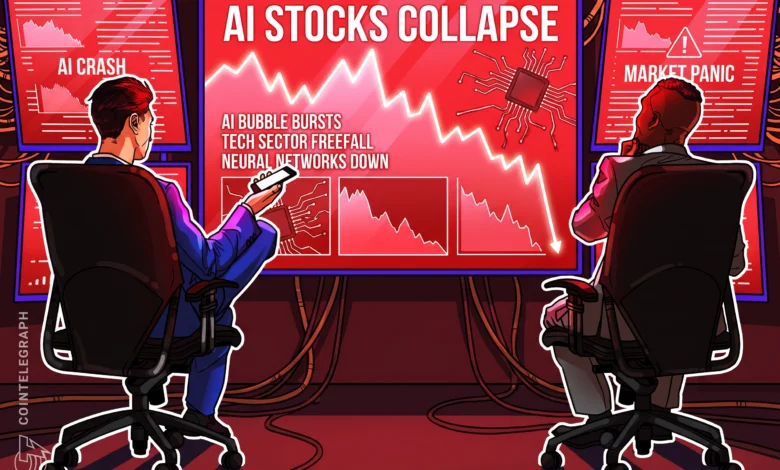
Situational Awareness, a high-flying hedge fund established in 2024 by former OpenAI researcher Leopold Aschenbrenner, is seeking emergency liquidity from lenders and investors after suffering severe drawdowns during the recent collapse in artificial intelligence equities.
According to a July 24 investor communication reported by the Financial Times, the fund has also given select backers the opportunity to acquire portfolio assets directly. The Wall Street Journal previously calculated the fund’s assets under management at approximately $20 billion as of June 8. While exact loss figures and funding targets remain undisclosed, the fund’s downturn marks a sharp reversal for one of the year’s most aggressive speculative vehicles in tech infrastructure.
Through June, Situational Awareness had posted a remarkable 439% gain net of fees, fueled by substantial leverage that amplified returns during the early 2024 surge in artificial intelligence and high-performance computing stocks. However, those same leveraged positions caused steep losses when tech markets suffered a sharp correction in July. In his communication to investors, Aschenbrenner argued that the market slump had generated attractive entry points for long-term positions.
A major focus of the fund’s concentrated strategy involved data center capacity and power infrastructure supporting generative AI models. Filings submitted to the U.S. Securities and Exchange Commission in March revealed that Situational Awareness held roughly $1.11 billion spread across seven publicly traded Bitcoin mining operations—including IREN, Core Scientific, Riot Platforms, and CleanSpark—that had begun pivoting their facilities toward AI workloads.
The strategy aimed to capitalize on a broader structural shift within the digital asset sector. Following the April 2024 Bitcoin halving, which cut block reward block emissions by 50 percent, many industrial-scale cryptocurrency miners faced severe margin compression. To sustain profitability, several operators reconfigured their power-dense physical locations to host energy-intensive high-performance computing for AI firms, transforming pure-play crypto operations into critical infrastructure providers for machine learning model training.
Aschenbrenner, who gained prominence as a researcher at OpenAI before launching the fund in mid-2024, published a widely discussed series of essays on artificial general intelligence around the time of the fund’s inception. In his writings, he projected that machine intelligence will surpass human college graduates before the end of the current decade.