Syrian Airbase Strike Triggers Diplomatic Standoff Between Israel and Turkey
Washington races to establish deconfliction channels after Israeli strike near Turkish presence in Syria
Tensions between Ankara and Jerusalem are spilling into Washington’s diplomatic sphere following Israeli air strikes in Syria, directly challenging U.S. efforts to maintain regional stability and manage relations with key partners. While President Donald Trump praised bilateral ties with Turkey during the NATO summit, Israeli Prime Minister Benjamin Netanyahu voiced grave concerns over Turkish backing for Hamas, with key lawmakers quietly questioning potential shifts in the regional power balance.
Audio narration of this article is available for listeners.
Israeli Defense Minister Israel Katz directed a sharp public warning at Turkish President Recep Tayyip Erdoğan on Thursday morning, cautioning him against embarking on “dangerous adventures in Syria” and warning Ankara not to test Jerusalem’s military resolve.
“Israel will not allow any actor to threaten its security,” Katz wrote in a post on X. “It would be better for Erdoğan to continue his detached-from-reality, fanciful rhetoric against Israel in the Turkish Grand National Assembly than to attempt to test Israel’s determination to defend itself.”
The exchange followed an Israeli strike two days prior on Syria’s Abu al-Duhur Airbase, placing Washington in the delicate position of trying to mediate between a NATO ally and its key Middle Eastern security partner. Israeli officials contended that Syria was close to violating a mutual security arrangement by permitting Turkish military personnel to deploy at the facility—a claim Ankara vehemently denied.
Abu al-Duhur Airbase, situated strategically between Aleppo and Idlib, served for years as a critical hub for Syrian military operations before falling to opposition forces in late 2024. Control over or access to such northern Syrian air assets has become a high-stakes flashpoint, as any power operating there gains significant intelligence and strike capabilities over both the Levant and eastern Mediterranean airspace.
Damascus stated that no permanent Turkish base or military stationing was planned, though Syrian Foreign Minister Asaad al-Shaibani acknowledged Turkish officers had visited the airfield for technical exchanges and training. According to a Reuters report, Turkey’s Defense Ministry maintained that no Turkish military personnel were on-site prior to or during the bombardment.
CRITICS SAY TURKEY’S VERBAL ATTACKS ON ISRAEL HAVE CROSSED INTO ANTISEMITISM
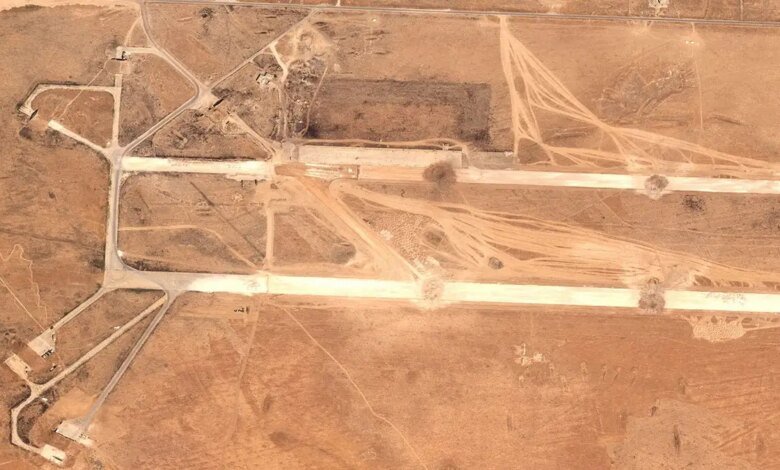
A satellite image shows craters on the runways of Abu al-Duhur Airbase near Syria’s Aleppo after an Israeli attack, August 19, 2026. (Pleiades Neo © Airbus DS 2026/Handout via Reuters)
Ankara rejected Israel’s claims as “untenable” on Wednesday, charging in an official statement on social media that the allegations were designed “to legitimize Israel’s unlawful airstrikes targeting Syria’s sovereignty and territorial integrity.” The Turkish government added that these accusations originated from “Netanyahu’s intent to pursue expansionist and destabilizing policies in the region ahead of the elections in Israel.”
Speaking to Reuters on Thursday, U.S. Ambassador to Israel Mike Huckabee said Washington is coordinating a framework for de-escalation that remains active but requires further refinement. Addressing concerns about a direct military clash between Israel and Turkey, Huckabee remarked, “I don’t think we’re even close to that,” while acknowledging that Israel views Turkey’s southward movement in Syria as a potential security risk.
U.S. Ambassador to Turkey and special envoy for Syria Tom Barrack issued a more urgent warning following the attack. Barrack revealed that Turkey was given no prior notification and might have readied a military defense after tracking Israeli jets flying northward toward Turkish airspace, adding that Washington is actively trying to construct a formal deconfliction agreement among Israel, Turkey, and Syria to avoid accidental engagements.
Deconfliction channels in Syria have historically relied on informal military-to-military hotlines, such as the mechanism established between Israel and Russian forces operating in Syrian airspace starting in 2015. Creating a comparable three-way operational protocol involving Ankara presents distinct geopolitical challenges, as Turkey is both a formal NATO ally and a direct actor supporting Syrian armed groups.
Sinan Ciddi, director of the Turkey Program at the Foundation for Defense of Democracies, told Fox News Digital that the government in Ankara interprets the rising friction in fundamentally different terms.
FORMER SYRIAN PRESIDENT ASSAD SENTENCED TO DEATH IN ABSENTIA
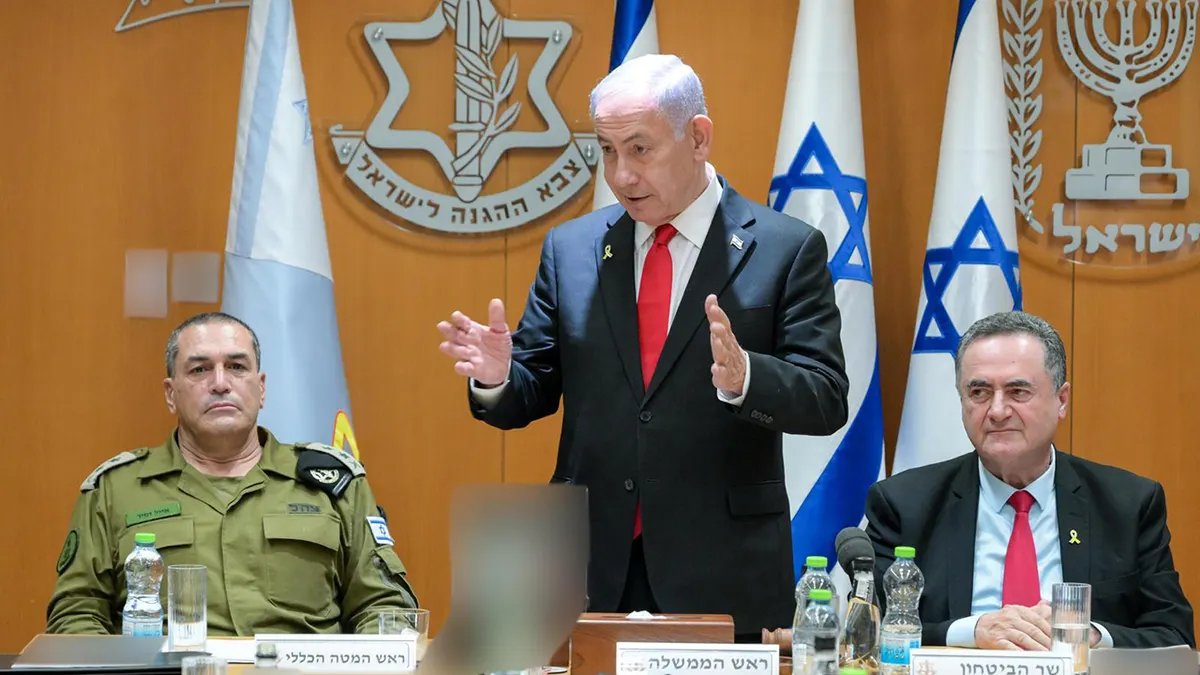
Israeli Prime Minister Benjamin Netanyahu, IDF Chief of Staff Eyal Zamir and Defense Minister Israel Katz attend a meeting. (GPO)
“Turkey is chalking up the increasingly escalatory climate between Turkey and Israel to election antics/propaganda by Netanyahu and driving a narrative that Israel does not want stable neighbors and regional powers in the Middle East,” Ciddi explained.
However, Ciddi observed that Erdoğan “seems intent on taking actions inside Syria that are perceived by Israel as military escalation,” highlighting proposed weapons exports, military instruction, Turkish influence over fighters incorporated into the restructured Syrian military, and, critically, “developing military bases with Turkish troops and sensitive equipment.”
“Israel established clear red lines about what it was willing to tolerate in Syria,” Ciddi noted. “Deconfliction only works if parties implement the agreed upon rules.”
NETANYAHU WARNS TURKEY SHOULD NOT GET F-35S, CITING ERDOĞAN’S HOSTILITY TOWARD NATO ALLIES
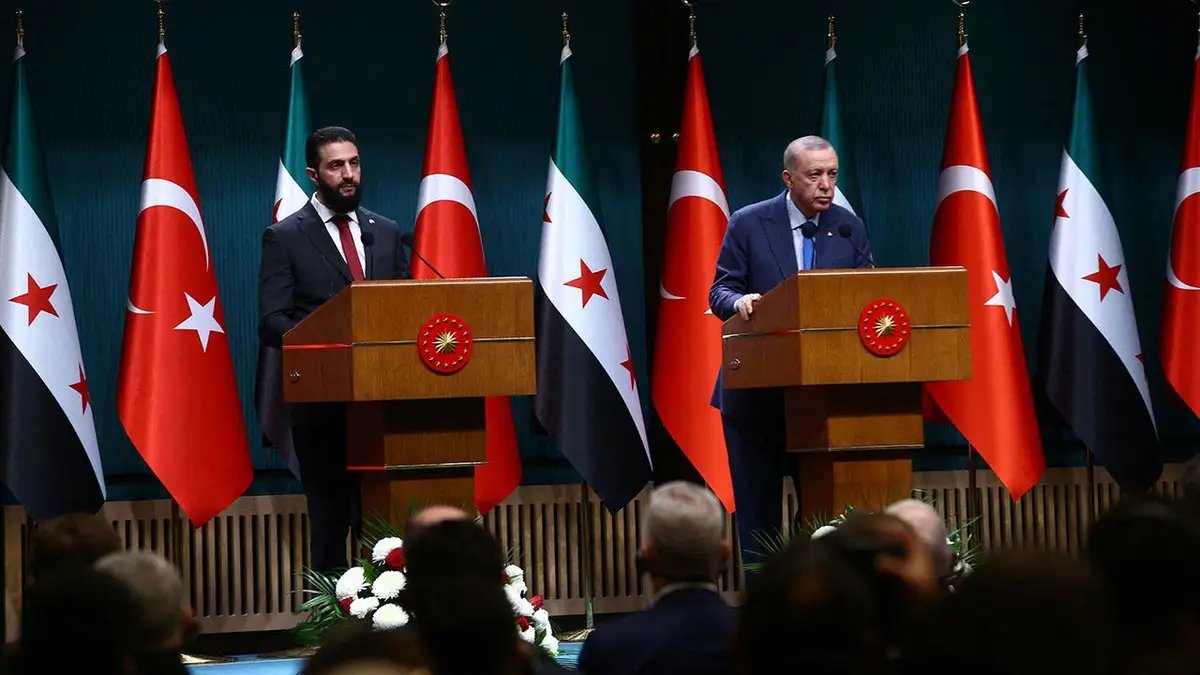
Syria’s president Ahmed al-Sharaa and Turkey’s President Tayyip Erdoğan attend a joint press conference at the Presidential Palace in Ankara, Turkey, February 4, 2025. (Cagla Gurdogan/Reuters)
High-level discussions regarding these friction points preceded the military operation. Four days before the strike, Mossad Director Roman Gofman held talks with al-Shaibani on Aug. 14, according to three sources referenced by Reuters, focusing on Israel’s objections to Turkish military expansion in Syria, including potential combat deployments, arms transfers, and drone shipments to Syrian forces.
Diplomatic mechanisms aimed at preventing military friction between Israel and Turkey have been in development for over a year. The two nations initiated bilateral technical talks hosted in Azerbaijan in 2025 to avoid unintended field clashes in Syria, with Turkey’s defense minister confirming in June 2025 that dialogue remained ongoing alongside Ankara’s training initiatives for Syrian forces.
Ciddi emphasized that procedural channels alone cannot deter future military strikes if Ankara repeatedly tests boundaries that Jerusalem deems essential to its national security.
TRUMP’S TURKEY ARMS SALE PROPOSAL SPARKS CONGRESSIONAL QUESTIONS BEFORE NATO SUMMIT
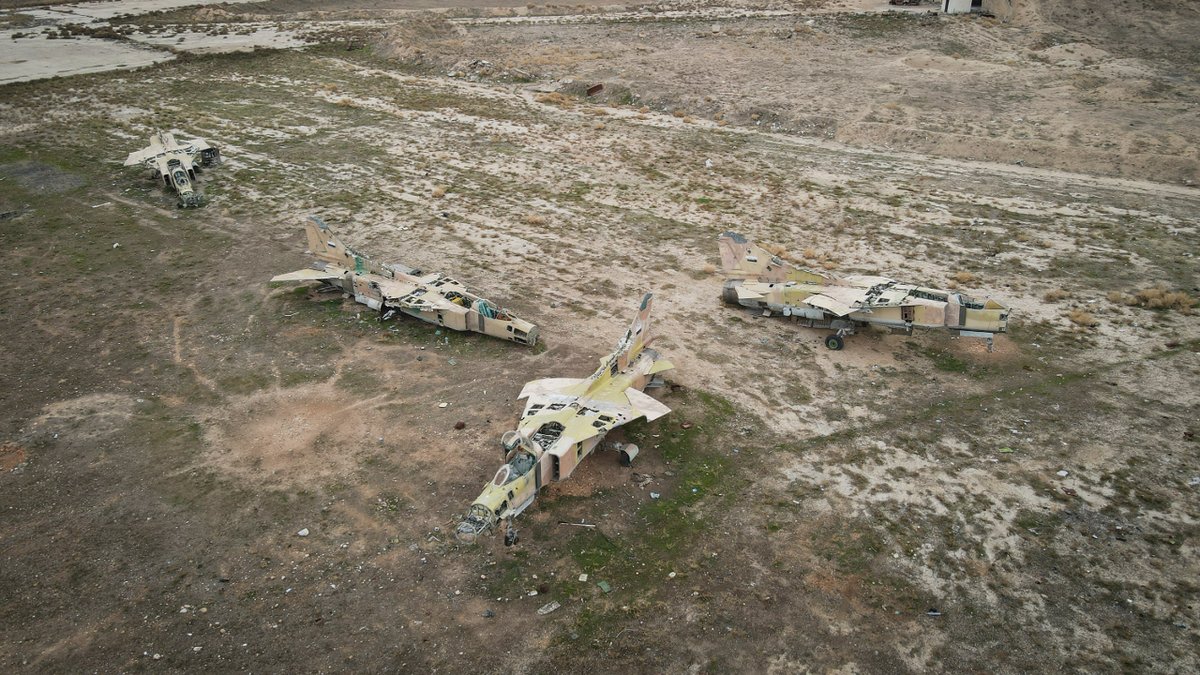
Decommissioned Syrian air force planes are seen at the Abu Duhur military airbase east of Idlib, following the takeover of the area by Syrian opposition fighters on Dec. 7, 2024. (AP Photo/Omar Albam, File)
“To the extent that Ankara will push boundaries and attempt to position military capabilities that Israel feels is harmful to its safety, we are likely to see pre-emptive action by Jerusalem,” Ciddi said. “The ball is in Erdoğan’s court to not raise the temperature.”
Domestically, Netanyahu is facing pushback from Israeli opposition figures. Former Prime Minister Ehud Barak accused his longtime political rival on Wednesday of stoking tensions with Ankara to bolster his standing ahead of upcoming parliamentary elections.
“Turkey is not Iran or Assad’s Syria,” Barak stated in a post written in Hebrew on X, contending that Israel’s strategic differences with Ankara should be resolved, contained, or deferred through quiet diplomatic channels in coordination with Washington.
Official responses remain pending from the White House, the Turkish Embassy in Washington, and Defense Minister Israel Katz’s office following inquiries regarding the status of the de-escalation dialogue.
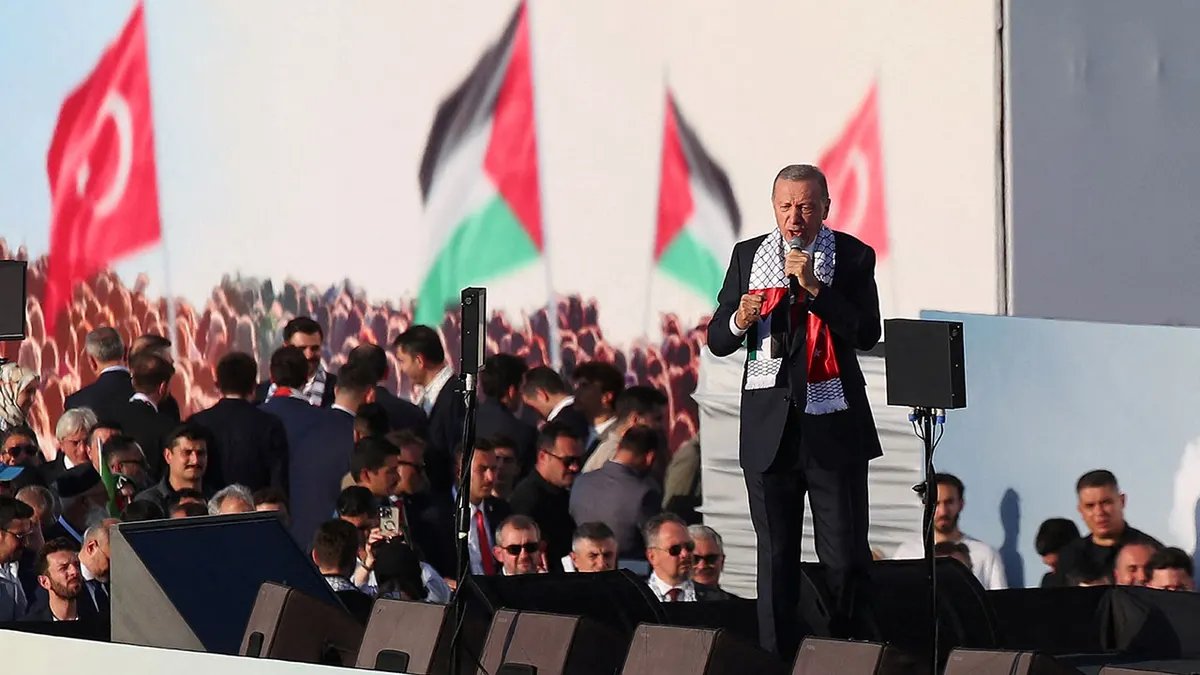
Turkish President Tayyip Erdoğan speaks during a rally in solidarity with Palestinians in Gaza, amid the ongoing conflict between Israel and the Palestinian Islamist group Hamas, in Istanbul, Turkey October 28, 2023. (Dilara Senkaya/Reuters)
Efrat (Effie) Lachter is a reporter for Fox News Digital covering conflict, global affairs, human rights, and political accountability. She holds a bachelor’s degree in communication and a master’s degree in political science, and was awarded the 2022 Peres Center for Peace Award.