Trump Threatens Bombing Attacks on Oman Over Joint Strait of Hormuz Deal With Iran
U.S. opposes joint Iranian-Omani management of shipping lanes carrying 20 percent of global oil supplies
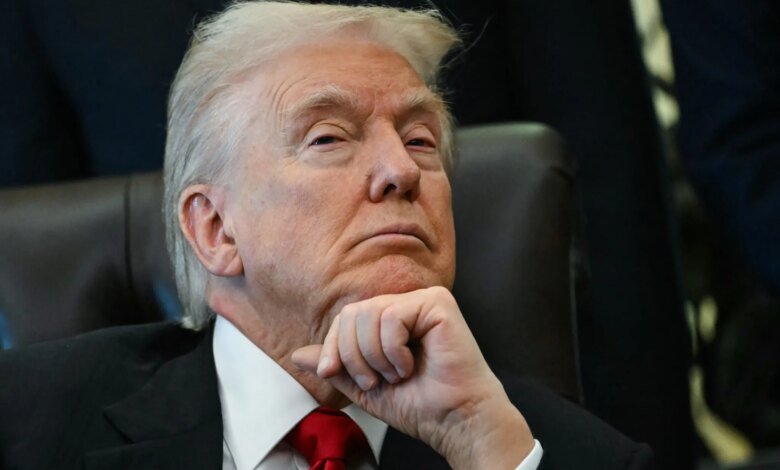
U.S. President Donald Trump has threatened military action against Oman after the Gulf nation moved toward finalizing a deal with Iran to manage maritime traffic through the Strait of Hormuz, two regional officials said. The administration delivered warnings to Muscat expressing opposition to key elements of the emerging agreement, which would establish shared Iranian and Omani oversight of the exit lanes in the strategic waterway.
The officials said the Trump administration has told Oman it is opposed to parts of the yet-to-be-announced deal, including the joint Iranian and Omani management of the exit route out of the passage that’s critical to global supplies of oil and natural gas. The officials were briefed on the U.S. position and how the administration views Oman’s position.
Trump amplified his warnings during Oval Office remarks and on social media, posting a map depicting the Strait of Hormuz as U.S. territory while asserting that Washington retains a blockade in full force and effect over the corridor. The president told reporters he favored declaring the strait a territory and referenced previous warnings to Muscat, including May comments during a Cabinet meeting where he stated Oman will behave just like everybody else, or we will have to blow them up. The White House declined to comment further about Oman beyond referring to the president’s Oval Office statements.
The U.S. believes Oman has not been tough enough in its negotiations with Iran and is unhappy with Oman’s agreement to collect voluntary fees from vessels, even if the charges are related to security and maritime environmental protection, according to the officials, who spoke on condition of anonymity because they were not authorized to talk to journalists.
The dispute centers on one of the world’s most vital energy transit choke points. The Strait of Hormuz, a narrow passage measuring 21 nautical miles wide at its narrowest point between Oman’s Musandam Peninsula and Iran, carries roughly 20 million barrels of crude and petroleum products per day—accounting for nearly 20 percent of global liquid petroleum consumption, according to the U.S. Energy Information Administration. Oman controls the inbound and outbound traffic separation schemes within its territorial waters, making Muscat’s posture pivotal for commercial shipping between the Persian Gulf and the Gulf of Oman.
Iranian officials rejected Trump’s assertions regarding sovereignty over the passage while reiterating that shipping traffic will remain restricted until Washington meets specific conditions. Iranian Deputy Foreign Minister Kazem Gharibabadi wrote on X that Tehran would correct what he called the U.S. president’s delusion regarding the strait. Iranian parliamentary negotiator Mohammad Bagher Qalibaf confirmed that the Strait of Hormuz will not reopen until the U.S. fulfills commitments including lifting the blockade, releasing frozen assets, lifting oil sanctions, ending threats, and halting regional military operations.
Muscat has long maintained a neutral diplomatic stance in the region, serving as a mediator between Tehran and Western capitals under Sultan Haitham bin Tariq and his predecessor, Sultan Qaboos bin Said. Oman previously hosted secret bilateral discussions between U.S. and Iranian negotiators that facilitated the 2015 nuclear agreement. Omani Foreign Minister Badr al-Busaidi met with Egyptian Foreign Minister Badr Abdelatty to discuss the bilateral deal, which Cairo noted could establish a pathway for Washington and Tehran to return to negotiations for a comprehensive regional agreement.
The diplomatic tension comes as maritime security in the corridor remains unstable. An unidentified projectile hit a vessel exiting the strait off the Omani coast, damaging its engine room and prompting an intervention by the Omani Coast Guard. Concurrently, the United Arab Emirates Defense Ministry reported that two ballistic missiles launched from Iran fell into the sea, underscoring the immediate security context surrounding the Omani-Iranian traffic negotiations.