Rio Tinto Chair Dominic Barton Warns Business Leaders to Adapt as Global Trade Rules Collapse
Rio Tinto Posts 43% Profit Growth as Executives Adapt to Supply Chain Volatility and Tariff Threats

The foundational framework of international commerce is breaking down under an expanding set of geopolitical strains, leaving corporate leaders to navigate unannounced tariffs, conflict in Iran, and tightening bilateral tech controls.
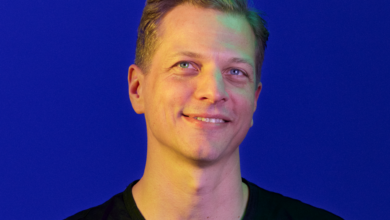
“We’re in a world where all the assumptions about international institutions, free trade, a rules-based order—that’s all going away,” said Dominic Barton, strategic counselor to Eurasia Group and chair of Australian mining giant Rio Tinto.
Barton offered the assessment to Fortune shortly after U.S. President Donald Trump levied 50% tariffs on select Canadian imports, including automobiles, dairy products, and alcohol, while also suggesting tariff action over cross-border wildfire smoke. “Fifteen years ago, there would have probably been diplomats bringing this forward,” he observed. “Now it’s just tweeted.”
(Underscoring the fluid nature of these policy shifts, Trump subsequently announced on social media on Aug. 19 that the implementation of the Canadian tariffs would be delayed by three days as negotiators worked toward an agreement).
Drawing on a career that spans decades at McKinsey, a diplomatic posting as Canada’s ambassador to China, and his current role leading Rio Tinto, Barton urged executives to accept the permanent nature of the volatile climate. “There’s a lot more risk, but there’s also a lot more upside,” he said. “You can whine about it—’I hope it’ll go back to the way it was.’ I just don’t think it will.”
Moving away from the after-dinner speaker
Geopolitical risk can no longer be managed as a secondary corporate concern, Barton argued, calling for it to be integrated directly into primary business strategy.
“You have to move away from the after-dinner speaker. You’d get a former politician or someone at a board to give a talk at dinner and say, ‘let me tell you about my experience,’” he said. “That’s kind of over.”
Barton’s perspective was shaped during his long tenure at McKinsey, where he directed the firm’s Asia expansion, and his subsequent 2019 appointment by former Canadian Prime Minister Justin Trudeau as ambassador to Beijing. That diplomatic assignment placed him at the center of the “Two Michaels” crisis, which saw Chinese authorities detain Canadian citizens Michael Kovrig and Michael Spavor on espionage charges widely regarded as retaliation for Canada’s arrest of Huawei Chief Financial Officer Meng Wanzhou at the request of U.S. authorities.
Beijing released Kovrig and Spavor in 2021 after the U.S. Department of Justice entered into a deferred prosecution agreement with Meng.
The diplomatic standoffs between major economic powers have demonstrated how multinational balance sheets and supply chains are directly exposed to state-level retaliation, accelerating the demand for dedicated geopolitical risk management across global boardrooms.
“CEOs are going to have to spend more time with governments, and in government relations, than they ever have before,” Barton noted. He cited business leaders like Temasek Chief Executive Dilhan Pillay Sandrasegara, former Apple CEO Tim Cook, and Tesla’s Elon Musk as examples of executives who actively engage foreign governments to comprehend their policy drivers.
He emphasized that geopolitical analysis must shape core operational choices. “What’s your balance sheet look like? How much debt do you want to have? Are you able to withstand periods when you may have problems with customers, or with supply chain security? Where is your data going to be managed? Where do you incorporate yourself? You can’t just do it anywhere anymore,” Barton said.
Rio Tinto’s China shift
In addition to his advisory role at Eurasia Group, Barton serves as chairman of Rio Tinto. Mining operates under persistent political pressure because sovereign governments frequently assert ownership over natural assets, requiring extraction firms to balance profitability against political exposure.
While declining to elaborate extensively on Rio Tinto ahead of its July 29 financial disclosure, Barton’s company subsequently posted a 43% increase in first-half underlying earnings, driven by elevated copper and aluminum prices fueled by expanding data center infrastructure.
Addressing China’s transformation into an industrial technology power, Barton explained how global trade shifts are reshaping operational purchasing. “China’s a competitor, but it’s also a humongous source of IP now,” Barton said, noting that purchasing from China has increased significantly despite higher price points. “It’s more expensive than some of the traditional Western suppliers. But it’s better. It lasts longer. It doesn’t break down.”