Treasury Yield Rise Driven by Strong Economic Growth, Not Inflation, Larry Kudlow Says
10-Year and 30-Year Bond Rates Normalize as Real Economic Output Expands
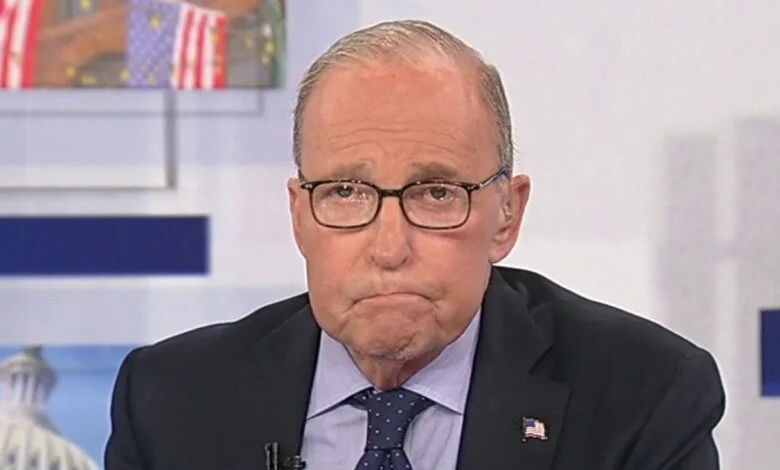
Recent upward adjustments in long-term U.S. Treasury bond yields reflect accelerating real economic growth rather than escalating inflation pressures, FOX Business host Larry Kudlow stated during a recent broadcast of ‘Kudlow.’
Addressing market commentary, Kudlow urged observers to avoid alarm regarding 30-year Treasury bond yields, pointing out that media coverage surrounding the 30-year debt instrument over the past two weeks has surpassed levels seen over the previous decade.
He noted that the bellwether Treasury is the 10-year, which has been trading steadily in a range of 4 percent to 5 percent without drawing widespread concern.
According to Kudlow, the approximately 35 basis-point yield increase on the 30-year Treasury bond in recent weeks is almost entirely attributable to fresh economic data indicating robust growth, particularly across manufacturing, construction, and advanced technology sectors.
Kudlow disputed assertions attributing the rate movements to inflation, arguing that news headlines citing inflationary pressure lack proper analysis and reflect ongoing media criticism of President Trump.
An examination of recent Treasury rate increases demonstrates that the upward movement stems from the real yield rather than the inflation component, Kudlow stated.
He emphasized that the consumer price index breakeven compensation for inflation has remained flat all year, with the expected inflation component on the 30-year CPI breakeven hovering just above 2.0 percent year to date.
In fixed-income markets, the breakeven inflation rate represents the yield spread between nominal bond instruments and Treasury Inflation-Protected Securities of identical maturity. A rising real yield alongside stable breakevens signals that investors are pricing in higher real economic growth rather than surging consumer price indices.
In a separate segment on ‘Kudlow,’ Hoover Institution senior fellow Victor Davis Hanson analyzed anti-Israel sentiment across political circles and university campuses, addressing what he described as ‘hating Israel fatigue.’
Providing additional yield metrics, Kudlow observed that market rates for 10-year Treasuries have increased by approximately 50 basis points so far this year.
This rise was driven almost entirely by a 50 basis-point increase in the real yield from Treasury Inflation-Protected Securities, while the expected inflation rate derived from breakevens grew by less than 5 basis points.
The consumer price index break-even component that implies inflation has remained basically flat, a pattern that extends to the 30-year Treasury bond.
Kudlow explained that market rates are being pushed higher by real economic growth near 4 percent, marking a return to normalized levels following extended periods of zero-rate policy after the financial crisis and Covid pandemic under Federal Reserve policies that he noted Kevin Warsh is going to fix.
Contextualizing yields above 4 percent, Kudlow compared current market conditions to the era of President Clinton and Speaker Newt Gingrich, when lower capital gains taxes and welfare reform produced robust expansion.
During another portion of the broadcast, Sen. John Hoeven, R-N.D., discussed efforts in North Dakota to expand domestic energy production under the Trump administration.
Kudlow observed that Treasury rates hovered around 6 percent during the 1990s expansion, characterizing the current rate environment as a standard normalization process accompanying a major economic boom, before citing statements delivered by Mr. Trump at the White House regarding key economic legislation.
“We’ve gained so much in the last 16 months like nobody can believe, actually,” Trump said. “And not only that, but we have more money being invested in the United States than any country at any time in history. Money is coming in by the trillions.”
Trump added that “our nation’s economic dominance drives trillions of dollars in investments, creates millions of jobs, and expands access, credit and capital so that every citizen has a chance to achieve what we now hear a lot about the American dream.”
Reiterating his outlook, Kudlow stated that the American dream remains active, encouraging viewers to ignore alarmist headlines and noting that bond market interest rates are not exploding.
He concluded that incremental rate advances reflect a stronger-than-expected economy, emphasizing that current bond market dynamics signify rate normalization driven by underlying expansion.