Roster Networks Outperform Elite Diplomas in Wall Street Recruitment, Study Finds
New NBER research tracking 120,000 Ivy League graduates reveals that direct teammate bonds nearly triple the chances of landing top finance jobs compared to general university ties.
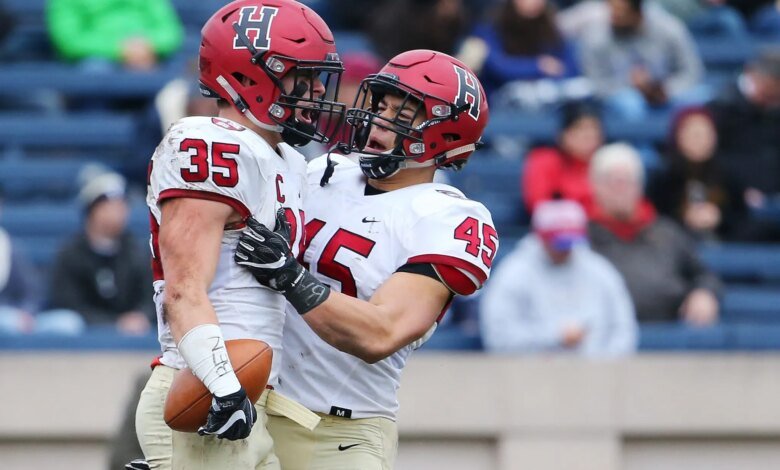
While an Ivy League diploma has long served as a traditional gateway to Wall Street, new economic research reveals that athletic team membership provides a substantially more potent hiring advantage than university prestige alone.
A study published by the National Bureau of Economic Research (NBER) analyzed the early career trajectories of 120,306 Ivy League graduates between 1950 and 2020. Conducted by researchers Paul Gompers, George Hu, Will Levinson, and Sachin Srivastava, the paper quantifies how collegiate sports rosters function as powerful, highly concentrated professional pipelines into elite sectors like investment banking, management consulting, and private equity.
The findings indicate a stark contrast between general institutional affiliation and direct team connections. Simply graduating from the same university as existing employees at a target firm increased an applicant’s chances of being hired by 4.6 percent. However, sharing the same sport across different Ivy League institutions raised those odds by 16.4 percent.
The impact spiked dramatically when candidates shared a specific team history. Having just one former teammate—defined as an alumnus from the same school, sport, and roster—already employed at a firm boosted an applicant’s hiring probability by 193.7 percent, nearly tripling the baseline likelihood.
Crucially, this influence extends across generations. Former athletes who attended the same institution and played the same sport decades prior—and thus never shared a locker room with the job candidate—still increased hiring odds by 171.9 percent.
According to the researchers, these numbers point to two distinct operational mechanisms within corporate recruitment. Recent teammates act primarily as active information conduits and direct referral sources. Conversely, older alumni who never met the applicant influence hiring by shaping recruiter perceptions and institutional preferences for specific varsity backgrounds.
The financial sector shows an especially high concentration of varsity alumni. Although athletes represented roughly 5 percent of the overall sample, they secured 7.08 percent of all initial post-graduation positions in finance. Investment banks such as Morgan Stanley and Bank of America led in hiring athlete-heavy cohorts, while Goldman Sachs and JPMorgan Chase dominated overall Ivy League recruitment. Strategy firms McKinsey & Company and Bain & Company ranked prominently across both categories.
The phenomenon extends to executive leadership across major U.S. corporations. Bank of America Chief Executive Officer Brian Moynihan played varsity rugby at Brown University, while Comcast Chief Executive Officer Brian Roberts competed in squash for the University of Pennsylvania. Both leaders have cited their collegiate athletic training as foundational to their management approaches.
The paper builds upon earlier research by co-authors tracking nearly 400,000 Ivy League graduates, which established that former varsity athletes consistently out-earn their non-athlete peers and reach C-suite roles at higher rates, even after controlling for academic major, graduation year, and institution.
Labor economists divide career outcomes into human capital—technical proficiency and learned skills—and social capital, which encompasses professional networks and institutional trust. While network access explains a significant portion of the hiring disparity, researchers note that soft skills cultivated through athletics, such as resilience, goal execution, and structured discipline, also contribute to candidate evaluations during institutional recruitment.