Google DeepMind Executive Warns AI Extinction Risk Is ‘Not Zero’ While Rejecting Utopian Forecasts
Chief AI Readiness Officer Lila Ibrahim cautions against both existential complacency and radical economic predictions.
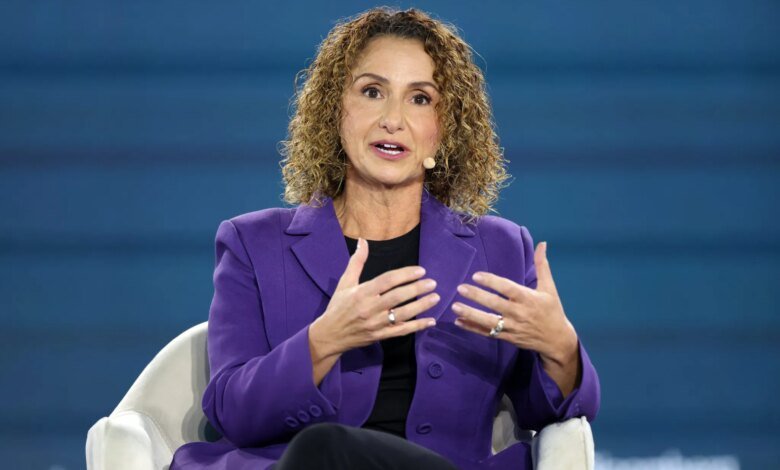
Google DeepMind Chief AI Readiness Officer Lila Ibrahim warned that the risk of Artificial Intelligence causing human extinction is “not zero,” emphasizing that tech leaders must actively mitigate existential threats alongside practical deployment risks.
Speaking to Fortune, Ibrahim pushed back against both specific numerical odds of doom and sweeping promises of automated prosperity, arguing that precise long-term forecasts misrepresent the current limits of technological foresight. “Anything beyond that is just me guessing… that’s the engineer in me,” Ibrahim said regarding existential risk calculations.
Her comments come three years after she joined OpenAI Chief Executive Sam Altman and Anthropic CEO Dario Amodei in signing a statement by the Center for AI Safety, which declared that mitigating existential risk from AI should be a global priority alongside risks like nuclear war. Ibrahim noted it would still “be irresponsible of us not to talk about existential risk.”
Other prominent industry figures have attempted to quantify that threat. Geoffrey Hinton, often termed the “godfather of AI,” has estimated the odds of AI-driven human extinction at 10% to 20% within three decades, while Amodei previously calculated a 25% chance of the future going “really, really badly.” The late physicist Stephen Hawking similarly warned nearly a decade before ChatGPT’s release that advanced AI could spell the end of mankind.
For DeepMind’s first chief operating officer, corporate responsibility requires balancing risk containment with practical application. “The two things that keep me up at night are: Are we doing everything we can to mitigate the risks? And are we doing everything we can to maximize the opportunity? Those two, in my mind, go hand in hand,” Ibrahim said.
Reflecting on earlier technological expansions, including the rise of the internet and social media, Ibrahim argued that Silicon Valley historically failed to anticipate downstream consequences during early funding cycles. “We didn’t sit around the table when we were making investment decisions and talk about the risks in the way that we should have. Sometimes we can be so much in the here and now,” she stated, adding that “There’s a lot of things that could go wrong.”
She cautioned against repeating those oversights as AI development accelerates. “If we don’t do anything to mitigate that or to invest in the good things along the way, then we’re ending up exactly where we don’t want to go,” she said.
Ibrahim expressed equal skepticism toward high-profile predictions of an effortless, post-scarcity economy driven by robotics and superintelligence. Tesla CEO Elon Musk recently told The Economist that “Money won’t matter in 2036,” arguing that rapid robotic automation will eliminate salaries, induce deflation, and require governments to provide a universal high income within ten years. Amazon founder Jeff Bezos has projected that “millions of people” will reside in space by 2045, while Altman predicted that college graduates will work “some completely new, exciting, super well-paid” jobs in space in under a decade.
Ibrahim rejected such definitive timelines. “I don’t think we can really predict what a future state looks like,” she told Fortune, contending that focus should shift from speculative sci-fi scenarios toward concrete applications such as managing extreme weather, reducing industrial waste, and researching disease treatments.
“I would rather we put our attention towards how we use technology as a tool to maximize human potential,” Ibrahim said. “That’s going to be where we need to be investing and spending our time—having the debates around what are the diseases that we can solve by having this new tool that can find patterns that we as humans haven’t.”
“I think a lot about how we get to a future versus what the future is,” she added.