Apparel Giants Launch In-House Resale Platforms to Reclaim Secondary Market Revenues
H&M, Zara, and Lululemon build proprietary resale channels to capture secondary sales and retain customer data as global secondhand market targets $393 billion.
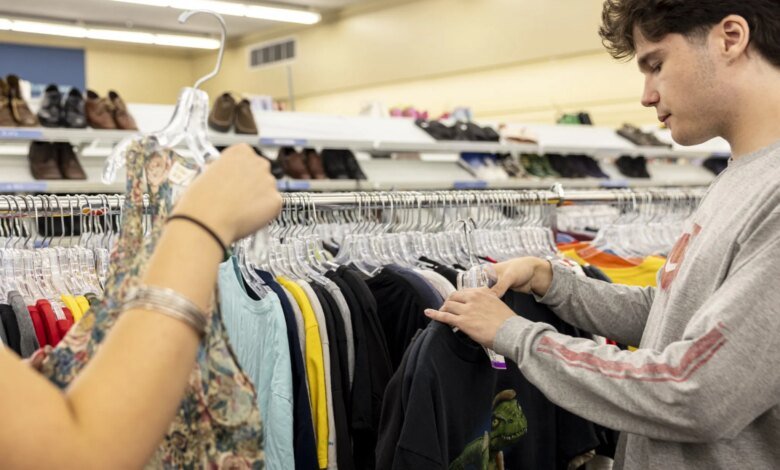
H&M Group generated SEK 1,844 million ($194.4 million) from its resale operations in 2025, a 31% increase from the prior year, as major retail chains move to capture secondary apparel revenues long dominated by third-party platforms.
The shift coincides with rapid growth in the global secondhand apparel market, which is projected to reach $393 billion by 2030, according to ThredUp’s 2026 Resale Report. Expanding at double the pace of the broader apparel sector, the resale boom has prompted global brands including Zara, H&M, Lululemon, Levi’s, and REI to build internal resale marketplaces directly alongside primary product offerings.
For years, secondary sales of branded clothing occurred almost exclusively through peer-to-peer and third-party platforms like eBay, Poshmark, Depop, and The RealReal, generating billions in GMV without producing revenue streams or customer data for the original manufacturers. Direct corporate participation allows retailers to monetize their secondary footprint while maintaining active customer relationships past the initial checkout.
Shawn Grain Carter, a professor of Fashion Business Management at New York’s Fashion Institute of Technology, said operating proprietary resale allows apparel companies to “own the entire fashion life cycle,” spanning original retail sales, maintenance, secondary resale, and eventual recycling. The operational shift creates additional revenue channels while deepening brand loyalty.
“There’s a real reason for brands to play in that secondhand space,” said Neil Saunders, managing director at retail consulting firm GlobalData Retail. “More consumers are involved with resale, and I think there’s a view that if a brand is not present in the space, it’s losing out.” Saunders noted that retailers must adjust to shifting consumer economics, adding that “resale is one of the hottest spaces.”
At H&M, pre-owned sales accounted for 0.8% of net group turnover in 2025. The company launched its Pre-Loved initiative in 2021 and has expanded the service across 24 e-commerce markets and physical storefronts in 11 countries. Sofia Måhlén, team lead for Circular Business Models at H&M, identified the initiative as “a sustainability and a business opportunity.”
“By extending product life through resale, we can support resource efficiency while creating new opportunities for growth through new business models,” Måhlén said. “We are continuing to expand access to resale and second-hand services across H&M Group’s brands and markets to help keep products in use for longer.”
The U.S. secondary clothing market is expected to expand to $78.8 billion by 2030 after growing nearly four times faster than overall retail apparel sales last year. Gen Z and millennial consumers remain the primary drivers of the sector, seeking circular fashion models while managing squeezed consumer budgets hit by elevated housing costs and student debt loads.
“There’s definitely a little bit of bandwagoning,” Saunders said regarding corporate adoption. “When you start to see some of the big names on that, it definitely raises conversations like, ‘Hey, why are we not playing in this space? What’s our strategy around that?’”
Saunders added that proprietary secondary platforms offer clear marketing leverage: “You can make a very strong argument that you are acting sustainably because you’re not encouraging things to be thrown away or going into landfill.”
Much of the corporate rollout relies on enterprise resale technology providers such as Trove and Reflaunt, which supply backend logistics, inventory tracking, and product authentication. Trove launched Patagonia’s Worn Wear program in 2017 before expanding its technology platform to power resale initiatives for Levi’s, REI, Eileen Fisher, and Lululemon. Conversely, Inditex-owned Zara developed an internal platform, Zara Pre-Owned, handling resale, repair, and garment donation internally.
Physical store networks are increasingly integrated into secondary retail strategies. Pacsun expanded its PS Vintage secondhand concept to 16 U.S. retail locations in April, five months after its e-commerce launch, with top-performing brick-and-mortar stores reporting a 20% inventory sell-through rate within weeks. In the U.K., Urban Outfitters introduced a garment take-back program offering store credits to customers, relying on third-party specialist Reskinned to manage cleaning, repair, and resale logistics.
Saunders highlighted that protecting overall brand execution remains a strategic priority for primary retailers. “There definitely is a viewpoint among some of the more premium brands that they would prefer to control that channel, or at least have some degree of control,” he said.
Although official corporate platforms operate alongside independent marketplaces like eBay, Depop, and Poshmark, they allow manufacturers to standardize visual presentation, control pricing baselines, and retain customer engagement over the full product lifecycle. “I don’t think for most it will ever displace the sales of new products,” Saunders said. “Sometimes they will buy into both.”