US Warns China on AI Theft and Rare Earths as Second-Quarter GDP Slows to 1.5%
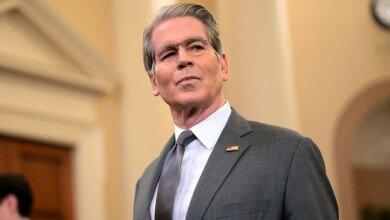
Treasury Secretary Scott Bessent addresses Q2 economic growth deceleration while warning Beijing over critical mineral restrictions and AI model distillation.
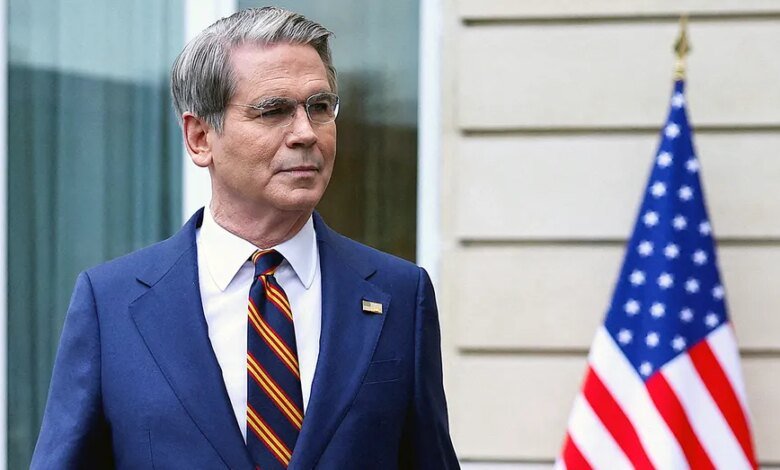
The U.S. government is confronting dual economic challenges as second-quarter national output slowed to an annualized rate of 1.5 percent while strategic tensions with Beijing over Artificial Intelligence and critical mineral supplies continue to escalate. U.S. Treasury Secretary Scott Bessent sought to downplay growth concerns on Thursday, characterizing the GDP deceleration from the first quarter’s 2.1 percent rate as a technical accounting distortion tied to federal energy reserve policy rather than a signal of broader economic weakness.
Addressing bilateral trade friction, Bessent issued direct warnings regarding Chinese economic practices, alleging that Chinese entities have engaged in widespread intellectual property theft through the illegal copying of American artificial intelligence systems—a process referred to as model distillation—while restricting international exports of critical rare earth minerals required for high-tech manufacturing and defense applications.
Forensic evidence raised at the technical level indicates that digital watermarks embedded within top-tier U.S. artificial intelligence models have repeatedly surfaced within Chinese-developed software. While asserting that the United States retains a substantial technological advantage over China in AI capabilities, Bessent emphasized that open-source software frameworks must operate within legal boundaries and cannot serve as cover for intellectual property infringement.
Supply chain constraints surrounding critical materials remain another flashpoint. China maintains dominant control over global rare earth processing, refining roughly 90 percent of key elements essential for electric vehicles, guidance electronics, and renewable energy infrastructure. Bessent cautioned that Washington would actively push back if Beijing continues to choke off rare earth shipments to American businesses, describing the diplomatic dynamic as a water polo match where peaceful surface interactions belie aggressive maneuverings under the water.
Despite trade friction at the staff level, executive diplomatic channels remain open. President Donald Trump has invited Chinese President Xi Jinping to Washington for a summit scheduled for late September, following preliminary talks earlier this spring. Both powers share a mutual interest in preventing powerful artificial intelligence models from falling into the hands of non-state actors, requiring baseline coordination on security protocols.
On the domestic front, data released by the U.S. Bureau of Economic Analysis confirmed that second-quarter real GDP expansion moderated. Bessent explained that large-scale drawdowns from the Strategic Petroleum Reserve to reduce domestic fuel costs artificially suppressed GDP figures, as inventory draws subtract from calculated private domestic investment. Underlying economic pillars, including consumer spending, factory activity, and labor market resilience, remain robust enough to keep full-year expansion above 2.0 percent.
Simultaneously, key inflation metrics evaluated by the Federal Reserve showed continued disinflation. The personal consumption expenditures price index dropped to an annual pace of 3.7 percent in June, down from 4.1 percent in May. Core PCE, which excludes volatile food and energy categories, pulled back to 3.3 percent from 3.4 percent, signaling that service-sector price increases are gradually cooling despite persistent volatility in global energy markets linked to regional conflict in Iran.