U.S. Launches New Strikes on Iran as Trump Reinstates Blockade and Proposes Strait of Hormuz Tolls
President Trump announces a 20% cargo fee for transit protection as regional tensions flare.
WASHINGTON — The United States launched a new round of military strikes against Iran on Monday, hours after President Donald Trump announced the reinstatement of a naval blockade in the Strait of Hormuz and proposed charging commercial vessels a fee for safe passage through the strategic waterway.
U.S. Central Command announced on social media that the military had initiated another round of strikes targeting Iranian forces. According to the military command, these operations are designed to impose a heavy cost on Iranian forces and degrade their ability to attack innocent civilians and commercial shipping.
Shortly after the military’s announcement, President Trump characterized the operation as “another major attack” during a briefing with reporters in the Oval Office. “We’re hitting them very hard. And it’ll continue, and we’ll see what happens,” Trump said, adding that the U.S. is “knocking out all of their offensive capability” and “controlling the straits.”
The U.S. military confirmed it will officially resume its blockade of Iranian ports on Tuesday at 4 p.m. EDT.
Shift on Shipping Fees
In a significant policy shift, Trump detailed plans to charge commercial ships transit fees to offset the costs of U.S. military protection. “We’re protecting a very rich portion of the world,” Trump stated. “We’re spending money. And so, what we’ve done is, we are going to be reimbursed for protection.”
On social media, Trump wrote that the U.S. would be “reimbursed” by 20% of the value of cargo to cover the costs of providing safety and security, while asserting that “all other countries will have fair and open use of the Strait.”
This proposal marks a reversal of long-standing U.S. policy, which previously maintained that the strait must remain open to all transit without tolls. The change follows the breakdown of an interim peace deal. Prior to the U.S. and Israeli attacks on Iran on Feb. 28, the waterway operated without such fees. Any attempt to impose transit charges could challenge global norms on freedom of navigation and risk further economic disruption. Following Monday’s developments, the price of Brent crude oil rose 7.8% to $81.92 a barrel, though it remains below the peak of nearly $120 reached during the height of the conflict.
Speaking to conservative radio host Hugh Hewitt, Trump declared that the previous agreement was “built to test” Iran, adding that “when you’re dealing with sleazebags don’t mean much.” He questioned why the U.S. had entered a ceasefire agreement rather than pursuing a comprehensive deal first, having declared the ceasefire “over” last week. “They didn’t honor the test,” Trump said.
Regional and International Reactions
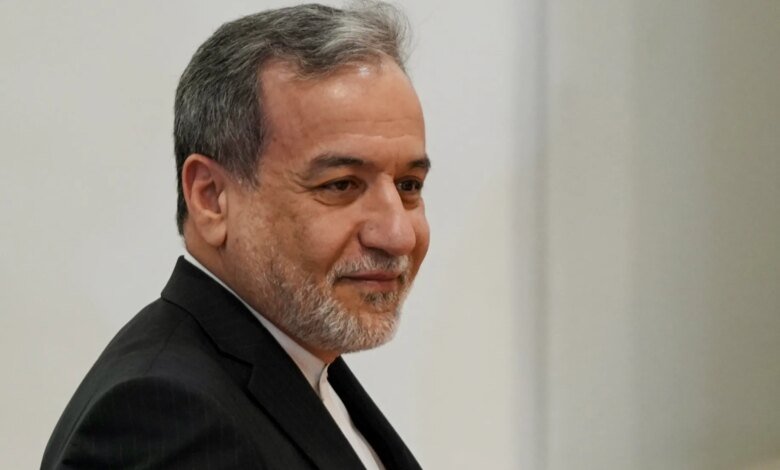
Iran has maintained that it holds the right to manage traffic and potentially levy fees within the waterway under the terms of the interim peace deal. Iranian Foreign Minister Abbas Araghchi reacted to Trump’s toll proposal on social media, using the U.S. position to justify Tehran’s claims.
“POTUS is absolutely right. Whoever provides secure and safe passage of commercial vessels through the Strait of Hormuz should be compensated for this service,” Araghchi wrote on X. “Iran has always been the GUARDIAN of the Strait and will remain so FOREVER. 20% is of course too much. We will be fair.”
The International Maritime Organization, the United Nations agency overseeing global shipping, stated it is seeking further details on the U.S. proposal but expressed firm opposition to tolls on international waterways. “There is no legal basis through which to introduce mandatory tolls simply to transit through a strait,” the organization said.
The stance also contrasts with statements made last month by U.S. Secretary of State Marco Rubio. During a meeting with Gulf leaders in Bahrain on June 25, Rubio stated there was “zero support among the Gulf countries for any sort of toll or fees” and affirmed that the U.S. president had made it clear such fees would not be implemented.
Escalating Military Actions
The latest U.S. strikes targeted dozens of Iranian sites on Monday, including air defense systems, radar installations, missile and drone equipment, and small boats. These actions followed an Iranian attack on a container ship on Sunday. The U.S. military also disclosed that it utilized drone ships for the first time on Sunday to strike an Iranian ship maintenance facility and a submarine.
The conflict has triggered wider regional instability:
- Bahrain: Home to the U.S. Navy’s 5th Fleet, Bahrain activated missile alert sirens three times on Monday. No immediate damage was reported.
- Kuwait: The Foreign Ministry reported an attack on its consulate in Iraq. Kuwait also condemned Iran and its loyal Iraqi militias for targeting border points and a maritime drilling platform owned by the Kuwait Petroleum Corporation.
- Jordan: The Jordanian military intercepted and shot down four Iranian missiles, reporting zero casualties or material damage.
- Iran: State-run IRNA news agency reported strikes in Hormozgan, Khuzestan, and Markazi provinces, resulting in at least two deaths. Semiofficial media also reported strikes in the eastern Sistan and Baluchestan province.
Iran’s Foreign Ministry spokesperson Esmail Baghaei blamed Washington for the regional escalation. Baghaei also announced that Iran would bar the International Atomic Energy Agency (IAEA) from visiting nuclear sites bombed by the U.S. in 2025, where Tehran’s stockpile of highly enriched uranium is believed to be entombed.
The U.S. has also ended waivers that allowed Iran to sell crude oil in U.S. dollars. Despite the escalation, mediators from Pakistan, Qatar, and Egypt are continuing efforts to negotiate a final agreement. The U.S. and Iran are currently near the midpoint of a 60-day negotiation window originally intended to secure a permanent treaty and address Iran’s nuclear program.
Context and Background
The Strategic Importance of the Strait of Hormuz
The Strait of Hormuz is one of the world’s most vital maritime chokepoints. Located between Oman and Iran, it connects the Persian Gulf with the Gulf of Oman and the Arabian Sea. Historically, approximately one-fifth of the world’s petroleum liquids pass through this narrow passage, making it a critical artery for global energy security. Because the shipping lanes are narrow, any military blockade or disruption directly impacts global oil prices and maritime insurance rates.
The Legal Framework of International Straits
Under international maritime law, specifically the United Nations Convention on the Law of the Sea (UNCLOS), foreign vessels are guaranteed the right of “transit passage” through straits used for international navigation. This legal regime ensures that ships and aircraft may navigate through or over such straits continuously and expeditiously without political or financial interference from coastal states, provided they do not threaten the security of those states.
The Role of the International Maritime Organization
The International Maritime Organization (IMO) is a specialized agency of the United Nations established in 1948. Headquartered in London, the IMO is responsible for developing and maintaining a comprehensive regulatory framework for shipping. Its mandate covers safety, environmental concerns, legal matters, technical co-operation, and maritime security. The agency consistently opposes unilateral levies or restrictions on international transit lanes to preserve global trade flows.
The U.S. Fifth Fleet
The U.S. Navy’s Fifth Fleet is headquartered in Manama, Bahrain. Established to ensure stability and security in the maritime region encompassing the Persian Gulf, Red Sea, Gulf of Oman, and parts of the Indian Ocean, the Fifth Fleet plays a central role in protecting commercial shipping lanes, conducting counter-piracy operations, and projecting U.S. military power in the Middle East.