Physical NFC Keys Enter Digital Detox Market at a Fraction of Competitor Costs
A $9 physical NFC key offers an affordable alternative to expensive app-blocking hardware and easily bypassed software limits.
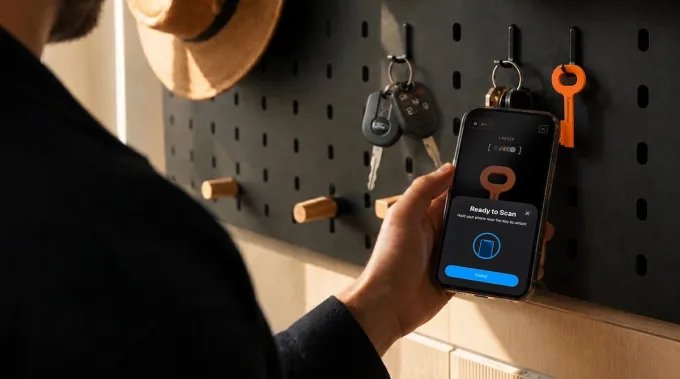
Smartphones are designed around frictionless interaction, making standard software-based limits notoriously easy to override with a quick tap. To counter this, hardware developers are increasingly turning to physical barriers to enforce digital discipline. Emerging from a Kickstarter crowdfunding campaign, the $9 Autonomous Key has begun shipping to customers, introducing a low-cost hardware token aimed at curbing app addiction.
The system relies on an NFC key that pairs with a mobile companion app to restrict access to distracting platforms such as Instagram or TikTok. To reopen locked applications, users must physically tap the physical token against their phone. Each scan grants an unlock window of up to 60 minutes before the applications automatically relock.
By requiring physical contact, the hardware forces users to make a conscious decision—particularly if the key is stored in a separate room, office, or gym bag—turning mindless scrolling habits into an intentional effort.
The market for physical screen-time enforcement has expanded alongside growing consumer awareness of digital fatigue, but competing devices often carry high upfront prices. Brick sells for $59, while alternative options like Blok and Unpluq cost $29 and $26.50, respectively. While Brick offers extra features such as a specialized Sleep Mode and in-app purchase blocking, Autonomous Key provides basic app-locking capabilities at a significantly lower entry price.
The device avoids the recurring subscription fees common among digital productivity applications. Furthermore, a single NFC key can pair across multiple smartphones, making it accessible for multi-device users or families sharing a single token.
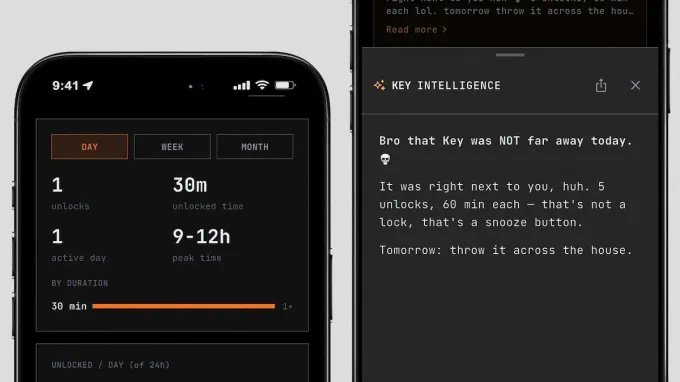
The companion app features an integrated AI system that logs interaction habits, including unlock frequency, session durations, and peak usage hours. Rather than offering neutral analytics, the AI employs a sarcastic personality to highlight poor habits—such as teasing users who immediately scan the key after locking their apps and advising them to place the token further away.
Practical evaluation shows that the physical interface is not without flaws. NFC scans occasionally fail to register on the first attempt, making the system less suitable for locking essential daily communications like messaging or primary email applications.
Account recovery in the event of a lost key also remains limited. Users who lose the physical token while their apps are locked must uninstall and reinstall the companion app to regain access. If apps are already unlocked, the key can be disconnected through account settings. Developers indicate that an alternative recovery mechanism will be introduced in an upcoming software update.
Measuring approximately three inches long, the hardware token supports smartphones running Android 8.0 or later and iPhones running iOS 15 or higher. The device is currently shipping in beta across five color options: pink, orange, blue, gray, and brown.