Brazil Deploys Advanced Forensics to Track Illicit Amazon Gold and Break Laundering Networks
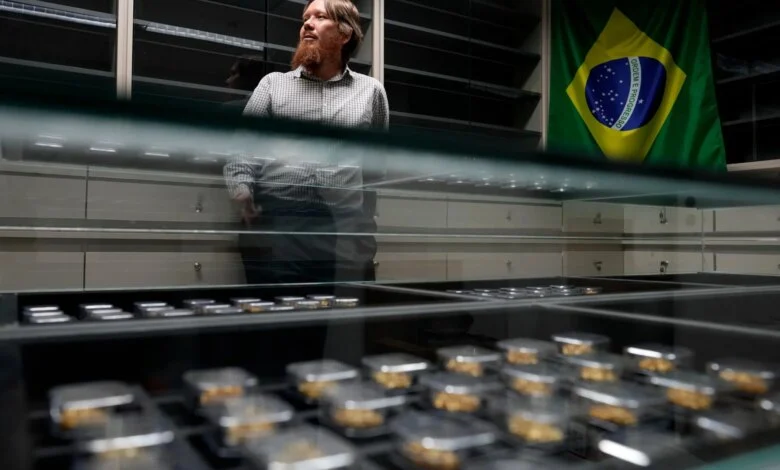
In a high-tech facility in Brasília, Brazilian federal police are deploying advanced chemical analysis to trace the precise geographical origin of seized precious metals, seeking to choke off a lucrative illicit gold trade devastating the Amazon rainforest.
Operating out of the National Institute of Criminalistics, the forensic unit analyzes microscopic signatures embedded within gold samples. Because gold absorbs trace elements such as silver, copper, and iron unique to the geology of specific riverbeds or rock deposits, scientists can construct a distinct fingerprint for every sample. By testing seized bullion against a growing national geochemical database using laser ablation mass spectrometry and X-ray fluorescence, investigators can prove whether gold claimed to come from a licensed concession was actually illegally extracted from protected Indigenous territories or national parks.
The forensic breakthrough comes as criminal syndicates exploit loopholes in Brazil’s mineral oversight to launder wildcat gold into global financial supply chains. Soaring international gold prices—which reached historic highs in recent years—have fueled an aggressive expansion of illegal mining across South America. According to data from the satellite-tracking initiative Amazon Mining Watch, illicit mining operations have cleared roughly 223,000 hectares of forest in the Brazilian Amazon since 2023.
To bypass law enforcement, illicit operators frequently utilize ghost mines—a practice highlighted in investigations by environmental group Greenpeace and audits by Brazil’s Federal Court of Accounts. Laundering networks obtain official permits granted to small-scale concessions that show no physical activity on satellite imagery, using those paper licenses to falsely certify gold stripped from restricted Indigenous lands. Federal prosecutor André Porreca recently launched legal action against the National Mining Agency to tighten permit regulations, warning that existing oversight has enabled organized crime to systematically clean illegally mined gold.
The legal pressure is mounting across multiple fronts. A federal court in Pará state ordered the Central Bank of Brazil and mining regulators to implement strict end-to-end traceability protocols across the entire domestic gold supply chain. Police forensics expert Gustavo Geiser noted that validating the clean lineage of gold is essential for maintaining trust in sovereign financial reserves and international markets, where untraceable gold poses severe compliance and reputational risks.
As Brazilian authorities tighten domestic controls, criminal networks have increasingly shifted operations across international borders into neighboring French Guiana, Suriname, and Venezuela. In response, regional security forces have stepped up intelligence sharing through the Amazon International Police Cooperation Center, based in Manaus.
Beyond deforestation, wildcat mining inflicts severe and long-lasting ecological damage due to the widespread use of toxic mercury, which binds to gold particles during extraction before being dumped into waterways. A study by the Oswaldo Cruz Foundation, a premier public health organization in Brazil, revealed that over 21 percent of fish sold in Amazonian markets contained mercury concentrations exceeding World Health Organization safety guidelines. In some riverine communities, young children were found to consume mercury at levels up to 31 times above recommended exposure limits.
To address the public health emergency, Brazil’s Ministry of Mines and Energy has introduced a draft policy to phase out industrial and artisanal mercury usage, aligning with the nation’s commitments under the international Minamata Convention on Mercury. Forensic experts note that prohibiting mercury altogether will further strengthen criminal investigations, as any trace of the heavy metal found in gold samples will automatically serve as evidence of illegal processing.