Thomson Reuters Breaks 174-Year Precedent With Acquisition of Pre-Revenue Legal AI Firm Safe Sign Technologies
In a historic departure from its traditional corporate M&A criteria, global information giant Thomson Reuters completed the takeover of UK-based startup Safe Sign Technologies just 20 months after the firm was established. The deal marks the first time in Thomson Reuters’ 174-year history that it has acquired a company with zero commercial revenue, signaling a dramatic shift in how enterprise tech conglomerates value specialized Artificial Intelligence intellectual property.
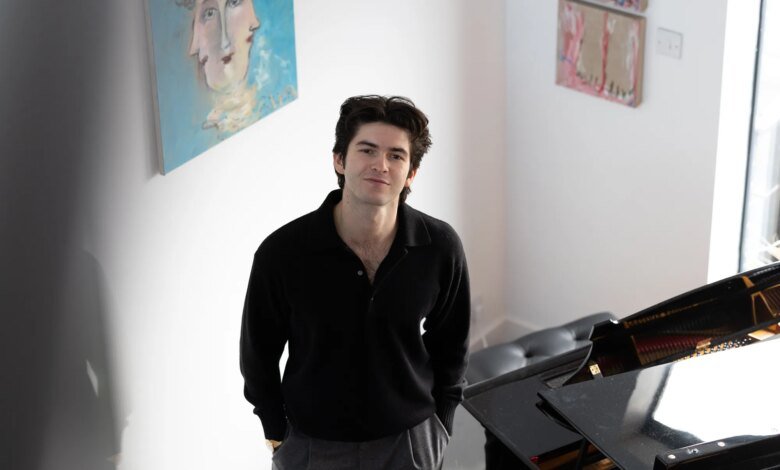
Safe Sign Technologies was founded by a former trainee solicitor at elite law firm Allen & Overy—now A&O Shearman following its major 2024 merger—who balanced early-morning software development with demanding legal training. Assembled on a tight budget, the startup’s research core comprised specialists from Cambridge, MIT, and Harvard. Rather than building consumer-facing legal software or chasing immediate subscription sales, the team focused exclusively on fundamental AI research, aiming to solve critical domain challenges in safety, reliability, and model robustness.
The enterprise appetite for specialized legal AI has accelerated rapidly as legacy providers rush to integrate automated document analysis and contract review into their core software suites. Thomson Reuters’ venture capital arm engaged with Safe Sign within minutes of reviewing the startup’s internal benchmark tests. The acquisition underscored a growing trend across the legal tech sector, where foundational model performance and domain-specific accuracy often command higher valuations than early top-line growth.
The journey to the transaction highlighted distinct cultural divides between British and North American venture markets. After facing repeated rejections from domestic UK investors who insisted on immediate revenue streams, the founder flew to New York with £200 to secure early funding. Ultimately, nearly all of Safe Sign’s seed capital originated from North American investors willing to finance long-term technical research without near-term commercial monetization.
The founder’s unconventional approach to risk and detail originated years earlier in south-east London. As a teenager, the founder taught themselves planning law from public archives to defend Rollins House—a historic Art Deco former factory where their mother lived—against property developers. Appearing before a municipal council panel opposite an experienced legal firm, the self-taught advocate won the case, preserving the building and establishing a core philosophy that deep research and technical substance overcome outsized odds.
Now operating as an investor, the Safe Sign founder argues that mainstream venture capital remains overly focused on surface-level metrics like short-term revenue charts and public presentation decks rather than fundamental defensibility. Current investment capital, according to the founder, is over-concentrated on top-tier frontier labs, while neglecting crucial sub-layer infrastructure required to advance the field.
These under-funded critical areas include robust evaluation frameworks designed to prevent AI models from gaming standardized tests, persistent memory architectures capable of continual domain learning, and specialized enablement tools for AI-driven scientific laboratories. These deep technical bottlenecks, often mischaracterized by casual observers as simple tooling or database storage, represent the primary structural hurdles facing the next generation of artificial intelligence deployment.