Trump’s Crypto Earnings Spark Senate Standoff Over CLARITY Act
Democratic senators push back against the crypto bill, demanding strict ethics rules following disclosures of Donald Trump's digital asset income.
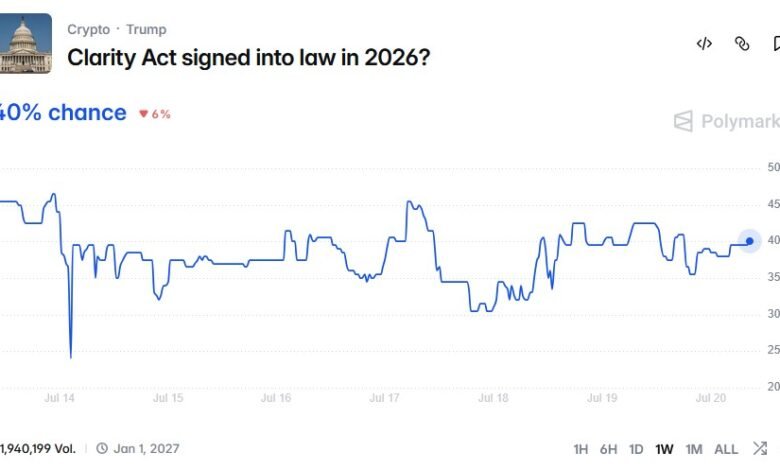
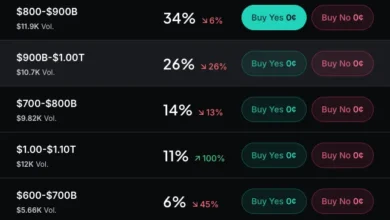
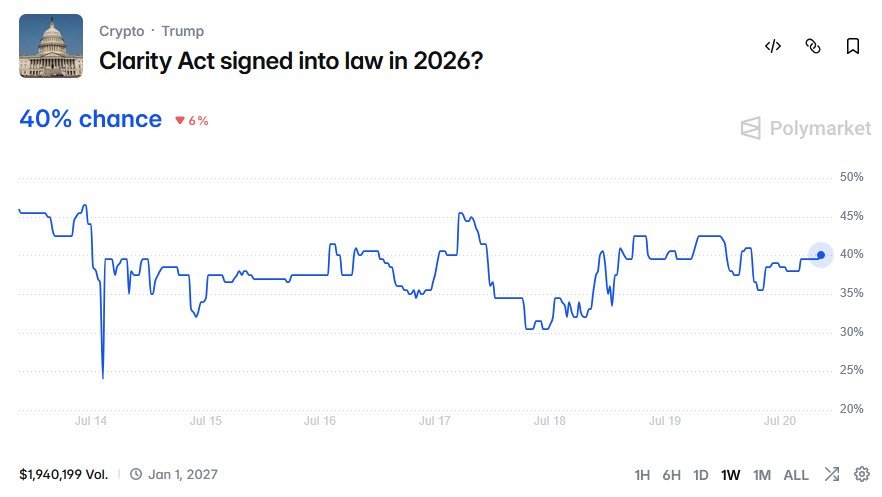
The upcoming US Senate vote on the CLARITY Act, scheduled before August 10, faces a steep uphill battle as political disputes over Donald Trump’s personal cryptocurrency earnings threaten to derail the legislation. With prediction markets placing the bill’s chances of passing this year at just 40%, the debate has shifted from technical regulatory frameworks to intense ethical scrutiny.
Senate Majority Leader John Thune has indicated that a crucial vote on the bill could occur as early as this week. However, a growing coalition of Democratic Senators, including Chris Murphy, Jeff Merkley, and Chris Van Hollen, have voiced strong opposition. The primary roadblock is a demand from Senator Elizabeth Warren, who is targeting Donald Trump’s financial ties to the digital asset industry. Pointing to Trump’s 2025 financial disclosures—which revealed he amassed over $1 billion from cryptocurrency last year—Warren has demanded that the former president voluntarily release his 2026 earnings.
Democratic lawmakers are reportedly refusing to back the bill unless it includes strict provisions prohibiting elected officials from promoting or issuing digital currencies. Summer Mersinger, the CEO of the Blockchain Association and a former commissioner at the Commodity Futures Trading Commission (CFTC), described the ethical debate surrounding political figures and crypto as “the big elephant in the room.” This legislative gridlock comes at a critical time for US digital asset policy, which has historically struggled to establish clear statutory definitions for tokens.
The friction over the legislative framework coincides with other regulatory setbacks in Washington. US regulatory agencies recently missed a key statutory rulemaking deadline for the GENIUS stablecoin act. While missing this deadline does not invalidate the legislation, it significantly compresses the timeline for stablecoin issuers to comply before the rules officially take effect in January. This delay occurs despite international efforts to harmonize standards; the US Department of the Treasury and the UK’s HM Treasury recently issued joint recommendations urging that stablecoins be fully backed on a 1:1 basis by liquid, high-quality assets.
While traditional crypto markets experienced a sluggish second quarter, decentralized prediction platforms have surged to historic volumes. According to data from CoinGecko, spot trading volumes across the top ten centralized exchanges fell from $2.7 trillion in Q1 to $1.95 trillion in Q2. In stark contrast, prediction markets posted a record-breaking $113.8 billion in notional volume. Polymarket has led this charge, with its World Cup winner contract alone attracting over $3.3 billion, alongside massive betting pools for the 2028 US presidential election. However, this growth has drawn international regulatory pushback; France’s National Gambling Authority recently ordered internet service providers to block access to Polymarket, classifying its operations as illegal gambling.

In another political development, the US Senate has adopted a resolution formally opposing executive clemency for disgraced FTX founder Sam Bankman-Fried. While the resolution cannot legally block a presidential pardon, it signals strong bipartisan resistance to any potential reduction of his 25-year prison sentence. Bankman-Fried, who was convicted of massive fraud and conspiracy following the 2022 collapse of FTX, applied for clemency from Trump in June 2026. Meanwhile, the FTX Recovery Trust continues its liquidation process, announcing a fifth round of distributions totaling $900 million to creditors, bringing its total payouts to approximately $10 billion.

Despite regulatory hurdles elsewhere, the tokenization of traditional assets continues to gain traction. The global market capitalization of tokenized stocks reached an all-time high of $2.3 billion. According to data from Token Terminal, Ethereum maintains the largest share of this market at 34%, followed closely by BNB Chain at 30% and Solana at 23%. Leading issuers include Ondo Finance, which commands $955 million in onchain equities, alongside Kraken’s xStocks and Binance’s bStocks. This trend is drawing interest from legacy financial giants; the Depository Trust & Clearing Corporation (DTCC), which oversees $114 trillion in assets, recently initiated a tokenized securities trial involving more than 40 financial institutions.

Security remains a persistent vulnerability across the Web3 ecosystem. Consensys, the developer behind MetaMask, recently revealed that it unknowingly employed a software developer with ties to North Korea. The developer had access to Consensys systems for a month before being discovered, prompting a temporary suspension of product releases. An internal investigation confirmed that no user data or assets were compromised. Concurrently, cybersecurity firm Kaspersky warned of a new malware framework called “OkoBot” targeting crypto investors, while SlowMist reported fake job recruitment campaigns on LinkedIn designed to trick Web3 developers into downloading malicious GitHub repositories.

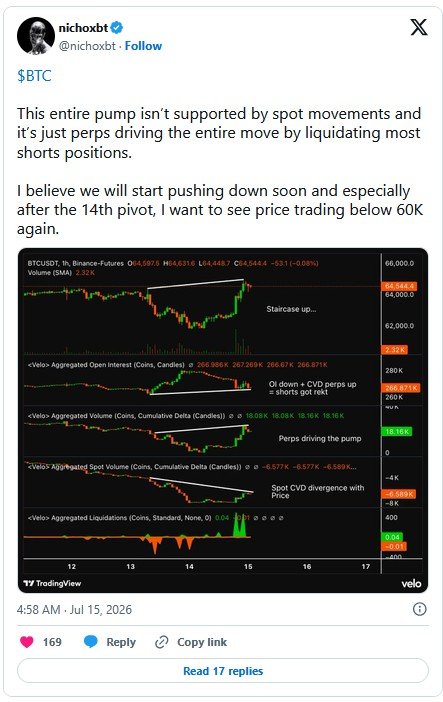
Amid these shifting dynamics, Jesse Pollak announced he is stepping down from leading the Base App. Pollak acknowledged that his strategic focus on social, messaging, and creator applications was a “wrong bet,” as those markets disintegrated. Leadership of the platform will return to Coinbase under the supervision of prominent crypto figure Jordan Fish, known online as “Cobie,” with a renewed focus on decentralized finance, payments, and AI agents. As the week closed, Bitcoin was trading at $64,620, Ether at $1,868, and XRP at $1.09, bringing the total cryptocurrency market capitalization to $2.21 trillion.