Trump’s Gulf Dilemma: Low Oil Reserves and Midterm Pressures Create a Strategic Straitjacket
Low energy reserves and upcoming elections paralyze U.S. strategy in the Persian Gulf.

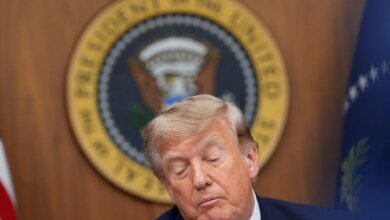
The United States is navigating a narrowing corridor of options in the Persian Gulf as record-low energy stockpiles and the political proximity of the midterm elections constrain the White House’s response to Iranian aggression. With the Strategic Petroleum Reserve now depleted to its lowest level since 1983, President Trump faces a strategic impasse: he cannot easily secure the Strait of Hormuz without risking a spike in gasoline prices that could alienate voters.
This maritime standoff is driven by a tactical shift from Tehran. By attacking oil tankers, Iran is attempting to force merchant shipping away from the southern route along the coast of Oman and toward a northern route hugging the Iranian shoreline. The objective is to extract tolls from vessels that previously utilized the waterway for free. According to Macquarie analysts Thierry Wizman and Gareth Berry, Iran calculated that failing to strike these vessels would mean losing the Strait of Hormuz as a primary tool of leverage.
For the White House, the timing of the conflict is particularly fraught. The war is increasingly unpopular with a domestic electorate sensitive to energy costs. Dan Alamariu of Alpine Macro argues that the closure of the waterway negates the president’s primary motivation for diplomacy, as the administration requires lower oil prices heading into the midterm elections. While the U.S. and China maintain national reserves, the steady decline of the American stockpile limits the ability to buffer the market against prolonged disruptions.
One potential political escape hatch involves shifting blame for the diplomatic friction onto JD Vance, identified by Alpine Macro as a prominent public proponent of the memorandum of understanding. The U.S. considers the provision for keeping the Strait of Hormuz open to be non-negotiable, and the recent strikes are viewed in Washington as a direct violation of that agreement.
Market volatility has mirrored the uncertainty of the conflict. Brent crude fell to $76 per barrel this morning, down from a peak of $79 yesterday, as traders reacted to a temporary lull in escalatory headlines. While explosions were reported inside Iran this morning, the U.S. has not confirmed further military action, and officials indicate that talks between Tehran and Washington are ongoing.
Geopolitical analysts, including Ed Yardeni, have noted that such crises often serve as buying opportunities for stocks, pointing to the 18.3% rise in the S&P 500 since the end of March. However, the abrupt end to the ceasefire suggests that the current volatility may persist as long as the fundamental dispute over transit rights and tolls remains unresolved.