Franklin Templeton Expands Crypto Strategy with Focus on Liquid Assets and Institutional Convergence
Ginns outlines the firm's move into liquid digital assets and the role of tokenization in traditional finance.
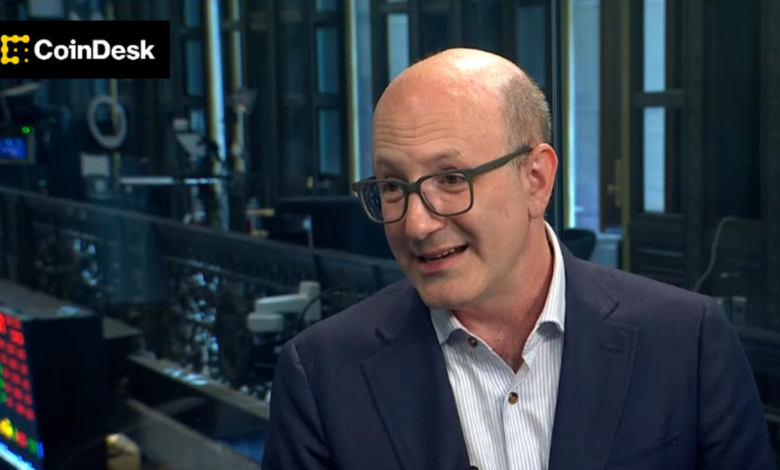
Franklin Crypto is seeking to establish itself as a leading fundamental crypto investment platform following the strategic acquisition of 250 Digital by its parent company, Franklin Templeton.
In a recent interview with Jennifer Sanasie on CoinDesk’s Public Keys, Ginns, who leads the initiative, detailed how the firm is navigating the current market environment. The acquisition of 250 Digital—a firm that originated from CoinFund’s liquid investment business—serves as a cornerstone for Franklin Templeton’s expanded digital asset capabilities.
Ginns noted that while venture capital has historically been a natural fit for institutional allocators, current market conditions have increased the appeal of liquid crypto investments. He observed a significant disconnect between current market prices and real fundamentals, suggesting that institutional engagement remains robust despite a prolonged market slump.
The convergence of traditional finance and blockchain technology is accelerating, according to Ginns. He highlighted Robinhood’s blockchain initiative as an example of how traditional financial distribution is migrating toward crypto rails. This shift is expected to create new opportunities for both developers and end-users by integrating legacy financial systems with decentralized infrastructure.
Furthermore, Ginns identified tokenized money market funds as a significant growth area. These instruments allow investors to earn yield while maintaining on-chain portability, bridging the gap between traditional cash management and the digital asset ecosystem. Other contributing factors to this convergence include the rise of tokenized equities and the broader adoption of stablecoins.
### Background: Franklin Templeton and Digital Assets
Franklin Templeton is a global investment management organization founded in 1947, managing over $1.5 trillion in assets under management (AUM). The firm has been an early mover among traditional asset managers in the blockchain space, launching one of the first U.S.-registered mutual funds to use a public blockchain to process transactions and record share ownership.
### Technical Overview: Liquid vs. Venture Crypto
In the digital asset space, liquid crypto investments refer to tokens that are already trading on public exchanges and can be bought or sold relatively easily. This differs from crypto venture capital, which typically involves long-term, illiquid investments in early-stage startups or protocols before their tokens are publicly available.
### The Role of Tokenization
Tokenization involves representing ownership of a financial asset as a digital token on a blockchain. By moving assets like money market funds or equities onto blockchain technology, financial institutions aim to reduce settlement times, lower operational costs, and increase transparency through a shared ledger.