
Robotic Lash Tech Startup Luum Raises $36M, But Lash Artists Are Holding Their Breath
Oakland Startup Automates Lash Extensions With $36M in Funding

Luum, an Oakland-based robotics startup, has secured $36 million in total funding to pioneer what it calls “intelligent beauty services,” beginning with the automation of eyelash extensions. The company’s commercial push comes as technology developers target the highly lucrative personal care market, moving artificial intelligence and precise robotic systems beyond factory floors and medical rehabilitation clinics. According to data from consulting firm McKinsey & Company, the core global beauty market—spanning skincare, cosmetics, haircare, and fragrances—is projected to reach $590 billion by 2030, growing at an annual rate of 5% from its 2024 valuation of $441 billion. When factoring in adjacent wellness and aesthetic services such as spa treatments, injectables, and specialized skincare, the market adds another $820 billion in global spending.
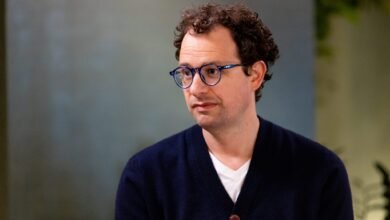
Jo Lawson, who joined Luum as president in 2023 after 15 years in marketing and product leadership roles at Apple, PayPal, and Movado, was appointed chief executive officer in 2024. The transition allowed co-founder Nathan Harding to move into the chief technology officer role to focus on hardware and AI development. Harding previously co-founded Ekso Bionics, a developer of wearable robotic exoskeletons designed to help stroke and spinal-cord injury patients regain mobility. The technical foundation of Luum’s automated beauty platform is rooted in such high-stakes medical robotics.
Applying this rigorous engineering background to aesthetic services, Luum’s hardware is designed around physical safety constraints to mitigate client apprehension. The robotic arm is mechanically calibrated so that it cannot make physical contact with a client’s closed eyelids. The wands responsible for isolating and applying the lash extensions are featherlight and flexible. They are attached to the robotic mechanism via low-strength magnets; if a client flinches, moves, or if the machine is externally bumped, the wands instantly detach without causing injury. A human technician can then replace them with a sterile pair to resume the process.

Luum’s business model does not seek to replace human labor entirely, but rather to increase salon throughput. The company employs three to four human lash artists per robotic unit. The human technicians handle client consultations, prepare the eyes, load the clients into the machine, and perform the final aesthetic styling. To date, Luum has established dedicated studios in Oakland, Newport Beach, and Dallas, and has expanded its retail footprint by placing its machines inside select Nordstrom and Ulta Beauty locations. Early backing was provided by retail giant Ulta Beauty.
Traditionally, a human lash artist applies individual synthetic or silk fibers to a client’s natural eyelashes one by one using cosmetic adhesive. This meticulous manual process requires extreme hand-eye coordination and typically takes between 90 minutes and two hours for a full set. By utilizing computer vision and working on both eyes simultaneously, Luum’s robotic system currently completes a full application in approximately one hour. The platform has been trained on roughly 150 terabytes of proprietary session data to map eye movements and locate individual lashes in real time. As its neural networks process more volume, the company aims to reduce total appointment times to approximately 30 minutes.
Despite the infusion of capital and technology, the concept of robotic beauty services faces skepticism from established industry practitioners. “I’d be holding my breath the whole time,” said Julianna Crisafuli, a veteran professional lash artist, when asked about the integration of automated systems. “I would worry about how it is going to look, all the mistakes that could possibly be in there, and the lack of personalization to it.” A key challenge lies in the sheer variety of human facial anatomy. Professional lash artists customize applications based on specific eye shapes—such as hooded eyes, monolids, and almond-shaped eyes—to prevent extensions from feeling heavy, drooping, or looking artificial.
Luum’s capital structure includes a $30 million Series A funding round that closed in 2024, co-led by Artifact Capital and Boardman Bay Capital Management. The Series A round was led by Long Journey Ventures. A subsequent convertible debt round brought the startup’s total funding to $36 million. While the company has declined to share specific revenue or financial figures, Lawson noted that the automated lash application represents a “beachhead” for broader applications, including automated eyebrow threading, shaping, and microneedling.
The company’s leadership team is structured to transition the technology from a venture-backed prototype to a retail-ready platform. Luum’s financial operations are overseen by Chief Financial Officer Tai Hsia, while the board of directors is chaired by Gordie Nye. Nye previously served as CEO of Zeltiq Aesthetics, the developer of the highly successful non-invasive fat-reduction treatment CoolSculpting, which was acquired by Allergan in 2017 for $2.4 billion. Cost is another variable; currently, automated robotic services at Luum’s retail outlets often carry higher price points than those charged by independent manual lash technicians.
The commercialization push by Luum occurs alongside a broader wave of private equity and venture capital activity across technology, defense, biotechnology, and infrastructure sectors. Moonwalk Biosciences, the biotechnology firm focusing on RNA-based obesity therapies, raised $70 million in a Series B round led by Alpha Wave and YK Bioventures, with participation from Eli Lilly and Company and Gaorong Ventures. Antioch, a simulation software developer for robotics and autonomous systems based in New York, closed a $32 million Series A funding round led by Greylock, supported by A*, Category Ventures, BoxGroup, and Icehouse Ventures.
In Paris, artificial intelligence developer Mistral raised €3 billion ($3.5 billion) in a Series D funding round led by Samsung Electronics, Scaleup Europe Fund, and PSG Equity. Holtec Nuclear, a nuclear power generation company backed by Holtec Holdings, announced plans to raise up to $900 million through an initial public offering on the Nasdaq. The company reported $989 million in revenue for the fiscal year ended March 31.
Euno, an enterprise data-management software developer based in Sunnyvale, secured $23 million in Series A funding, led by N47 with participation from 10D. Blee, a developer of marketing-compliance software in New York, raised $20 million in Series A funding, co-led by Fin Capital and SMBC Fin Atlas Beyond Fund, with participation from Hannah Grey VC and the National Bank of Canada. In Gauting, Germany, The Exploration Company, a developer of reusable spacecraft, secured $450 million in Series C funding led by Bessemer Venture Partners, Atomico, and the Scaleup Europe Fund, with participation from existing investors.
ARC Ride, an electric motorcycle and battery-swapping infrastructure provider based in Nairobi, Kenya, secured $33.3 million in funding led by Norrsken22 and Novastar Ventures. Orgvue, a workplace transformation software company in London, saw Main Capital Partners acquire a majority stake. Financial terms of the transaction were not disclosed. Copilot Capital acquired a majority stake in Green Eagle Solutions, a renewable-energy operations software developer based in Madrid and Seville, Spain. Financial terms were not disclosed.
Consolidated Precision Products, a manufacturer of complex aerospace castings in Cleveland, was acquired by aerospace giant GE Aerospace from private equity firms Warburg Pincus and Berkshire Partners for $11.75 billion. Atrium, a Salesforce- and Snowflake-focused consulting firm based in Bozeman, Montana, saw Sverica Capital Management acquire a majority stake. Financial details were withheld.
Cinven, the global private equity firm based in London, successfully closed its second specialized fund at €2.3 billion ($2.7 billion), targeting investments in financial services, business services, and the technology, media, and telecommunications (TMT) sectors. Westerleigh Group, a private crematoria and cemeteries operator in Bristol, is being acquired by infrastructure investment firm ICG Infra from Ontario Teachers’ Pension Plan and USS. Financial terms were not disclosed. Menlo Ventures, based in Menlo Park, named Alex Kurland as a Partner, joining the venture capital firm from Meritech Capital Partners.