

Apple’s New CEO Takes the Stage: Foldable iPhones, AI Overhaul, and a Supply Chain in Turmoil
Ternus Takes the Helm: Foldable iPhone, AI Overhaul, and Supply Chain Turmoil
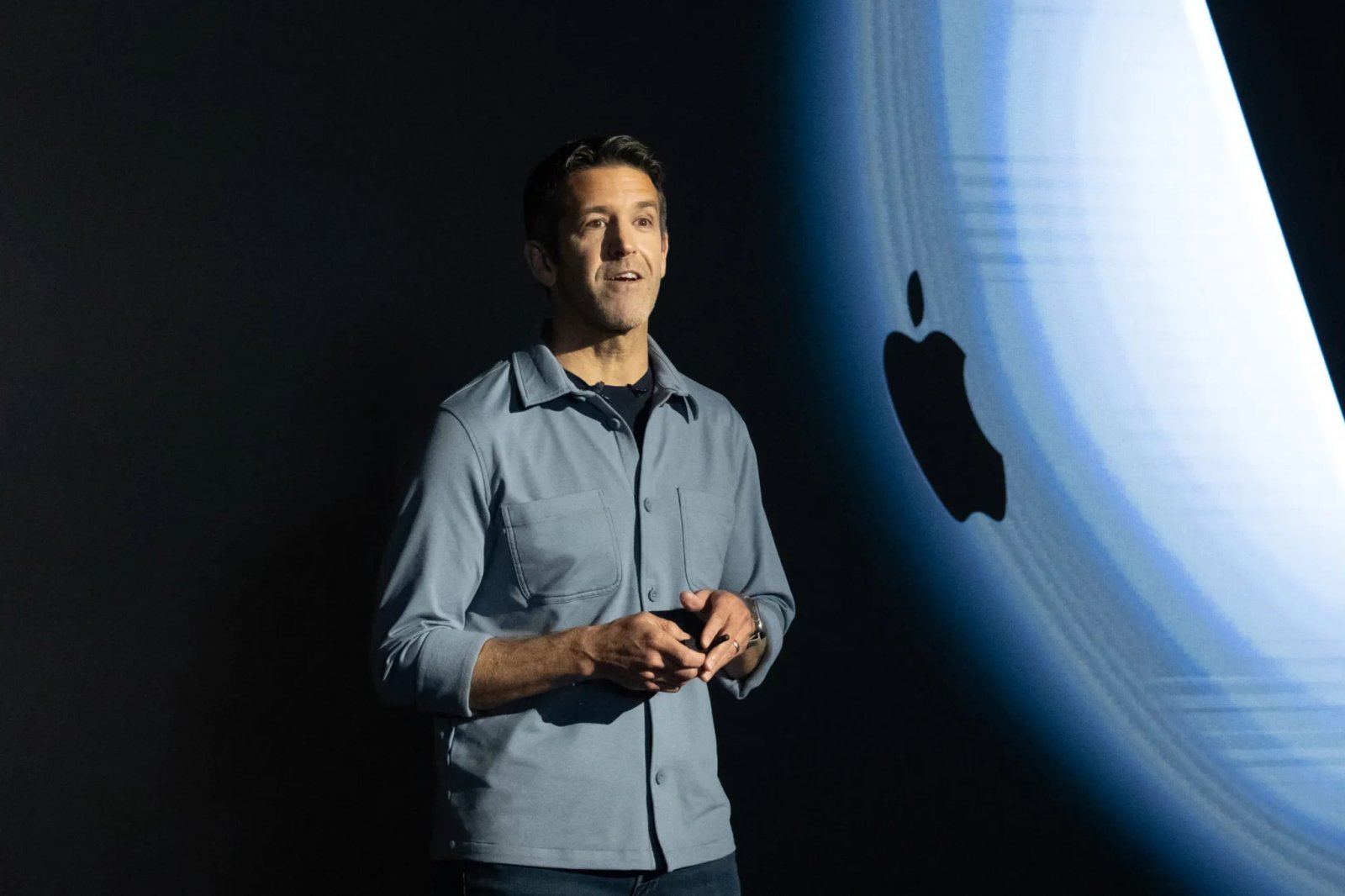
When John Ternus steps onto the stage at the Steve Jobs Theater on Apple Inc.’s Cupertino campus, the event will mark more than a standard annual hardware preview. It represents the official public debut of the company’s new chief executive, who inherits a complex landscape of supply chain bottlenecks, an evolving artificial intelligence strategy, and a high-stakes shift in consumer hardware design. Ternus, 51, officially assumed the chief executive role on Sept. 1, succeeding Tim Cook, who had led the company since 2011.
In an internal memorandum sent to employees on his first day as CEO, Ternus wrote that he was “so excited about everything we have in store,” adding that he was “just as excited about what lies beyond that, including the incredible products already in the works and the ones we haven’t even imagined yet that we’ll dream up and create together.” The focal point of the presentation is Apple’s first foldable smartphone, a release intended to refresh a hardware profile that has largely adhered to a standard glass-and-aluminum slab design since Steve Jobs introduced the original iPhone in January 2007. iPhone sales currently generate roughly half of Apple’s total annual revenue.
Industry observers note that Ternus takes the helm at a critical juncture for the world’s most valuable tech enterprise. “Everyone, whether you’re the kid at home saving their money for a new iPhone, or an analyst on Wall Street, will pay close attention to everything that Ternus says and does,” said Michael Gartenberg, an independent technology analyst and former Apple marketing executive. The launch schedule adjustments come as Apple navigates severe headwinds across its global supply chain. In July, Apple issued a lower-than-expected revenue outlook for its fiscal fourth quarter, explicitly citing component shortages and supply chain constraints.

Unlike Cook, who built his reputation as an operational and supply chain strategist, Ternus spent more than two decades in Apple’s engineering ranks. Having joined the company in 2001 to work on Mac display hardware, Ternus rose through the executive ranks to become Vice President of Hardware Engineering in 2021. In that role, he oversaw the hardware development of the iPad, AirPods, and recent iPhone generations, while managing Apple’s multi-year transition away from Intel processors to its custom M-series Apple Silicon. The tech industry is grappling with an acute global shortage of memory chips, driven by an unprecedented surge in demand for server-grade memory to power enterprise artificial intelligence infrastructure.
Expected to feature a specialized hinge system teased in event materials emphasizing “surprise and shine,” the foldable device enters a market established by rivals over the past several years. Samsung Electronics introduced its first commercial foldable device, the Galaxy Fold, in 2019, while Google entered the category with its Pixel Fold hardware in 2023. The competition for silicon capacity has pushed up component costs across consumer electronics. In response to those cost pressures, Apple recently executed price increases ranging from 15% to 33% across its Mac computer, iPad, and smart home product catalog.
Apple’s foldable device is expected to carry a starting price of approximately $2,000. That price point places it in direct competition with high-end foldables currently on the market, such as Samsung’s Galaxy Z Fold8, which carries a base price of $1,899.99, and the Galaxy Z Fold8 Ultra, which starts at $2,099.99. The company also implemented a $2 monthly price increase across several of its digital subscription services. Cook, prior to stepping down as CEO, referred to the industry-wide supply shock as a “100-year-flood” event.
While the high price point will likely concentrate early sales among premium consumers, analysts view the device as an essential effort to demonstrate technical leadership. Gartenberg noted that Apple’s recent launch events had fallen into a predictable pattern, but the foldable entry gives the company an opportunity to demonstrate a distinct architectural and hardware approach compared to existing Android devices. Beyond physical hardware, Wednesday’s keynote will outline the company’s updated strategy for artificial intelligence. Apple plans to release its upgraded Siri AI platform to consumers this fall following months of beta testing.
In addition to the foldable device, Apple is set to introduce its premium iPhone 18 Pro line. However, in a departure from Apple’s traditional release cadence, the entry-level base model iPhone 18 is not scheduled to reach the market until Spring 2027, according to an investment note published by Bank of America analysts. Originally acquired by Apple in April 2010 and integrated into the iPhone 4S in October 2011, Siri has faced increasing competition from advanced generative AI systems released by Google, Microsoft, and OpenAI.
Apple has occasionally staggered its product rollouts during major design transitions. In September 2017, Apple introduced the iPhone 8 and 8 Plus alongside the redesigned iPhone X, though the iPhone X did not ship until November of that year due to manufacturing complexity surrounding its OLED display and Face ID sensors. Similarly, during global supply disruptions in 2020, Apple released the iPhone 12 and 12 Pro in October, followed by the iPhone 12 mini and 12 Pro Max in November. Apple’s revamped Siri AI architecture relies on expanded contextual awareness, allowing the assistant to read and analyze data directly off a user’s screen, execute autonomous workflows across multiple third-party software applications, and process personal data tailored to individual user habits.
The decision to delay the standard iPhone 18 until 2027 breaks the company’s long-standing pattern of releasing full smartphone lines simultaneously each September. Bank of America analysts noted that while the split strategy could lift Average Selling Prices (ASPs) in the short term by steering early adopters toward high-end models, it “creates some risk that price-sensitive consumers defer upgrades until the lower-priced models arrive.” To deliver these capabilities, Apple is leveraging a hybrid processing model. Much of the underlying computation occurs locally on the device using the dedicated Neural Engine embedded in Apple Silicon chips, preserving privacy and reducing reliance on remote servers. However, for complex queries, Apple is utilizing external cloud partnerships, including technology developed in collaboration with Google.
The presentation at the Steve Jobs Theater will extend across Apple’s broader hardware portfolio. Beside the new phone lineup and software integrations, the company is scheduled to unveil the Apple Watch Series 12, featuring updated biometric sensors and refined chassis designs. The software updates arrive as competitors aggressively expand their consumer hardware footprints. Google has tightened the integration between its Gemini AI models and its native Pixel hardware, while OpenAI is pursuing hardware development in partnership with former Apple Chief Design Officer Jony Ive, who departed Apple in 2019.
While long-term hardware development cycles mean the products showcased this week were set in motion well before Ternus took the chief executive office, the event marks the official beginning of his leadership era as Apple attempts to open a new chapter in mobile computing. The company is also scheduled to unveil AirPods 5, updated with enhanced audio processing architecture, and Mac and Home Products, with preliminary refreshes for desktop silicon line-ups and connected home hardware.