

Dayton Truck Plant Layoffs Test Trump’s Ohio Working-Class Base
Canadian armored vehicle maker Roshel plans to double the workforce after 1,400 layoffs erased a year of Dayton-area job growth.
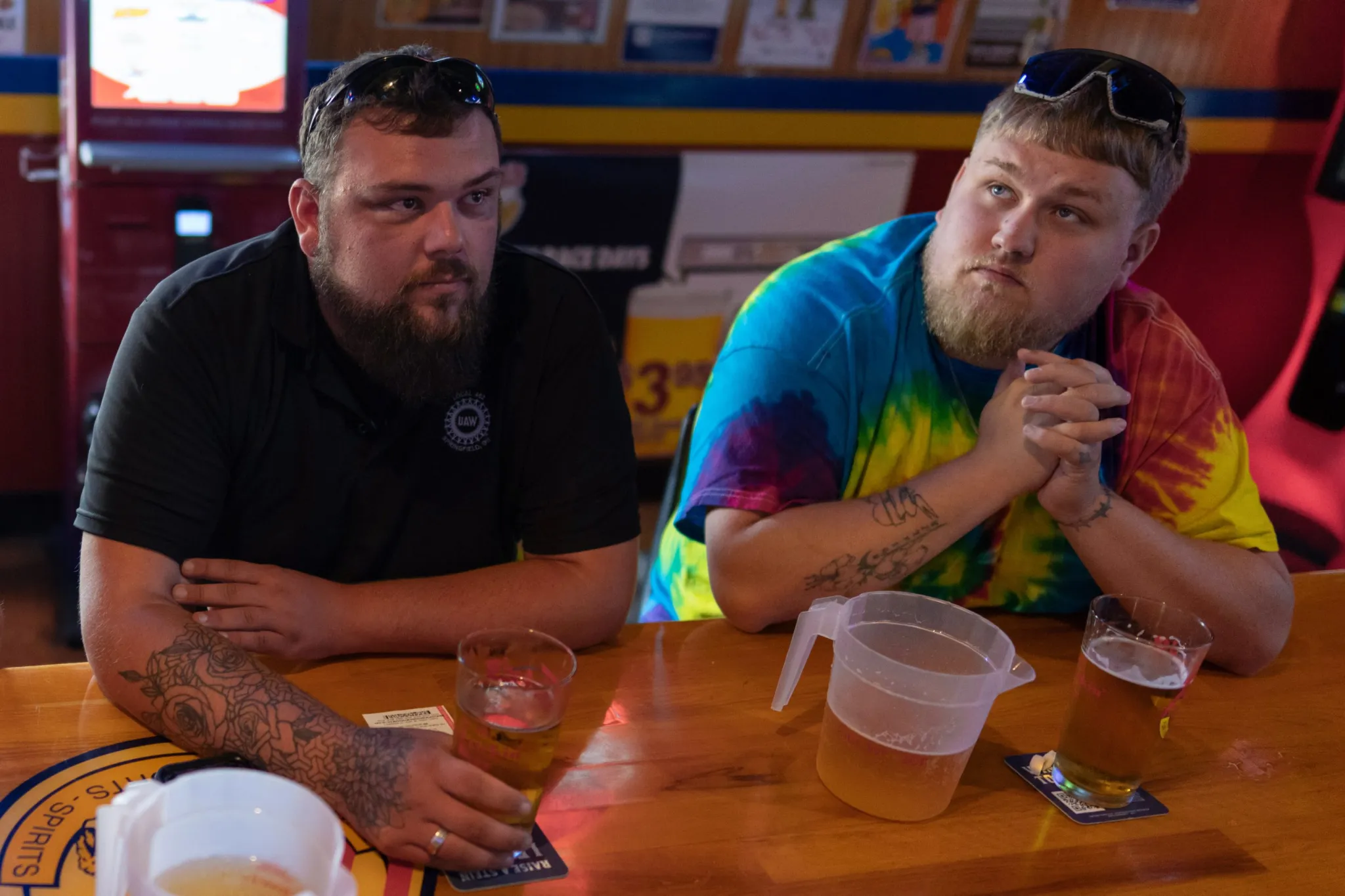
Roshel, a Canadian armored vehicle manufacturer, is acquiring the former Navistar truck factory in southwestern Ohio and has pledged to eventually more than double the facility’s workforce through a phased hiring process. The commitment follows the abrupt termination of nearly 1,400 employees on Wednesday, a mass layoff that effectively wiped out an entire year of job growth across the greater Dayton metropolitan area.
The timing places intense economic pressure directly beneath President Donald Trump, who is scheduled to hold a campaign rally at a nearby high school on Saturday. Trump has mapped out a 32-day stretch of rallies aimed at persuading voters that manufacturing is rebounding nationwide, but the shuttered plant floor just miles from his stage complicates that message. Only 17% of Americans currently approve of how the president is handling the cost of living, according to recent polling, and his proposal to distribute $5,000 checks if Republicans retain control of Congress has drawn sharp criticism from displaced workers who view the offer as dismissive of their immediate financial instability.
Dayton’s industrial trajectory makes it a critical barometer for the 2026 midterm elections. Once a global leader in patents per capita — producing the Wright brothers’ aircraft, the mechanical cash register and the electric car starter — the city of 137,000 has hemorrhaged roughly half its 90,000 factory jobs since 1990. The North American Free Trade Agreement initially accelerated the migration of auto parts manufacturing to Mexico, a trend that compounded sharply after China entered the World Trade Organization in 2001. The resulting collapse of steady wages fueled spikes in opioid addiction and crime that peaked following the 2008 financial crisis, leaving deep political scars that both parties are now attempting to leverage.


Former Navistar workers report that the administration’s broad tariff policies failed to generate enough demand to sustain operations before International Motors divested the facility. Legislative measures designed to boost working-class take-home pay, including provisions in the One Big Beautiful Bill that temporarily eliminated taxes on tips and overtime, offered minimal relief because production slowdowns had already eliminated available extra hours. Workers described resorting to buying marked-down meat for long-term freezer storage and canceling newspaper subscriptions and streaming services to manage household budgets.
Ohio’s U.S. Senate race is unfolding against this backdrop of economic anxiety. Republican Sen. Jon Husted is defending his seat against former Democratic Sen. Sherrod Brown, who lost his position two years ago and is attempting a political comeback by channeling voter frustration over inflation and the ongoing Iran war. Control of the Senate could hinge on the outcome.
State-level candidates are scrambling to demonstrate tangible relief. Republican State Rep. Andrea White recently helped push through a temporary suspension of Ohio’s 38.5-cent-per-gallon gas tax while emphasizing the GOP-led legislature’s efforts to flatten state income taxes and cap property tax increases. Democrats see an opening to break the Republican supermajority in the Ohio House. Rose Lounsbury, a former teacher running again as a Democratic state representative candidate, argues that voters are desperate for access to a middle-class standard of living they feel has been structurally dismantled.
Despite the manufacturing losses, the broader Dayton economy has stabilized over the past decade, driven largely by federal defense spending rather than trade policy. Wright-Patterson Air Force Base now directly employs 38,000 people, functioning as the region’s primary economic engine. Its aerospace research capabilities have attracted private-sector investment from companies including Joby Aviation, Sierra Nevada Corporation and Electra, which announced an $850 million local investment. The White House cited these corporate commitments, alongside announcements from Honda and Stellantis, as evidence that current policies are successfully generating employment. Jeff Hoagland, CEO of the Dayton Development Coalition, noted that leveraging the base’s output required sustained bipartisan effort spanning two decades.
Downtown revitalization projects, including residential loft conversions and the restoration of the historic glass-domed Dayton Arcade into retail and dining space, signal a transition toward a service and technology economy. Yet for United Auto Workers members who built their livelihoods assembling heavy trucks, the pivot offers little immediate comfort.
Displaced employees anticipate being recalled within six to 12 months as Roshel transitions the plant to armored vehicle production. Union organizers have intensified door-to-door canvassing in suburbs like Kettering, targeting retirees and active members whose financial security was severed overnight. For many former three-time Trump voters in the union ranks, the combination of grocery inflation and sudden unemployment has fractured previous allegiances, with several stating they plan to vote Democratic in November. The Canadian firm confirmed in a written statement that it is coordinating with all stakeholders to protect the existing labor pool during the ownership transfer.









