CEOs Outsourcing Emails to AI Risk Losing Employee Trust
Research links automated executive messaging to declining employee confidence and reduced cognitive engagement among corporate leaders.

A growing number of chief executives are handing over their inboxes and public communications to artificial intelligence, a shift that leadership experts warn is eroding the very trust required to manage modern workforces.
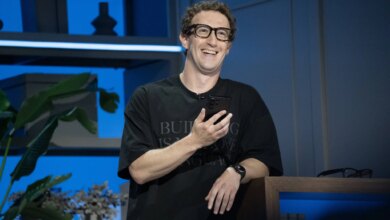
More than two-thirds of business leaders in the United States and the United Kingdom now rely on AI to summarize documents, while 58% use the technology to draft emails, according to survey data from General Assembly and coaching firm EZRA. The practice has reached the highest levels of Silicon Valley. LinkedIn CEO Ryan Roslansky uses AI for nearly every high-stakes message he sends. Microsoft CEO Satya Nadella deploys AI agents to process his inbox and brief him before meetings. Meta CEO Mark Zuckerberg is reportedly developing an AI clone trained on his personal tone and mannerisms to field questions from staff.
For executives managing constant demands from investors, boards, regulators, and employees, delegating communication offers immediate relief. David Meadvin, a former Senate speechwriter who runs the executive advisory firm One Strategy Group, notes that condensing information for leadership has always been standard practice. But he warns that AI output remains “reliably average” and risks diluting the distinct thinking that separates exceptional leadership from competent management.


That distinction matters more now than it did a decade ago. The Edelman 2026 Trust Barometer found that 73% of employees believe CEOs have a direct obligation to build trust and bridge societal divides within their organizations. Only 44% said their current leaders were executing that responsibility effectively.
David Shelley, CEO of book publisher Hachette, argues that leaning on algorithms to write corporate messages will widen this gap. He predicts a sharp dissonance between how executives appear in polished, machine-generated statements and how they behave in unscripted moments. Employees detect synthetic messaging quickly, according to Natalie Sutton, a communications consultant and executive coach. “Fluency is becoming cheap. Sincerity is becoming scarce,” Sutton said. A slightly flawed email written directly by a CEO routinely outperforms a grammatically perfect message generated by software because workers recognize the human origin.
The consequences extend beyond corporate reputation into cognitive function. Researchers tracking the phenomenon known as cognitive offloading have linked heavy reliance on generative AI to diminished critical thinking. A 2025 MIT Media Lab study found that participants who drafted essays using ChatGPT demonstrated the lowest brain engagement of any test group, with most unable to recall or quote from the text they had just produced.
Sutton argues that skipping the first draft prevents executives from discovering what they actually believe about complex issues. When information arrives pre-digested, leaders lose the capacity to sit with ambiguity long enough to form independent judgments, raising the prospect of a generation of managers capable of approving strategies but unable to construct them.
This cognitive shortcut collides with historical evidence linking deep reading to executive performance. Warren Buffett famously advised Columbia Business School students in 2000 to read 500 pages daily, comparing knowledge accumulation to compound interest. Bill Gates reads roughly 50 books annually. A JPMorgan report identifies reading as the most commonly cited habit among billionaires. Yet attention spans are contracting. Polling conducted in 2025 by the U.K. charity Reading Agency found that 46% of British adults struggle to focus on reading due to distractions, and 19% reported a measurable decline in concentration over the previous three years.
Psychologists David Comer Kidd and Emanuele Castano of the New School for Social Research previously established that reading literary fiction improves a person’s ability to interpret the emotions of others—a skill essential for executives navigating board disputes, labor negotiations, or public crises. Shelley contends that outsourcing comprehension to AI degrades intellectual curiosity and empathy, producing a weaker C-suite precisely when companies need sophisticated judgment.
Not all industry leaders view the shift as purely destructive. Daniela Amodei, president and cofounder of Anthropic, has argued that because AI models already excel at technical and quantitative tasks, human qualities such as emotional intelligence and curiosity are becoming premium assets. Under this framework, automation could force a renaissance in soft skills by stripping away rote administrative work.
Meadvin maintains that reading broadly remains essential for protecting executive mental health and perspective during periods of constant market disruption. Anthropic continues to expand its enterprise AI offerings throughout 2026, positioning its models for deeper integration into corporate workflows even as researchers publish new data on the neurological costs of automated cognition.