Saltine-Crusted Fried Chicken: The Southern Breading Method
How crushed crackers, potato flakes, and precise oil temperatures create a craggy Southern crust without flour
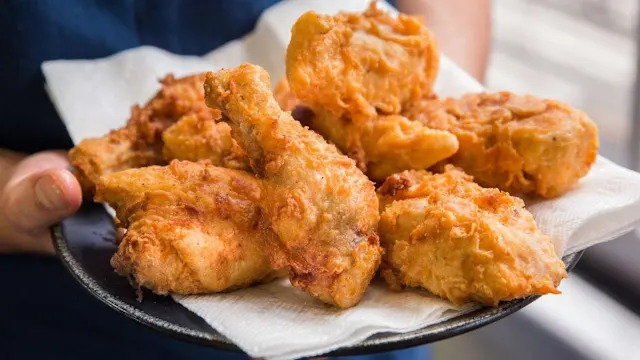
Southern home cooks have long bypassed flour and breadcrumbs in favor of crushed saltine crackers to coat fried chicken, producing a thick, craggy crust that shatters differently than standard batters. Unlike the ultra-thin, glass-like shell achieved with tapioca starch — a technique popularized across TikTok by chefs seeking gluten-free crunch — saltines deliver a heavier, deeply savory coating rooted in 19th-century American pantry staples.
F.L. Sommer and Company introduced the modern saltine in 1876 by adding baking soda to traditional hardtack dough. That chemical leavening transformed dense ship’s biscuit into an airy, shelf-stable cracker that became ubiquitous in American kitchens. Because saltines are pre-baked and already contain fat and salt, they brown faster and carry more inherent flavor than raw wheat flour when submerged in hot oil. This makes them particularly effective for pan-frying or shallow-frying, where the crust needs to set quickly before the meat overcooks.
The mechanics of a saltine crust rely on texture variation. Cooks typically crush two sleeves of crackers using a food processor or a rolling pin inside a sealed plastic bag, intentionally leaving irregular chunks. Those jagged pieces fry into distinct, crispy nodes across the surface of the chicken. After seasoning the raw poultry, it passes through a standard egg wash before being pressed firmly into the cracker crumbs.


While saltines function perfectly as a standalone breading, regional variations frequently blend them with other dry ingredients to alter the final texture. Instant potato flakes are a common addition throughout the Deep South. Dehydrated potatoes absorb moisture rapidly during frying, creating microscopic air pockets within the crust that yield a lighter bite despite the heavy cracker base. Boxed pancake mix is another frequent partner; the sugar, powdered milk, and additional leavening agents in commercial pancake blends accelerate Maillard browning and introduce subtle sweetness that balances aggressive spice rubs.
Because saltines possess a relatively neutral profile compared to seasoned commercial coatings, the seasoning must happen elsewhere in the process. Adding a few drops of vinegar-based hot sauce directly into the egg wash distributes acidity and heat evenly without thinning the binding liquid. Dry pantry staples — garlic powder, smoked paprika, white pepper, and dried Italian herbs — are typically whisked into the crushed crackers before dredging. Monosodium glutamate remains a widely used ingredient among experienced fry cooks to amplify umami depth in the absence of buttermilk marinades.
Maintaining oil temperature between 325 and 350 degrees Fahrenheit prevents the pre-baked cracker particles from scorching before the chicken cooks through. Peanut oil or refined vegetable shortening provides the high smoke points necessary for this method. Once the internal temperature of the thickest pieces reaches 165 degrees Fahrenheit, the chicken should rest on a wire rack rather than paper towels to preserve the structural integrity of the uneven saltine crust.