Voyageurs National Park: America’s Only Water-Based Park Remains Unknown to Most Minnesotans
The only roadless national park in the Lower 48 offers solitude, history, and northern lights — if you can find it
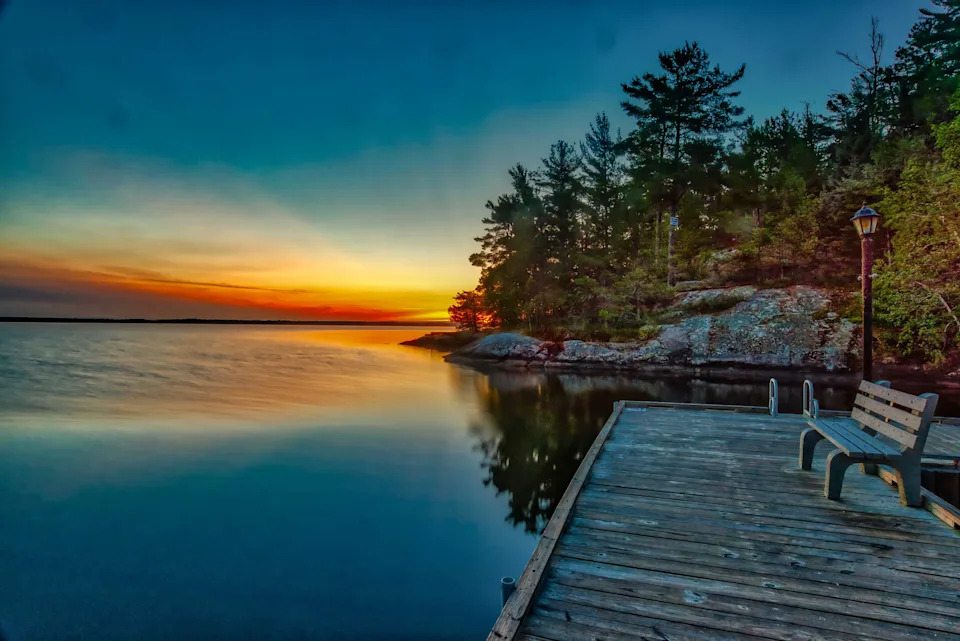
INTERNATIONAL FALLS, Minn. — Jason Sheehan pilots his boat through a channel between pine-covered islands on Lake Kabetogama, the wake cutting through water so still it reflects the shoreline like glass. The owner of The Pines of Kabetogama resort has made this trip countless times, but one statistic still stops him cold: 90% of Minnesota residents, he estimates, have never heard of the national park in their own backyard.
A week later, in Duluth — three hours south — the claim holds up. “What’s that?” respond two recent visitors to the region when asked about Voyageurs National Park.
The anonymity is striking for a park that holds a singular distinction in the National Park System: the only unit in the Lower 48 with no roads penetrating its interior. Established in 1975, Voyageurs spans 218,000 acres along the Minnesota-Ontario border, a labyrinth of four major lakes — Rainy, Kabetogama, Namakan, and Sand Point — plus Crane Lake, 26 smaller inland lakes, and more than 500 islands. Rainy Lake alone stretches 60 miles with 929 miles of shoreline.

“It’s an inland sea,” says Sheehan. “You could spend years exploring and not see it all.”
The park’s roadless character stems from geography and history. French-Canadian voyageurs — the fur traders who give the park its name — paddled these waterways in 36-foot birchbark canoes hauling three tons of trade goods. The Ojibwe navigated them for millennia before that. When Congress authorized the park in 1971, the water-based access was preserved by design.
Today, that same constraint creates a paradox: a wilderness experience accessible to novices. Four visitor centers — Rainy Lake, Kabetogama Lake, Ash River, and the newly opened Crane Lake facility — offer free boat launches and ranger-led tours ranging from 90 minutes to 6.5 hours. Private outfitters rent everything from kayaks to houseboats that function as floating hotels, complete with route guidance for first-time boaters.
“People think they need their own boat,” says Sheehan. “They don’t.”
Visitation numbers tell the story of obscurity. Voyageurs recorded 243,000 recreation visits in 2023 — a fraction of the 3.3 million at Yellowstone or even the 600,000 at nearby Isle Royale, another water-access park in Lake Superior. But the comparison misses the point. With 655 miles of undeveloped shoreline, Voyageurs offers a ratio of roughly one boat per mile at peak summer, a solitude metric few parks can match.
The seasonal calculus is shifting. Late August through early October has emerged as the optimal window: insects vanish, fall color ignites the boreal forest, and summer crowds evaporate. Winter brings a different park entirely — 110 miles of groomed snowmobile trails, cross-country ski routes, ice fishing on frozen lakes, and some of the darkest skies in the continental U.S. for northern lights viewing.
Gateway communities have adapted. The historic Kettle Falls Hotel, operating since 1913 and accessible only by boat, serves cheese curds and blueberry pie at the park’s only in-park lodging. Thunderbird Lodge on Rainy Lake draws diners from 100 miles away for prime rib and candied pecan salad. The Rocky Ledge, a knotty-pine local hangout, turns out walleye sandwiches and wild rice casserole.
Climate change looms over the park’s future. Warming winters have shortened the ice season by two weeks since 1970, threatening the winter recreation economy and the ecological processes that define the boreal boundary. The park’s namesake waterways — critical habitat for lake sturgeon, moose, and the highest density of breeding common loons in the Lower 48 — face pressure from invasive species and fluctuating water levels managed by international treaty.
For now, the park remains a place where cell service dies at the shoreline. The Crane Lake Visitor Center, completed in 2024 after years of planning, represents the largest infrastructure investment in a decade — a signal, perhaps, that the secret is slowly getting out.