Binance Pivots to Tokenized Stocks and AI Trading as Crypto Winter Forces Strategic Shift
Exchange bets on regulated assets and automation to survive crypto winter and reach unbanked investors
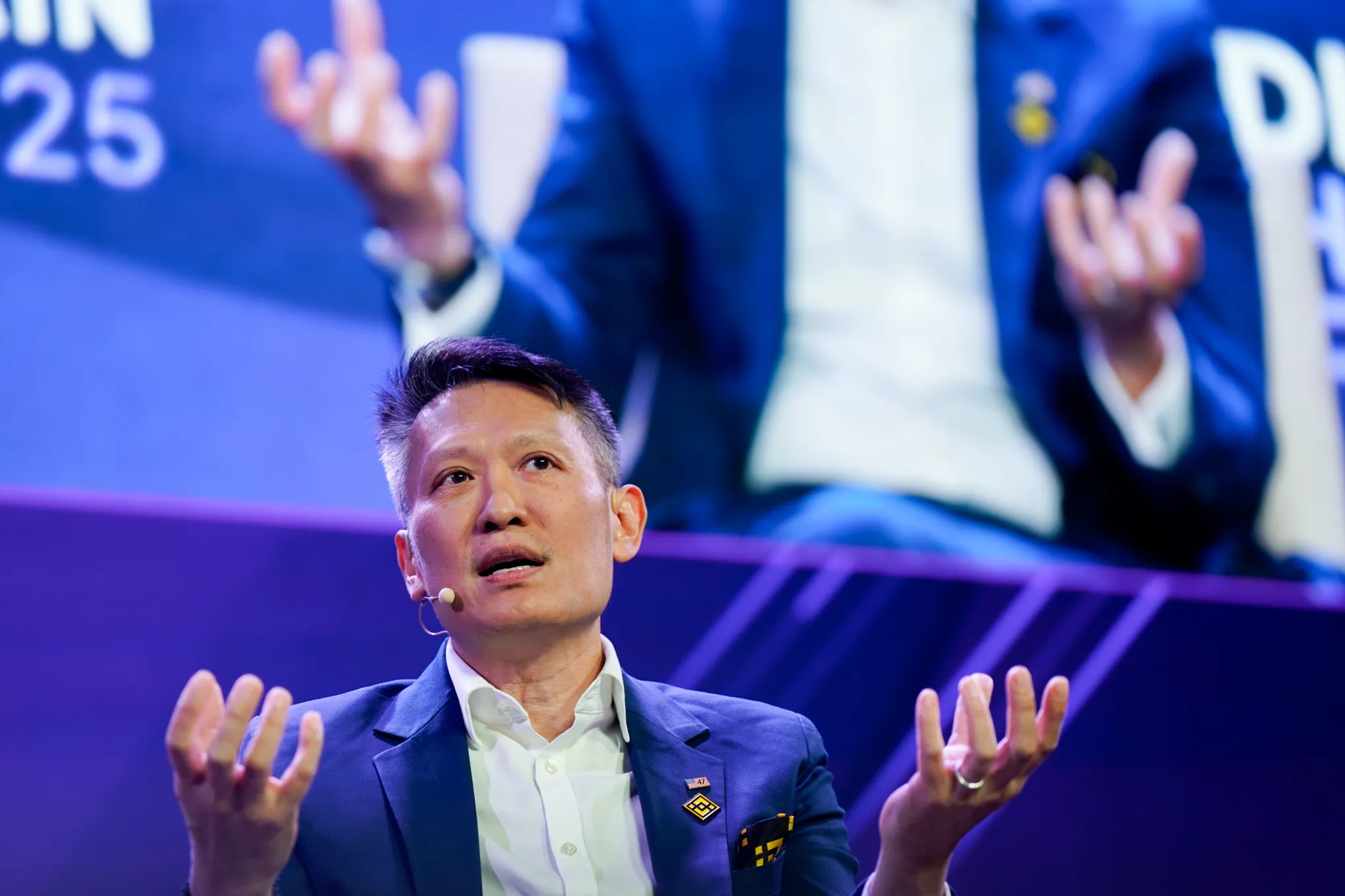
SINGAPORE — Binance is aggressively expanding beyond cryptocurrency into tokenized equities, commodity derivatives, and AI-driven trading tools, a strategic pivot designed to insulate the world’s largest crypto exchange from a prolonged digital-asset downturn and position it for a future where traditional finance and blockchain converge.
Speaking at the TOKEN2049 conference here, Chief Executive Richard Teng said the platform is “weatherproofing” itself by responding directly to user demand for exposure to global equity markets — specifically the top stocks in Hong Kong, South Korea, Taiwan, and Brazil — without the geographic and capital barriers that have historically excluded investors in emerging economies.
The exchange this year launched trading in tokenized U.S. shares and commodity derivatives, including precious metals and oil. It also rolled out pre-IPO perpetual futures settled in USDT, allowing speculation on the expected valuations of private companies such as Anthropic. Later this month, Binance will debut Binance AI Pro, an automated assistant that handles market analysis, strategy execution, and position management.


“It has been a great leveler,” Teng said of the AI tools. “But the nature of trading will be different.”
The move mirrors a broader industry scramble. Coinbase, which posted a $359.5 million net loss in the second quarter — its third consecutive quarterly loss — introduced traditional stock trading, perpetual futures, and prediction markets last December as part of its push to become an “everything exchange.” OKX last week announced plans to offer tokenized shares in dozens of U.S. companies through a joint venture with Intercontinental Exchange, alongside a new stablecoin-focused app.
Bitcoin and other major cryptocurrencies remain well below the peaks reached in October 2025, squeezing transaction revenue across the sector. Exchanges are betting that diversifying into regulated, yield-bearing assets will attract institutional capital that has largely stayed on the sidelines.
“The first 3% of adopters didn’t need certainty, and they didn’t want certainty,” Teng said. “But for crypto to go mainstream, we need not just retail investors, but also sophisticated institutions that want clear rules and regulations they can operate within.”
That philosophy is rooted in Teng’s own trajectory. A former central banker at the Monetary Authority of Singapore and later CEO of the Financial Services Regulatory Authority at Abu Dhabi Global Market, he was appointed to lead Binance in November 2023 after founder Changpeng “CZ” Zhao pleaded guilty to U.S. anti-money-laundering and sanctions violations. Binance paid $4.3 billion in penalties; Zhao served four months in prison and paid a $50 million fine before receiving a presidential pardon.
Teng frames tokenization as a financial-inclusion tool. Roughly 1.3 billion adults globally lacked a formal bank account as of 2025, according to the World Bank. In regions where brokerage access is limited or nonexistent, Binance functions as a de facto shadow bank — offering savings products, yield generation, cross-border payments, and now fractional access to global equities with low entry thresholds.
“Many people are still constrained by the geography that they are born in,” Teng said. “If we tokenize U.S. stocks, these people can get exposure to companies around the world they may not have had access to previously.”
Traditional financial firms are simultaneously embracing digital assets, accelerating the blur between the two worlds. The convergence hinges on regulatory clarity — the very condition Teng argues is necessary for the next wave of adoption. Whether regulators in Washington, Brussels, and Singapore provide that framework will determine if the “everything exchange” model becomes the industry standard or remains a regulatory gray zone.