
Mercedes GLB Interior Review: Massive Screens Can’t Hide Volkswagen-Style Cost Cutting
High-tech presentation meets frustrating everyday controls
The front-door armrest switchgear sits below a cabin dominated by glowing screens. Our preferred trim is AMG Line Executive, although its advantages become clearer only when the higher trims’ extra technology is used day to day.
AMG Line Premium introduces the passenger superscreen, 20-inch wheels, electric front-seat adjustment with memory settings, dual-zone climate control and adaptive suspension. AMG Line Premium Plus adds adaptive Multibeam headlights, a Burmester sound system, a heated steering wheel and a head-up display.
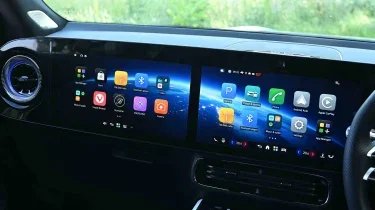
That passenger display is unusual equipment in this class. The Mercedes GLB passenger superscreen gives the front passenger a dedicated screen, while rivals such as the Audi Q4 e-tron, BMW iX1 and Tesla Model Y continue to use a single central panel or do not offer the same kind of passenger-facing display.

Lower down, the GLB’s cabin uses some harder plastics. Most versions have Artico man-made leather, while the base model adds fabric upholstery and real leather is available as an option. Trim finishers vary between models, with the matt white natural finish on AMG Line Premium Plus cars standing out.
Above those materials, digital displays play a major role. Every car has a high-resolution 14-inch screen at the centre of the upright dashboard. Premium and Premium Plus models add a second 14-inch touchscreen for passengers, with both displays set into shiny black plastic surrounds. Stylised air vents with LED illumination sit at either end, and ambient lighting extends across the cabin with adjustable colours and brightness levels.
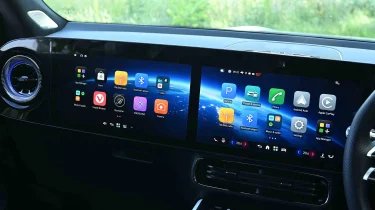
The 10.25-inch driver’s display completes the multi-screen layout. It gives the GLB a more elaborate digital presentation than compact luxury SUVs with a single-panel dashboard, but it also leaves more everyday functions inside the interface.
In use, Mercedes’ MBUX system responds to voice commands, including requests for current efficiency readings in different units. Its sensitivity can become irritating when it hears the trigger phrase during a conversation between passengers. Voice control can be deactivated or limited to the microphone button below the central air vents.
That button sits beside the hazard-warning switch, with further shortcuts for the home screen, climate menu and drive settings. The arrangement gives the driver some physical access to important functions, although the heated rear screen is available only through the main display. The windscreen-defrost button is physical, but the rear defroster is not.
The shared window control on the front door creates a similar compromise. Instead of four individual window switches, Mercedes uses one combined switch and a button to select between the front and rear windows. It adds an extra step to a routine action. The layout follows a decision already seen in Volkswagen’s ID line, despite the wider consumer backlash against capacitive and shared controls there.
That contrast runs through the range. AMG Line Executive keeps the sportier interior and exterior styling and more supportive sports seats without making the cabin dependent on every available digital extra. Premium adds the passenger screen, larger wheels and adaptive suspension, while Premium Plus layers on lighting, audio and display upgrades. The hardware grows more impressive, but the physical controls remain subject to the same interface compromises.