

Apple’s iPhone Handoff Puts a Second Phone on One Cellular Line
One number, two iPhones, new carrier fees
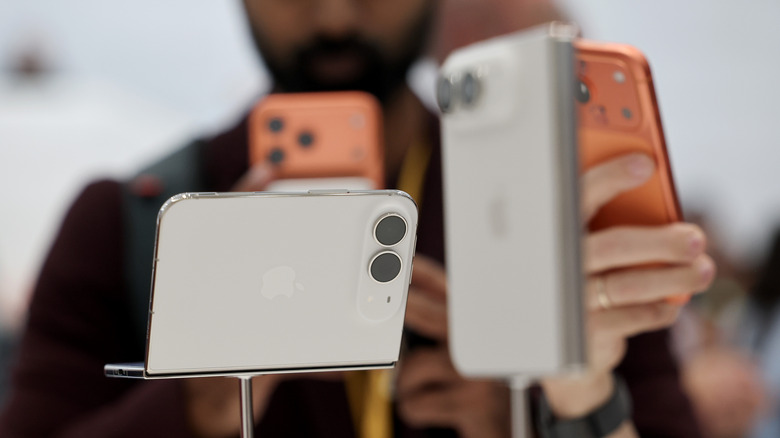
CUPERTINO, Calif. — Apple is expanding its Continuity ecosystem with iPhone Handoff, a dual-device cellular feature arriving with iOS 27. It allows subscribers to use one phone number across two separate iPhones, while carriers create new service tiers for the capability.
T-Mobile is the first U.S. carrier to confirm pricing, charging $5 per month to provision a secondary handset on an existing line. Germany’s Telekom has also confirmed launch support in Europe, and additional international carriers are expected to follow as network infrastructure updates are deployed.
The feature was first previewed at Apple’s Worldwide Developers Conference (WWDC) and formally detailed during the company’s “Surprise and Shine” event on Sept. 9. Unlike earlier Continuity functions, iPhone Handoff moves multi-device cellular provisioning into the mobile operating system’s core architecture.

Apple introduced Continuity in 2014 with iOS 8 and OS X Yosemite, enabling phone calls and SMS messages to relay from an iPhone to a Mac or iPad on the same local network. Universal Clipboard arrived in 2016 with iOS 10 and macOS Sierra, followed by Auto Unlock through Apple Watch, display extension through Sidecar, and hardware integration through iPhone Mirroring in macOS Sequoia.
The earlier call-relay system depended on a primary iPhone broadcasting data over Wi-Fi to secondary hardware. With iPhone Handoff in iOS 27, either smartphone can handle direct cellular traffic independently after authentication. Carrier support remains mandatory: unauthenticated secondary devices and carriers without compatible entitlement servers cannot initialize the shared cellular connection.
The primary iPhone retains the main embedded SIM (eSIM) and master carrier configuration settings. A secondary iPhone uses coordinated eSIM provisioning authorized by a supporting carrier. T-Mobile’s $5 monthly charge covers the back-end routing that mirrors incoming and outgoing voice calls, Short Message Service (SMS) texts, and carrier-level services across both devices without requiring separate primary rate plans.
Wireless carriers have long charged supplemental fees for multi-device line sharing, particularly since the cellular-enabled Apple Watch Series 3 launched in 2017. That device typically carries a $10 monthly connection fee across major U.S. networks. iPhone Handoff extends the same general framework to full-featured smartphones.
Both handsets must run iOS 27 or later. During initial configuration, they must be positioned adjacent to one another, connected to the same Wi-Fi network, and authenticated under the same Apple Account across iCloud, FaceTime, and iMessage.
The user begins with both target iPhones unlocked and placed together. On the designated secondary phone, the path is Settings > Cellular, followed by Set Up Cellular, Add eSIM, or iPhone Handoff. Choosing “Use Number on This iPhone and Another” starts the cryptographic handshake between the hardware and the carrier’s provisioning servers, after which on-screen prompts identify the handset that will hold the main carrier profile.
Apple has placed the switching mechanics in the native user interface. Unlocking the secondary phone activates it, and a real-time status badge appears in the Dynamic Island, just below the Wi-Fi signal indicator, to confirm that cellular identity has migrated to the active handset.
Applications, iCloud data, and Apple Pay credit and debit cards synchronize broadly between the devices, but hardware and security boundaries prevent complete parity. Government-issued digital identification cards, driver’s licenses, and certain transit passes stored in Apple Wallet do not replicate because Apple’s hardware security architecture isolates those credentials within the Secure Enclave of the physical device where they were originally provisioned, complying with anti-cloning security protocols.
An Apple Watch also remains tied to its original host iPhone. iPhone Handoff does not automatically re-pair the smartwatch between devices, regardless of which handset is handling cellular traffic.
Replacing either iPhone requires manual eSIM profile migration to the new device. Completely unlinking or disabling iPhone Handoff requires account-level intervention through the mobile carrier.
The feature is intended for several consumer and enterprise scenarios. Enterprise fleets using mobile device management (MDM) platforms can apply single-number routing to field personnel who alternate between standard handsets and specialized or ruggedized mobile hardware.
For consumers, iPhone Handoff simplifies hardware transitions between older and newer models. It also supports users who maintain different device form factors, including a standard iPhone paired with high-end hardware such as the $2,000 dual-screen iPhone Duo, as well as travelers using a lower-cost secondary handset in places where device loss or damage is a heightened risk.










2 Comments