

Apple’s iPhone Duo Brings Split-Screen Multitasking and Apple Pencil Support
Apple’s first foldable iPhone combines iPad-style productivity with adaptive displays and new camera tools
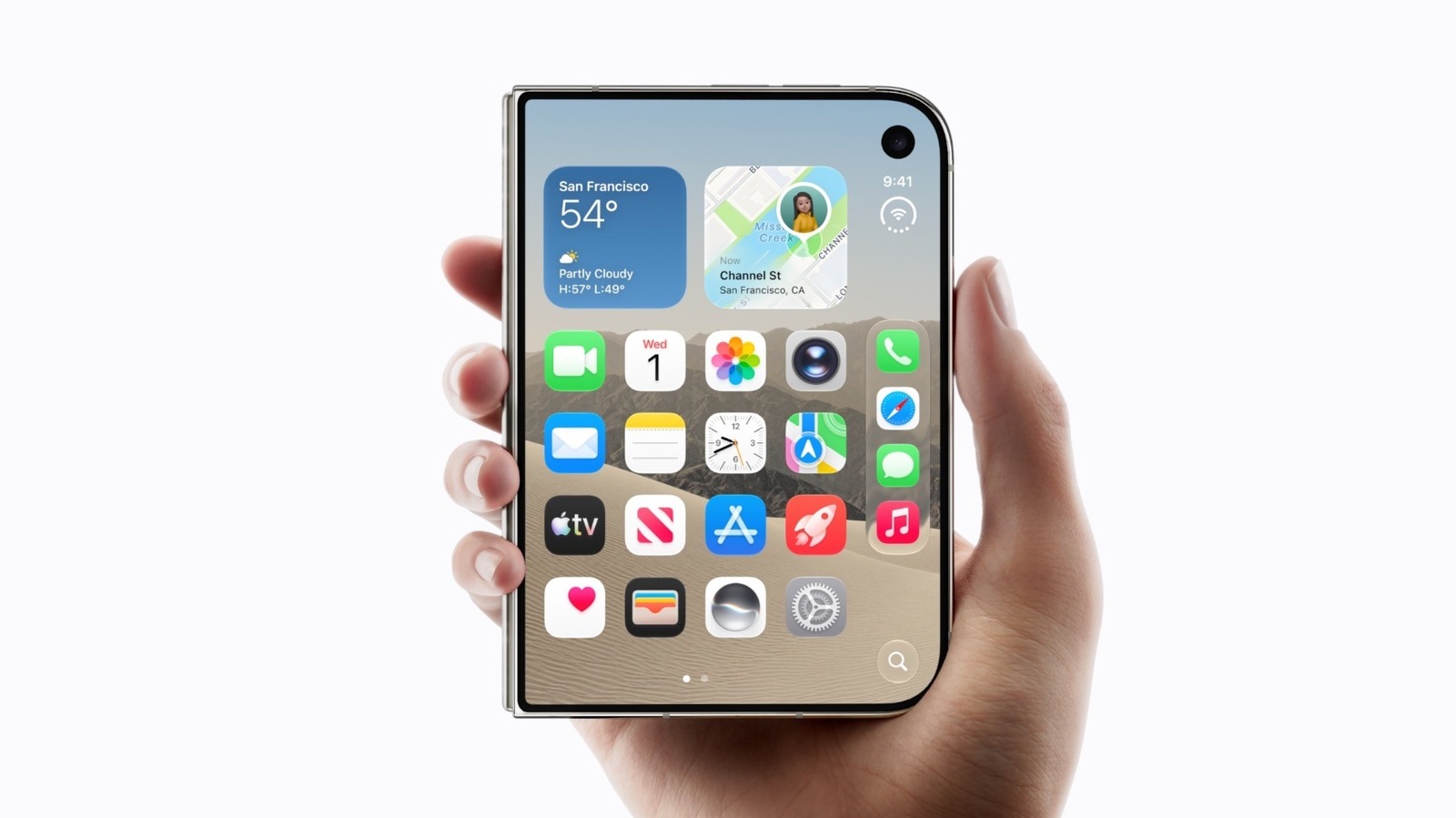
CUPERTINO, Calif. — Apple is scheduled to release the “iPhone Duo” in October, marking the company’s first foldable smartphone. The device enters a category pioneered by rivals including Samsung and Google while attempting to combine the portability of the iPhone with the utility of the iPad.
The foldable’s external display can function as a live viewfinder, allowing users to frame high-resolution self-portraits with the main rear camera array or show subjects how they look before a photo is taken. During FaceTime calls, the iPhone Duo can also stream video from its front-facing and rear cameras simultaneously, using the exterior screen to bring bystanders into the call.
Apple is positioning the device around productivity and mobile multitasking rather than treating it simply as a luxury novelty. Its larger, flexible inner display supports two applications side by side. Users can pin the active Home Screen to one half while interacting with a running app on the other, making it easier to manage files, text, and images across applications.


The iPhone has supported background app processing since iOS 4 arrived in 2010, but it has historically lacked true split-screen capabilities, requiring users to switch between active windows. The iPhone Duo does not use “Stage Manager,” the overlapping-window system introduced with iPadOS 16 and macOS Ventura in 2022.
The device’s physical layout also changes how its software behaves. When partially folded, it enters a split-input mode in which typing tools and secondary controls move to the bottom half of the display. The lower section becomes a virtual keyboard, while media playback or document views remain on the top half.
Apple has also designed a “tent mode.” Propped on a flat surface like an A-frame, the iPhone Duo can serve as an ambient bedside clock, with the inner display gradually illuminating when programmed alarms are triggered.
Official Apple Pencil support is another major change. Since the stylus debuted in 2015 with the original iPad Pro, compatibility has been limited to Apple’s tablet lineup. Extending it to the iPhone Duo changes Apple’s mobile input approach and directly challenges Samsung’s use of the S-Pen on its Galaxy Z Fold series.
The redesigned interface moves the traditional top-aligned status bar to the right edge. Cellular signal strength, Wi-Fi connectivity, and battery percentages appear there in one clustered graphic intended to maximize screen real estate. The same vertical margin houses the system Dock and the Dynamic Island interface, bringing secondary navigation tools together along the inner display’s right side.
Software also tracks the angle of the physical hinge. Interactive elements, text fields, and buttons automatically move away from the center crease so users do not have to tap on the flexible joint, addressing a common usability problem in existing foldable designs.
For photography, Apple has introduced “Smart Take,” an artificial intelligence-driven feature that automatically captures photos when subjects pose, removing the need for manual shutter taps or countdown timers. Parents can use “Kid Cue,” which displays a customized Snoopy animation on the external screen to attract a child’s attention during a photo shoot.
“Kid Cue” builds on Apple’s existing partnership with Peanuts Worldwide, which previously brought animated Snoopy faces to watchOS 10 in 2023. A similar attention-grabbing function appears on Google’s Pixel 9 Pro Fold, whose outer screen uses a visual cue called “Made You Look.”
The dual-screen architecture enables these camera configurations, but fitting sophisticated optics into a folding chassis also creates compromises. Compared with Apple’s standard flagship smartphones, the iPhone Duo lacks some advanced camera features that debut on the concurrent iPhone 18 Pro.
Specifically, the foldable does not include the new variable-aperture lens system, which is designed to mechanically control light entry and depth of field. It also omits the advanced “Pro” manual controls reserved for Apple’s top-tier standard flagship.
The October rollout will test consumer appetite for this trade-off, as Apple bets that the productivity benefits of a pocketable, stylus-compatible hybrid device will outweigh the omission of its absolute best camera hardware.





One Comment