AMD Quietly Solved Shader Stutter Months Ago While Nvidia Users Still Need Third-Party Tools
Radeon drivers quietly eliminated UE4 shader stutter months ago; GeForce owners still rely on community tools
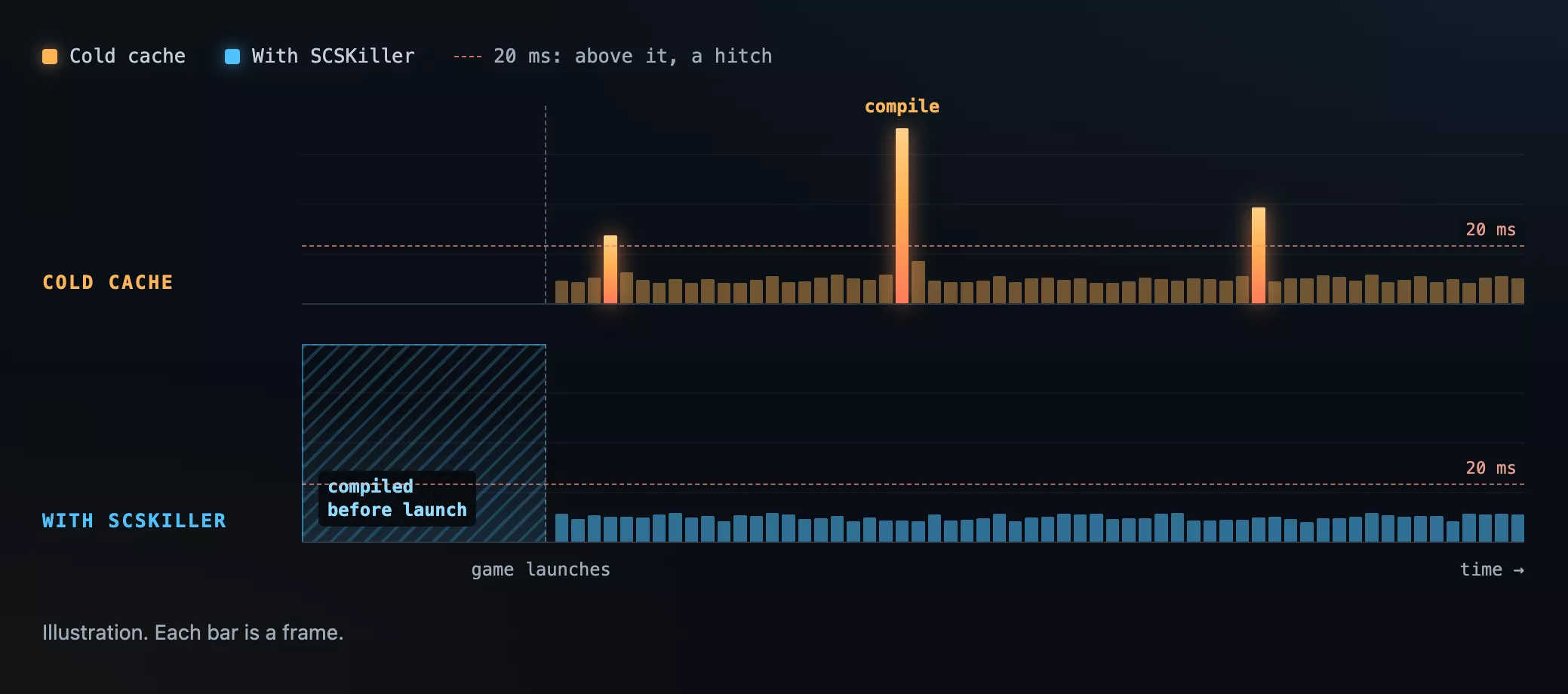
A free utility called SCSKiller promises to eliminate shader compilation stutter by pre-compiling graphics pipelines before you launch a game. Our testing confirms it works — sometimes dramatically — on Nvidia hardware. But the real story emerged when we swapped an RTX 5090 for a Radeon RX 9070 XT.
AMD’s Adrenalin 26.9.2 driver, released months ago, already handles background shader compilation for Unreal Engine 4 titles including Tiny Tina’s Wonderlands, Borderlands 3, and Cyberpunk 2077. The same games that stutter badly on GeForce GPUs without third-party intervention run smoothly on Radeon hardware straight from a fresh driver install.
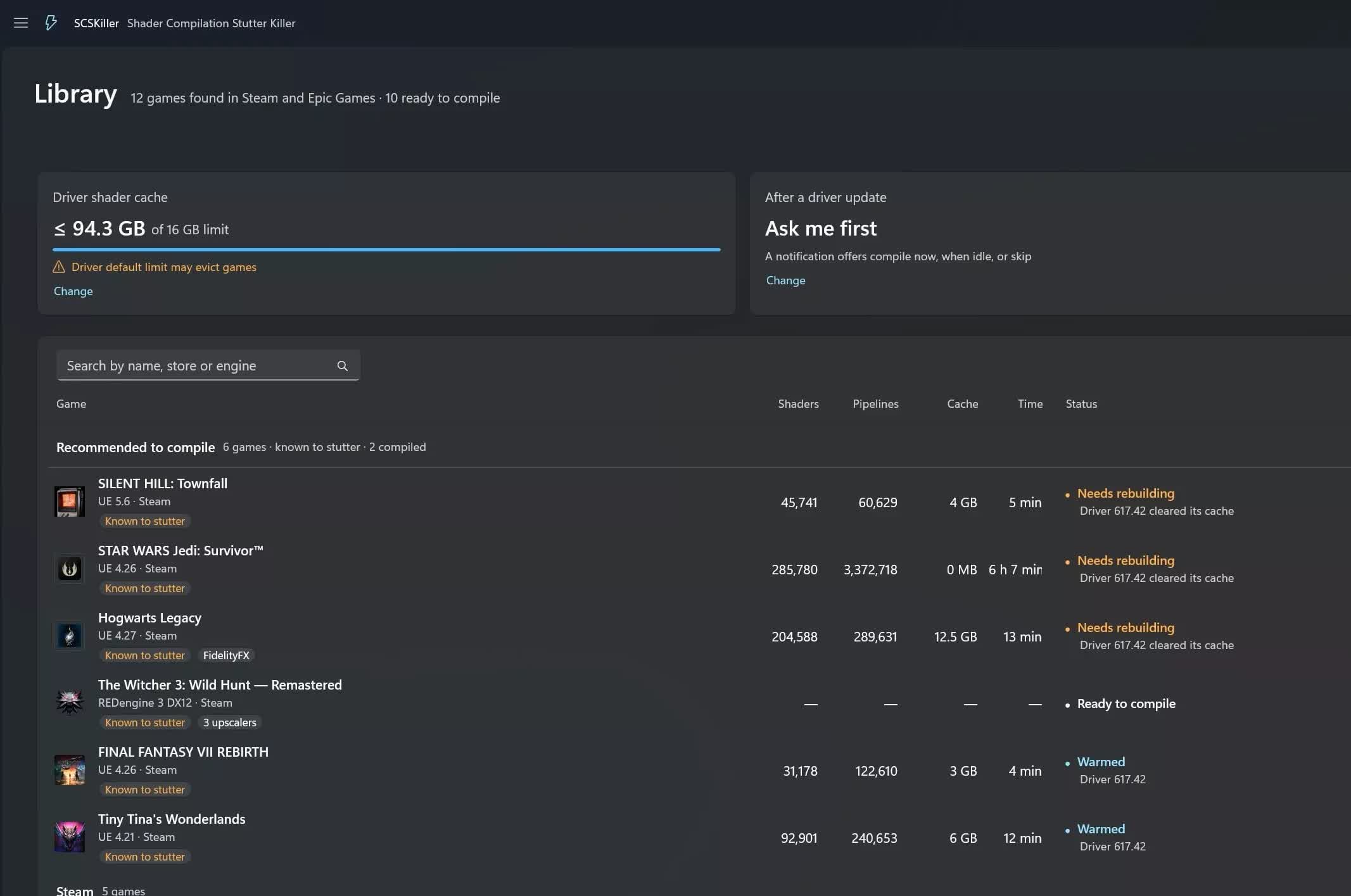


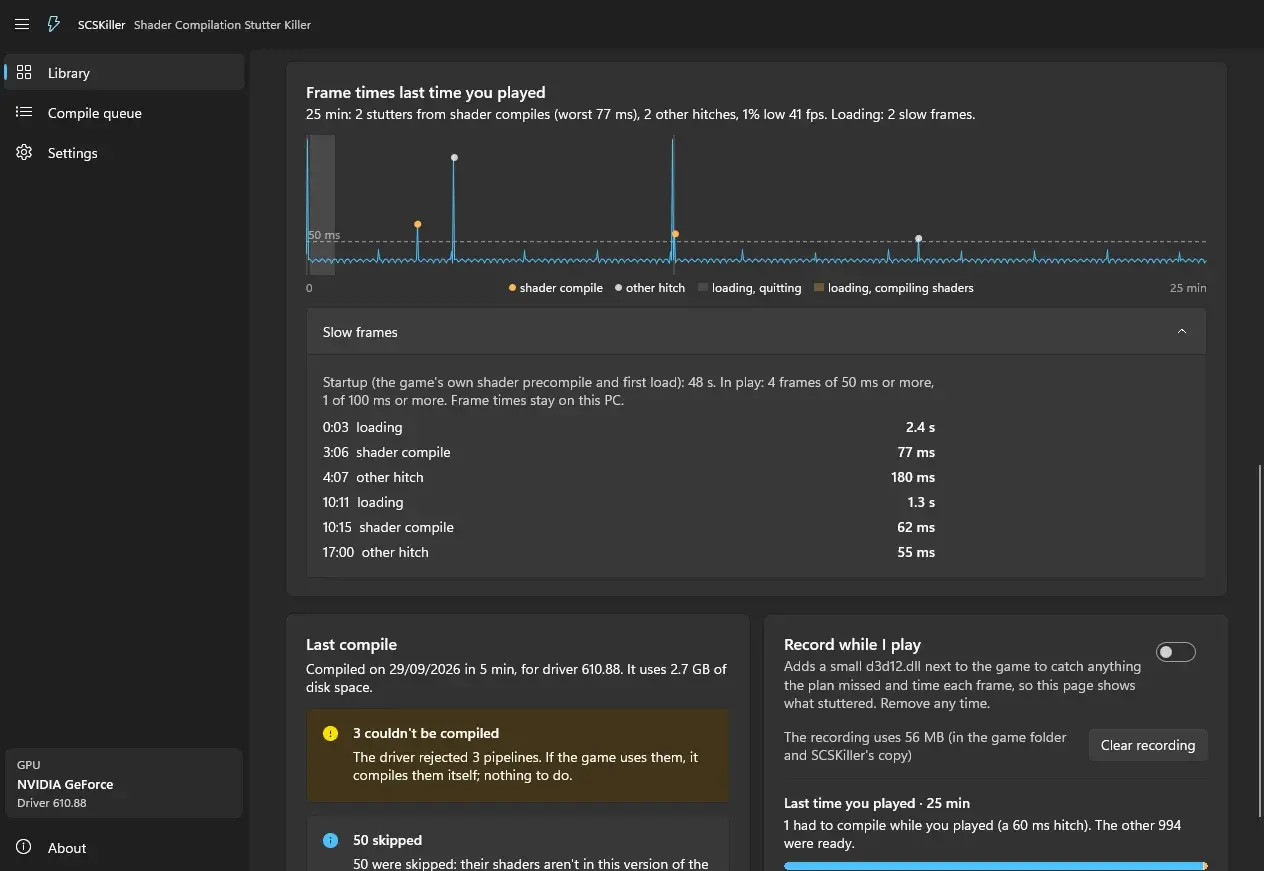
SCSKiller scans game files, extracts shader code, and compiles pipelines into the GPU driver cache. It supports Unreal Engine 4 and 5, Unity, RE Engine, FromSoftware engines, generic DirectX 12 titles, and DirectX 11 on Nvidia. An optional recorder captures additional pipelines during gameplay. The tool is open-source and free.
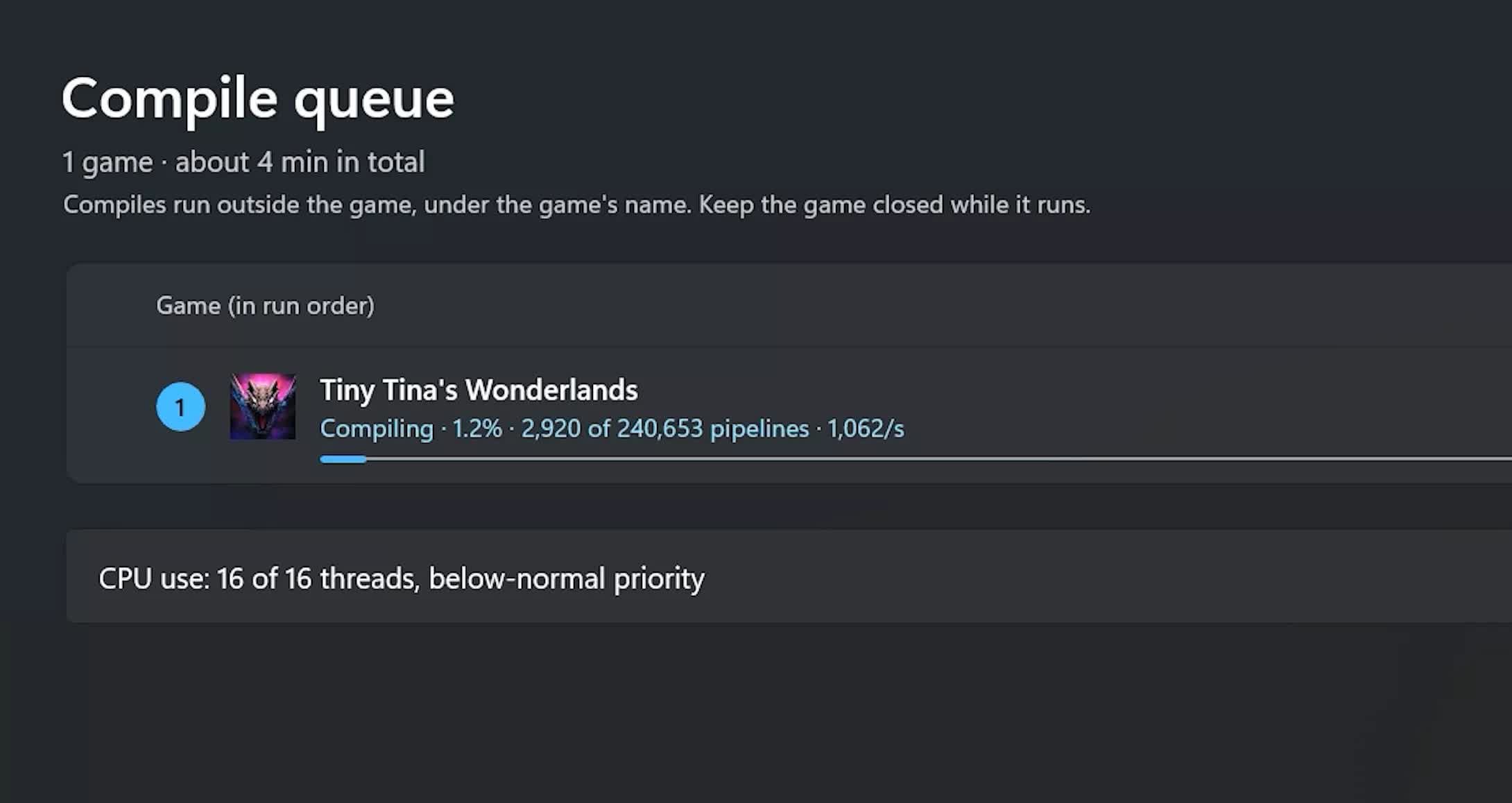
On a Ryzen 7 9800X3D with RTX 5090, Tiny Tina’s Wonderlands delivered 1% lows of just 45 fps without SCSKiller — despite the game’s own pre-compilation pass. After 30 minutes of pre-compilation via SCSKiller, 1% lows jumped to 147 fps. Stutter vanished. Star Wars Jedi: Survivor saw a 25% average FPS gain and similar 1% low improvement. The Blood of Dawnwalker improved 15% at the 1% low.
Results weren’t universal. Hogwarts Legacy showed no measurable improvement across multiple quality presets despite 20-50% higher system RAM usage. Grounded 2 and Silent Hill: Townfall also saw no benefit. SCSKiller cannot fix traversal stutter — the hitching caused by streaming assets from storage — which remains prevalent in Unreal Engine 5 titles.
The Radeon RX 9070 XT told a different story. Fresh driver install, game launch, brief shader preparation — Tiny Tina’s Wonderlands ran flawlessly. No SCSKiller. No 30-minute wait. 1% lows matched the SCSKiller-optimized RTX 5070. Final Fantasy VII Rebirth, capped at 120 fps, maintained 1% lows above 60 fps on Radeon versus single-digit 1% lows on unoptimized GeForce.
AMD’s background compilation supports UE4 titles natively and added UE5 support in 26.9.2. The company recommends 15 minutes of gameplay for compilation to complete before benchmarking. Nvidia’s driver offers no equivalent; users must rely on SCSKiller or in-game pre-compilation, which often proves insufficient.
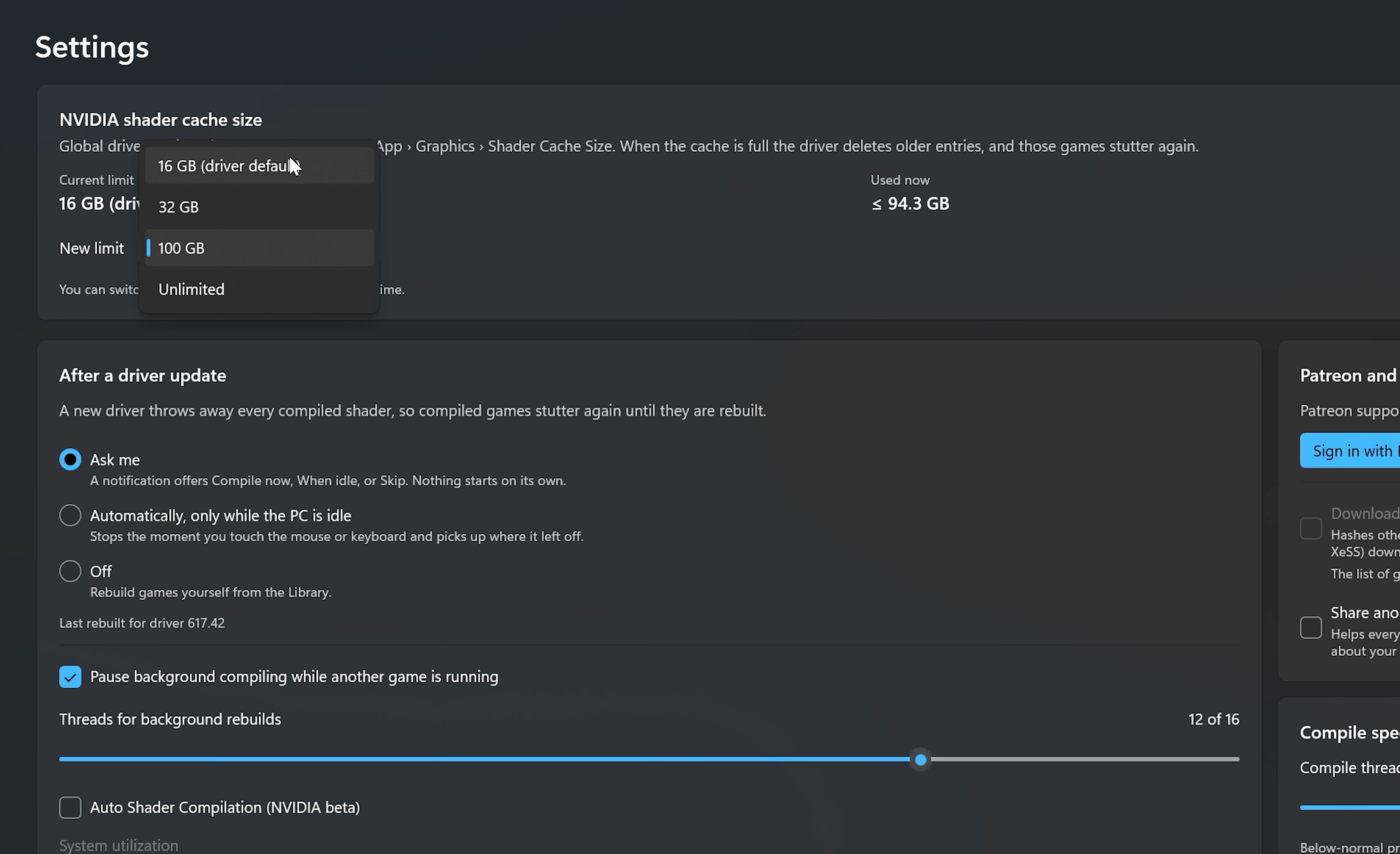
There’s a catch for Radeon owners. SCSKiller’s developer claims AMD enforces a fixed 16 GB on-disk shader cache limit. Nvidia allows 100 GB or unlimited via control panel. Once AMD’s cache fills, older entries are evicted, forcing re-compilation. We haven’t independently verified the 16 GB figure with AMD.
AMD told us it considers itself an industry leader in Microsoft’s DirectX 12 Advanced Shader Delivery — an official Windows 11/DX12 technology letting supported games download pre-compiled shaders. Adoption depends on game and platform support. SCSKiller works today across hundreds of existing titles without developer involvement.
Practical trade-offs remain. SCSKiller can pin CPU at 100% for extended periods during pre-compilation. It increases system RAM usage — 2 GB to 7 GB in our tests — and consumes SSD space. Anti-cheat compatibility should be verified per title. But for Nvidia users suffering shader stutter in UE4 games like Tiny Tina’s Wonderlands or Final Fantasy VII Rebirth, it’s a transformative free download.
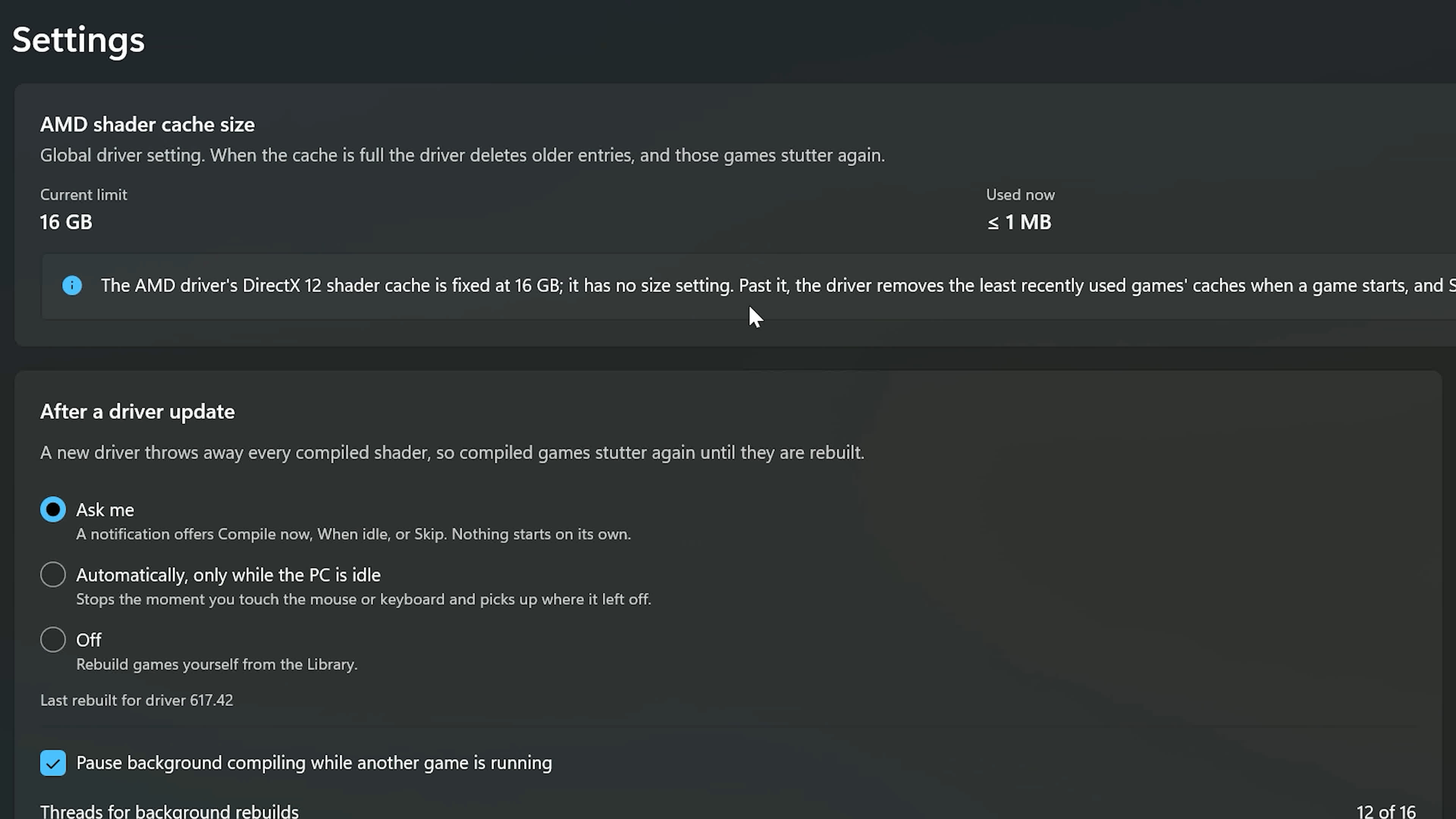
The broader implication: AMD has been shipping a functional shader stutter solution at driver level for months while the PC gaming conversation focused on in-game pre-compilation passes and third-party tools. Nvidia users effectively pay a “time tax” — 30 minutes of pre-compilation per title — to reach parity with Radeon’s out-of-box experience in affected games.