Nike’s $2.5B Converse Problem Threatens Elliott Hill’s Turnaround
Analysts suggest a sale could follow a record 44% demand deterioration for the Chuck Taylor maker
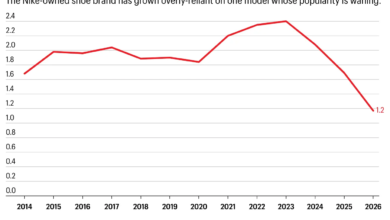
Two years into Elliott Hill’s tenure as Nike CEO, the company’s turnaround strategy faces a structural liability hiding in plain sight. Converse, which generates just 2.5% of Nike’s total revenue, accounted for 20% of the company’s overall sales decline last quarter, according to Fortune’s Phil Wahba. The math presents a stark portfolio management problem for executives trying to stabilize a sprawling athletic empire.
Sales at the 118-year-old maker of the Chuck Taylor plummeted 28% in the most recent quarter. BNP Paribas analyst Laurent Vasilescu noted a 44% deterioration in demand during the fiscal quarter that ended in November 2025. “We’ve never seen a 44% decline in demand for a brand,” Vasilescu said, adding he would not be surprised if Nike ultimately decided to sell off Converse.
The collapse traces back to a failure in product development rather than shifting macroeconomic conditions. Analysts point to an overreliance on the Chuck Taylor silhouette and an inability to innovate beyond it. VF Corp-owned Vans has suffered an identical trajectory, dragged down by its own dependence on skater shoes featuring distinctive checkered patterns. Both legacy brands built decades of equity on a single aesthetic, only to find that same identity functioning as a ceiling when consumer preferences shifted toward performance hybrids and technical footwear.


Nike acquired Converse in 2003 for $305 million. At the time, the purchase was viewed as a low-risk way to capture lifestyle market share without diluting Nike’s core performance identity. For years, the bet paid off. Converse operated as a high-margin cash cow requiring minimal research and development investment compared to Nike’s mainline running or basketball divisions. That capital efficiency has now inverted. Maintaining retail distribution, marketing infrastructure, and corporate overhead for a brand shrinking at this velocity directly drains resources from Hill’s broader recovery efforts.
A potential divestiture carries complications. Private equity firms routinely acquire distressed heritage labels, but Converse’s current rate of decay makes valuation difficult. Any buyer would need to fund a complete design overhaul while managing continued revenue erosion. The secondary sneaker market offers little comfort; resale premiums have compressed significantly for classic canvas models as buyers migrate toward archival running silhouettes from competitors like New Balance and Asics.
Hill returned to lead Nike with a mandate to fix operational execution and restore wholesale relationships after a rocky period under former CEO John Donahoe. Divesting a historic American brand contradicts the narrative of restored momentum, yet retaining a unit responsible for one-fifth of the parent company’s top-line drag contradicts basic financial discipline. Wall Street is watching which priority wins out.
Nike reports its next quarterly earnings in December. Footwear industry analysts will be parsing the transcript less for updates on Air Max releases and more for any indication that Beaverton is preparing to cut ties with a brand it bought over two decades ago for roughly the price of a mid-tier NBA player’s rookie contract.