U.S. News Briefing: Clancy Trial, Iran Leak, AI Risks
From the Clancy jury room to Pentagon deployments and AI health warnings, today's top developing stories.

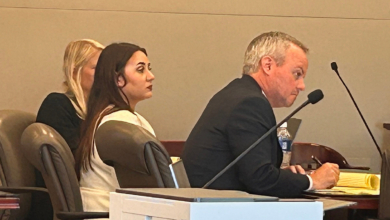
A Massachusetts jury deliberation has exposed the calculated nature of the Lindsay Clancy murders, as a holdout juror detailed the methodical sequence prosecutors used to secure a conviction in the killing of her three children. The case remains one of the most closely watched criminal trials in New England, centering on the intersection of severe postpartum psychosis and premeditated violence under state law.

At the federal level, President Donald Trump directed sharp criticism at the individual suspected of leaking classified operational plans regarding U.S. military contingencies involving Iran. Unauthorized disclosures of strategic military planning violate the Espionage Act of 1917 and carry severe mandatory minimum sentences. The Pentagon routinely initiates damage assessments through the Defense Counterintelligence and Security Agency when sensitive operational blueprints are compromised, evaluating potential threats to deployed personnel and allied intelligence-sharing agreements.


Separately, concerns over artificial intelligence dependency have escalated following assertions from a Massachusetts Institute of Technology professor linking heavy AI usage to cognitive atrophy. Neuroplasticity research indicates that offloading complex problem-solving, spatial reasoning, and critical reading to generative models can reduce the brain’s structural engagement over time. Unlike previous technological shifts, such as the adoption of calculators or search engines, large language models bypass multiple executive functions simultaneously, raising unprecedented questions about long-term neurological impacts on students and knowledge workers.
Federal investigators executed a raid seizing the mobile phone of a member of the congressional progressive “Squad” as part of an expanding immigration fraud probe. Device seizures under federal warrant require demonstrating probable cause to a magistrate judge, often initiating a lengthy digital forensics process managed by the FBI’s Operational Technology Division.
In Tennessee, death row inmate Christa Pike was returned to custody following a botched execution attempt. Her ultimate sentence now faces renewed legal scrutiny. Botched lethal injections frequently trigger Eighth Amendment challenges, prompting federal courts to review state protocols for cruel and unusual punishment violations.

The Department of Defense confirmed the deployment of hundreds of Army troops to Latin America for joint training exercises aimed at disrupting transnational drug-trafficking networks. These missions typically operate under Title 10 authorities, distinct from domestic law enforcement, and involve coordination with U.S. Southern Command and partner nations to dismantle cartel logistics chains.
Commercial aviation routes contracted this week after a major carrier announced its withdrawal from three regional locations, reducing connectivity for local travelers. Airline network adjustments are driven by fleet utilization rates, gate lease costs, and passenger load factors, often leaving smaller municipalities reliant on Essential Air Service subsidies to maintain basic commercial access.

Pharmaceutical safety discussions intensified after a patient reported sudden blindness allegedly linked to Ozempic use. Semaglutide, the active ingredient in the GLP-1 receptor agonist, carries warnings for rare ocular complications, including non-arteritic anterior ischemic optic neuropathy, though direct causation requires extensive epidemiological review by the Food and Drug Administration.
Congressional control remains fiercely contested as candidates navigate the final stretch of the midterm election cycle, with polling data indicating tightening margins in key battleground districts across Michigan and New York.