
What “Refurbished” Really Means When Buying a Used Smartphone
The standards behind used smartphone labels vary by seller
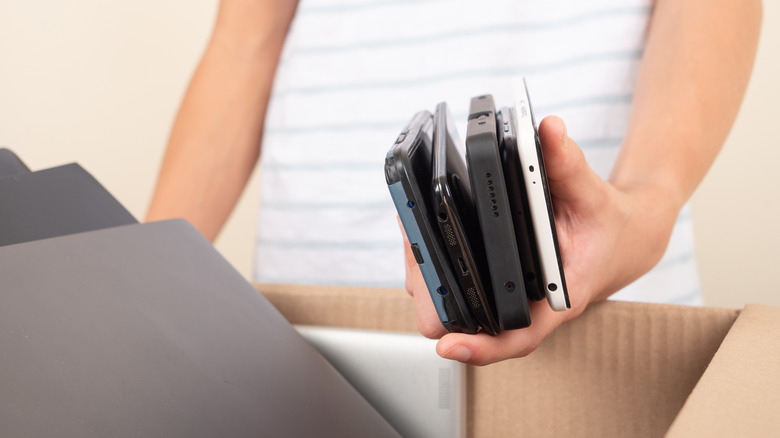
Flagship smartphone prices regularly reach or exceed $1,000, helping secondary mobile market sales grow into a multi-billion-dollar global industry. Yet federal regulatory agencies and retail sectors do not use standardized definitions, leaving buyers to compare different warranty terms, hardware inspection policies, and component standards.
The Federal Trade Commission regulates general deceptive trade practices, but the technical thresholds for calling a phone “refurbished,” “pre-owned,” or “certified” are largely set by hardware makers, wireless carriers, third-party marketplaces, and independent resellers. Secondary devices therefore range from direct, unverified peer-to-peer sales to comprehensive original equipment manufacturer (OEM) rebuilds.
Battery condition is one part of that distinction. Standard lithium-ion smartphone batteries chemically degrade over time and typically retain roughly 80 percent of their original maximum capacity after 500 complete charge cycles. Back Market requires professional refurbishers on its platform to verify a minimum maximum battery capacity of 80 percent, complete cryptographic data wipes and factory resets, and provide a one-year warranty with a 30-day return policy.


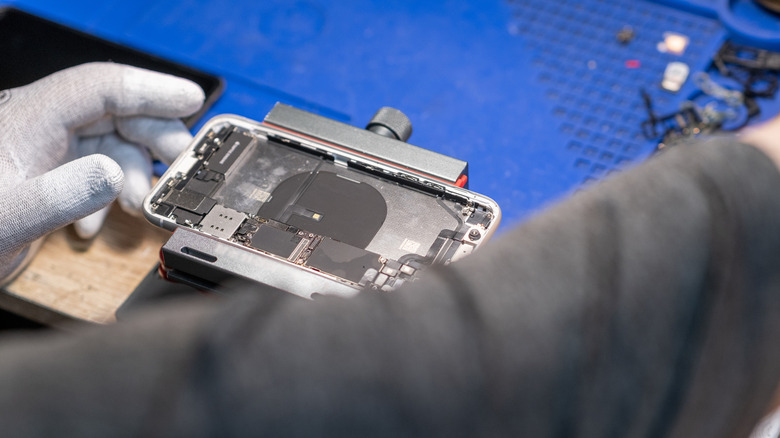
Direct manufacturer programs generally offer the highest standard of hardware restoration. Apple Certified Refurbished iPhones undergo complete teardowns and testing; technicians replace the outer enclosure and lithium-ion battery on every iPhone, use genuine OEM replacement components for internal repairs, and package each device with original accessories. These phones carry the standard one-year Apple limited warranty and remain eligible for extended AppleCare coverage.
Replacement-part origins can affect the software experience. When third-party refurbishers install non-OEM components, modern operating systems may display warnings about unverified displays, camera modules, or batteries that lack manufacturer cryptographic validation. Buyers must also check whether a device still has an iCloud Activation Lock or Android’s Factory Reset Protection enabled.
Samsung’s “Certified Re-Newed” program sends trade-in devices through a 147-point quality inspection matrix. Phones repaired through the program receive official OEM parts and new battery installations, then are sold with a standard one-year manufacturer warranty.
General e-commerce platforms use different grading structures. eBay limits its top “Certified Refurbished” designation to products refurbished directly by manufacturers or authorized commercial partners, and those products include a two-year warranty serviced by insurance provider Allstate. Its “Excellent,” “Very Good,” and “Good” condition tiers are handled by vetted third-party vendors and include a one-year Allstate-backed warranty. The separate “Seller Refurbished” classification falls outside that structured framework and relies entirely on individual vendor claims.

Retailers such as Walmart maintain their own refurbished tier systems and return windows, so shoppers must review the terms on each store’s site. Cellular carriers also use certified pre-owned (CPO) programs to return handsets and trade-in inventory to subscriber networks. Verizon’s CPO inventory receives multi-point functionality testing and physical reconditioning, including an evaluation of maximum battery capacity, although Verizon does not publish a strict minimum performance percentage floor.
Carrier pre-owned channels typically allow buyers to use monthly equipment installment plans (EIP). That option does not establish a universal hardware standard, just as the word “pre-owned” alone does not specify the inspection process, component source, or warranty.
Peer-to-peer platforms emphasize transaction verification and fraud mitigation rather than physical repair. Swappa requires verification before listing, including fully functional hardware, a clean International Mobile Equipment Identity (IMEI) number, and removal of all administrative activation locks. The IMEI is a 15-digit serial number that confirms the phone has not been blacklisted because of theft, loss, or unpaid financial balances. Under Swappa’s marketplace protections, buyers can receive refunds when a device arrives in a condition that materially differs from its listing.
Software support can determine how long an older secondary device remains practical. Google and Samsung now offer up to seven years of operating system and security updates for recent flagship releases, while older devices may reach software sunsetting sooner, affecting network security and application compatibility over time. Buyers acquiring any non-new smartphone must verify carrier frequency compatibility and confirm that cloud-based security locks have been completely disengaged.