
AI Talent Leaves DeepMind as Gemini Push Reshapes Global Research
Gemini’s commercial push accelerates the global redistribution of elite AI researchers
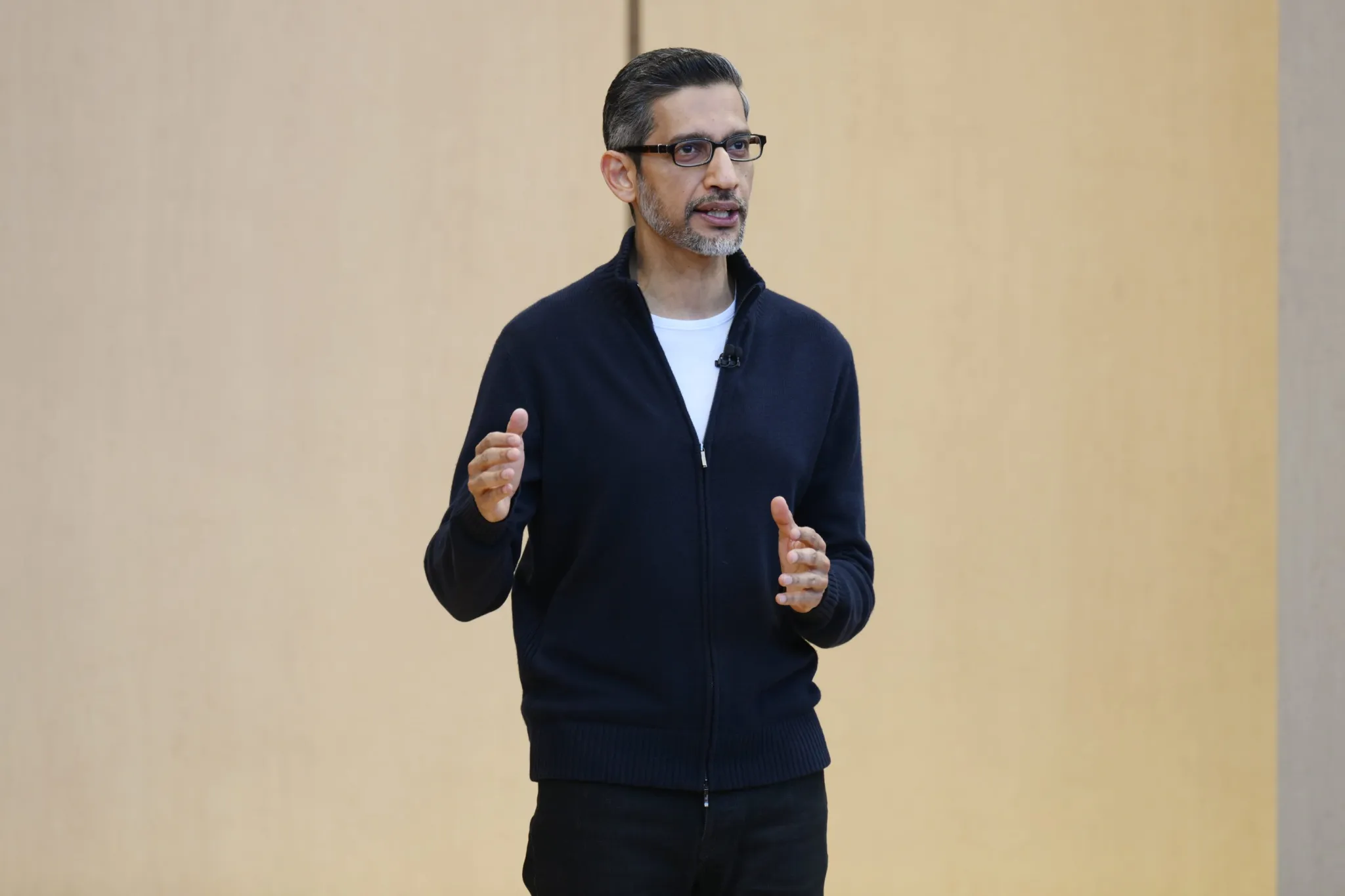
Google DeepMind’s changing research priorities are reshaping the movement of elite artificial intelligence talent across North America, Europe, and Asia. The lab was created in April 2023 when Alphabet Chief Executive Sundar Pichai merged DeepMind with Google Brain, the deep learning unit co-founded in 2011 by Andrew Ng and Jeff Dean. The consolidation was intended to streamline Alphabet’s research infrastructure and direct engineering resources toward challenging OpenAI’s ChatGPT.
DeepMind was founded in London in 2010 by Demis Hassabis, Shane Legg, and Mustafa Suleyman, then acquired by Google in 2014 for approximately $500 million. For years, it was a primary destination for advanced European AI research. Its international profile grew through AlphaGo’s 2016 victory over world Go champion Lee Sedol and the CASP14 structural biology breakthrough AlphaFold in 2020.
The merged organization subsequently concentrated heavily on Gemini, Google’s flagship multimodal model family introduced in late 2023. According to current and former staff, prioritizing Gemini shifted the lab away from the open-ended research that had originally attracted academic talent. In April 2025, DeepMind also introduced tighter internal review procedures and a mandatory six-month embargo on strategically sensitive generative AI papers to prevent competitors from using its findings, an operational change first reported by the Financial Times.


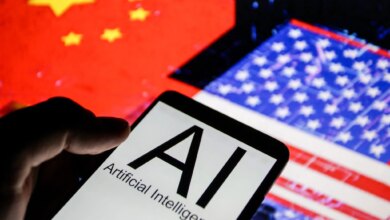
That movement is occurring as corporate pressure to deploy commercial products rapidly changes the culture of premier research facilities. For more than a decade, central AI laboratories had operated largely as academic-style environments focused on fundamental computer science breakthroughs. The aggressive commercialization of generative AI models, including Google’s Gemini family, has intensified friction between long-horizon scientific exploration and immediate product engineering. Competing firms and pre-IPO startups have added aggressive equity incentives.
A Zeki Data analysis tracks these labor shifts across 20,900 research scientists, research engineers, machine learning specialists, and technical staff at 10 major global AI laboratories. The UK-based data intelligence firm compiled the data in August 2026, finding a pronounced divergence in headcount expansion between established technology conglomerates and younger frontier labs. Across the tracked sector, total research and engineering hiring has grown at a compound annual rate of 23% since 2022. Anthropic’s technical research headcount grew at a compound annual rate of 152%, while OpenAI’s expanded by 97%; Google DeepMind’s technical headcount grew by 27%.
DeepMind’s net hiring ratio, which measures technical arrivals against departures, also narrowed. In the second quarter of 2023, the lab hired approximately 12 technical staff members for every one who departed. By the third quarter of 2026, the ratio was roughly 2 to 1. The 2025 arrivals-to-departures ratios were 22 to 1 at Anthropic, 5.7 to 1 at OpenAI, and 3 to 1 at Meta.
In EMEA, where DeepMind historically dominated elite hiring, its share of advanced research and engineering hires fell from 49% in 2022–2023 to 18.6% in 2025–2026. Zeki Data identified that as the sharpest regional market-share drop recorded for any major AI laboratory. Of the research scientists and advanced engineers who left DeepMind during the 12 months through mid-2026, 25% joined Anthropic, 21% moved to Meta, and 14% went to OpenAI.
Some of the movement followed major scientific departures. Jeff Dean, Alphabet’s chief scientist and a 27-year veteran who co-founded Google Brain, left Google with senior fellow Sanjay Ghemawat and researchers Oriol Vinyals and Quoc Le to found Discovery Loop. Noam Shazeer, a Gemini co-lead and co-author of the seminal 2017 paper “Attention Is All You Need,” also departed Google for OpenAI. The paper introduced the Transformer architecture foundational to modern large language models.
David Silver, the reinforcement learning pioneer who led development of AlphaGo, AlphaZero, and AlphaStar, left DeepMind after nearly 13 years to establish the London-based startup Ineffable Intelligence. The company reached a $5.1 billion valuation after a $1.1 billion seed funding round. Senior researcher Wojciech Czarnecki became chief technology officer at Fundamental, while Misha Laskin and Ioannis Antonoglou, a direct contributor to AlphaGo, left to form Reflection AI. Senior researcher Lasse Espeholt also departed the lab.
John Jumper, who shared the 2024 Nobel Prize in Chemistry with Hassabis for developing AlphaFold2, left DeepMind for Anthropic. AlphaFold team researchers Jonas Adler and Alexander Pritzel followed him to Anthropic shortly afterward. Of 29 named authors on the seminal 2021 Nature paper describing AlphaFold2, 13 have left DeepMind.
Many departures from the AlphaFold2 team followed internal reassignments. Alphabet redirected researchers to Gemini projects, enzyme design, genomics, nuclear fusion, and Isomorphic Labs, its dedicated AI drug discovery subsidiary launched in 2021. Zeki Data’s skill mapping separately found that DeepMind experienced net losses in large language models and multimodal systems over a 12-month period: specialized leavers in those categories accounted for 19.2%, compared with 15.6% for specialized joiners. Computer vision teams also recorded net talent reductions.
DeepMind did record net talent gains in robotics, embodied AI, and machine learning applied to non-biological sciences. The lab competes for specialized talent in those areas with hardware manufacturers such as Nvidia. Its executive structure also changed when Demis Hassabis stepped back from day-to-day operational management to become Chairman while retaining his position as Alphabet’s Chief Scientist. Chief Technology Officer Koray Kavukcuoglu took operational control of the laboratory.
Regional competition has expanded alongside the changes at DeepMind. In EMEA, Paris-based Mistral AI—founded in 2023 by former Meta and DeepMind researchers—and Anthropic have increased their regional hiring footprints. In Asia-Pacific, where DeepMind opened a research facility in Singapore in November, hiring share has increasingly moved toward domestic entities, including ByteDance, Tokyo-based Sakana AI, co-founded by former Google Transformer author Llion Jones, and India’s Sarvam AI.
Representatives for Google DeepMind did not comment on the Zeki Data findings. The laboratory retains access to Alphabet’s custom Tensor Processing Unit (TPU) compute infrastructure, capital reserves, and global recruitment reach.