

Iran Conflict Leaves U.S. Bases Damaged as Arms Sales Top $44 Billion
U.S. infrastructure damage and weapons demand rise together after Iran hostilities
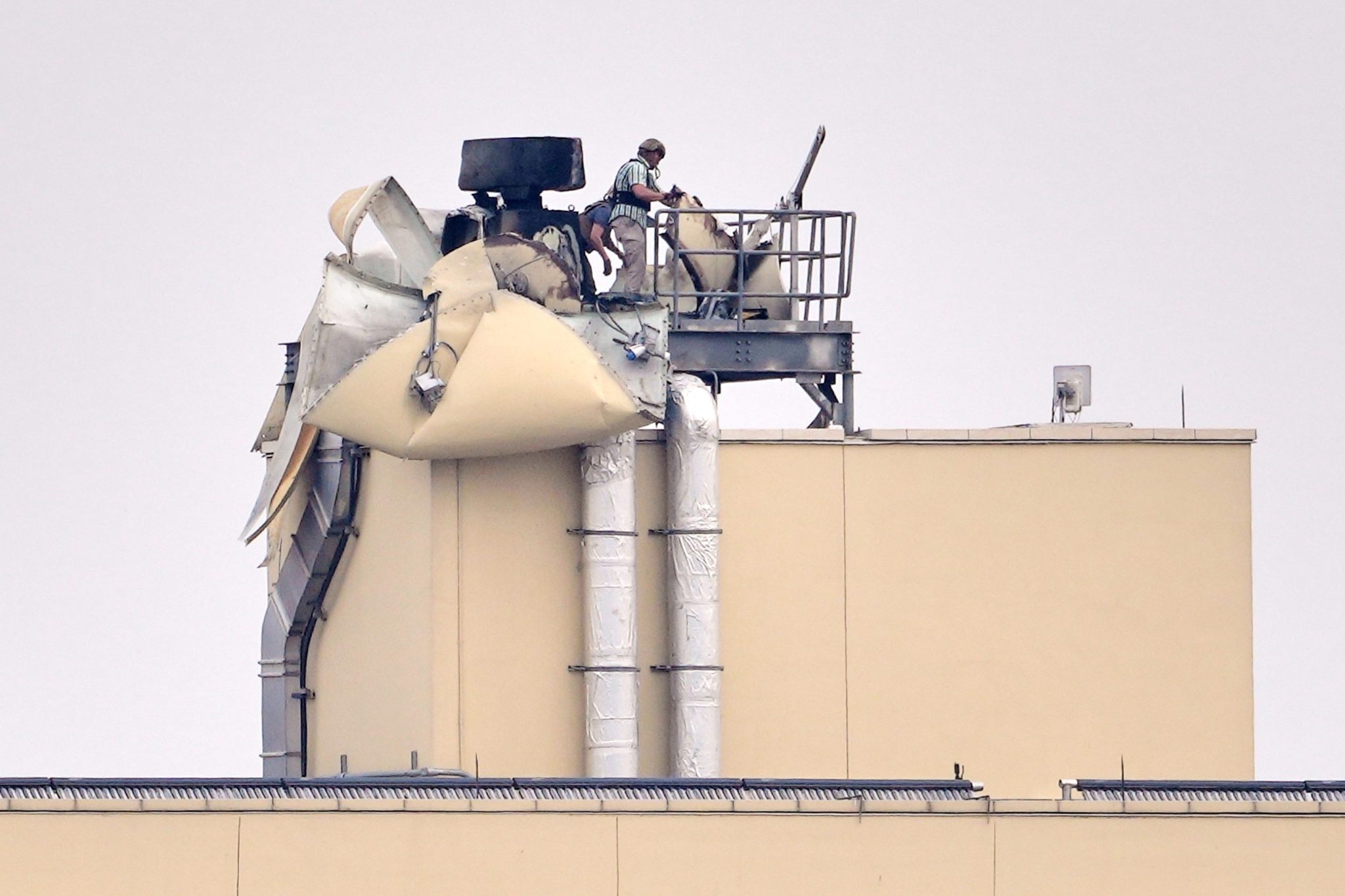
WASHINGTON — The United States approved more than $44 billion in emergency and non-emergency arms transfers to regional allies during recent hostilities with Iran, while American diplomatic outposts in the Middle East sustained an estimated $184 million in physical damage. The State Department also absorbed more than $11 million in unrecovered evacuation costs, according to a comprehensive federal watchdog report released Monday.
First disclosed by NBC News, the joint report was compiled by the Inspectors General for the Department of Defense, the Department of State, and the U.S. Agency for International Development (USAID). It covers the quarterly period from April 1 through June 30 and provides the federal government’s first consolidated official accounting of the conflict’s financial, structural, and operational toll.
The report said Iranian strikes damaged or destroyed hundreds of structures, hangars, maintenance facilities, and hardening systems at U.S. air bases, naval stations, and logistics hubs across eight countries: Kuwait, Bahrain, Qatar, the United Arab Emirates, Saudi Arabia, Iraq, Oman, and Jordan. Key installations included Al Udeid Air Base in Qatar, Ali Al Salem Air Base in Kuwait, Naval Support Activity Bahrain, and Prince Sultan Air Base in Saudi Arabia, all of which faced sustained target overlays.


American diplomatic facilities in Iraq, Kuwait, Saudi Arabia, and the United Arab Emirates bore the main impact of retaliatory strikes by Iranian forces and aligned militias, accumulating $184 million in structural destruction. The State Department recorded $113 million in direct conflict-related expenditures through early June, including nearly $80 million for emergency contingency operations.
Those operations involved multi-nation evacuations of U.S. direct-hire personnel, military dependents, private American citizens, and designated foreign nationals after the initial joint U.S.-Israeli strikes against targets inside Iran on Feb. 28. In the weeks and months afterward, the Trump administration extracted approximately 9,000 U.S. citizens from affected areas across the Middle East and parts of Europe using private charter flights, commercial airlines, overland vehicle convoys, and maritime transfers.
Although the largest number of evacuees departed from Israel, with additional transit routes through Jordan and Iraq, the United Arab Emirates accounted for the most expensive single evacuation corridor. Only 1,200 Americans were evacuated from the UAE, but long-haul charter flights to hubs in Istanbul, Athens, and Washington, D.C., cost more than $4 million, or over a third of the entire evacuation budget. By late June, the transport operations had exceeded $11 million.
Under standard State Department procedures governed by federal law, Americans transported on government-arranged evacuation flights generally must sign promissory notes agreeing to reimburse the U.S. Treasury for the equivalent cost of a commercial coach fare. Consular officials waived those obligations for the thousands evacuated during the crisis. “State determined that consular officers would not be able to fully document travel itineraries required to seek reimbursement from evacuees and therefore it would be impracticable to seek reimbursement from them,” the watchdog report stated.
While diplomatic posts were being evacuated and repaired, the State Department processed a surge of foreign military sales (FMS) to regional partners facing retaliatory strikes. More than $44 billion in emergency and standard defense transfers were authorized during the reporting period, driven by demand from countries hosting American forces that came under attack from Iranian missiles and loitering munitions.
The Kingdom of Saudi Arabia received the largest military packages, including agreements for military transport and attack helicopters, heavy artillery munitions, sustainment services, and advanced precision-guided weapon systems. Qatar, Kuwait, the United Arab Emirates, and Israel also purchased billions of dollars in American hardware.
The same period brought pressure on the U.S. military’s own war reserves. The multi-agency report warned that intense operational usage “has resulted in strategic inventory shortfalls and revealed industrial base bottlenecks for munitions resupply,” particularly involving high-demand precision weapons and defensive air interceptors. Defense analysts and supply chain experts cited in the assessment said primary defense contractors, including manufacturers of surface-to-air and anti-ballistic missile systems such as the Patriot PAC-3 and Standard Missile series, would need approximately three years to restore advanced missile and interceptor inventories to pre-war baselines.
Federal auditors also confirmed that dozens of U.S. military fixed-wing aircraft, helicopters, and uncrewed aerial vehicles (drones) were severely damaged or completely destroyed during the exchanges. The Pentagon’s costs for combat operations, air defenses, force deployments, and immediate repairs continued to rise; in late July, Defense Secretary Pete Hegseth told Congress that the Department of Defense had incurred $37.5 billion in war-related expenses since the outbreak of major hostilities.
The findings were issued under the Joint Lead Inspector General oversight framework authorized by Section 8L of the Inspector General Act of 1978. That mandate requires the Inspectors General of the Department of Defense, Department of State, and USAID to submit unified quarterly reports to Congress on designated overseas contingency operations.
The document covers the initial quarter of sustained combat oversight following the Feb. 28 strikes. Future quarterly submissions are expected to address ongoing procurement adjustments, final repair tallies for diplomatic property, and long-term defense production schedules intended to resolve critical inventory deficits.