

Alaska Drops Felony Voting Cases Against 11 Whittier Residents
Appeals ruling ends unusual prosecution of American Samoan residents
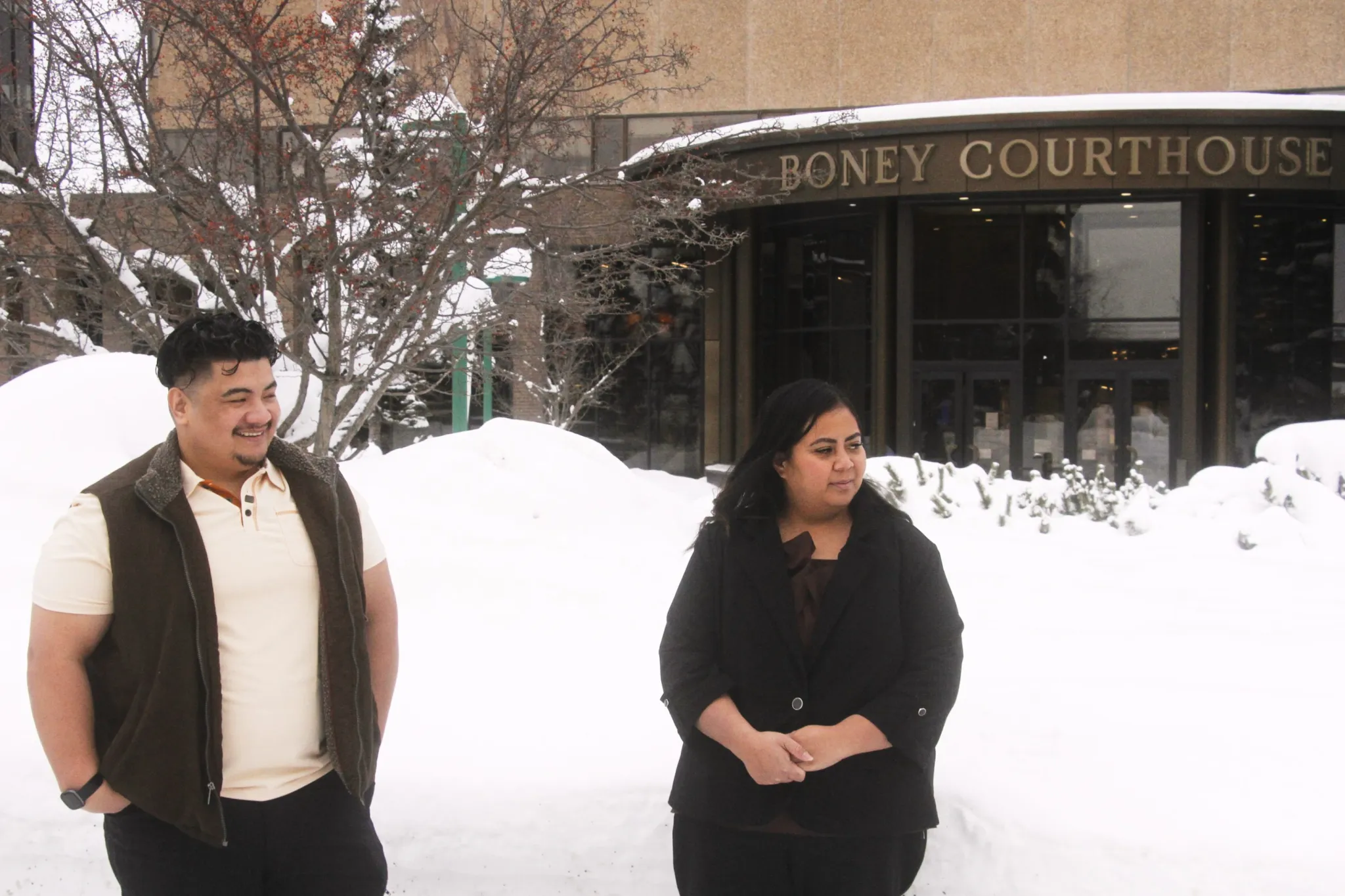
ANCHORAGE, Alaska — Alaska is dropping felony voter misconduct cases against 11 residents of Whittier after an appellate ruling found that prosecutors must prove a deliberate intent to break the law when someone erroneously registers to vote.
The case exposed the unusual legal status of American Samoans, who are U.S. nationals but are not automatically recognized as U.S. citizens. Under the federal Immigration and Nationality Act, specifically 8 U.S.C. § 1408, people born in American Samoa are classified as “nationals, but not citizens, of the United States.”
Whittier is a remote community of roughly 270 residents located about 50 miles southeast of Anchorage. Almost all of its residents live inside the single 14-story Begich Towers, and the town can be reached by land only through a single-lane, 2.5-mile tunnel shared by cars and trains. The prosecution of 11 residents represented a significant portion of the small town’s adult population.


The Alaska Department of Law announced the dismissals after the Alaska Court of Appeals threw out the indictment of Tupe Smith, a local school board member. A three-judge panel ruled that Alaska law requires evidence of a “consciousness of wrongdoing” when a defendant mistakenly registers to vote.
The status of American Samoans dates to the late 19th century. Under the 1899 Treaty of Berlin, ratified in 1900, the United States formally acquired the eastern islands of the Samoan archipelago. American Samoa remains the only inhabited U.S. territory where birthright citizenship is not automatically granted.
U.S. nationals carry American passports, may live and work anywhere in the United States without a visa, and can serve in the U.S. military. They cannot vote in federal, state, or local elections outside American Samoa and are barred from holding certain government offices. Becoming a citizen requires naturalization, which can cost thousands of dollars in fees and take months or years.
Alaska’s standard voter registration forms do not include a checkbox for “U.S. national.” Instead, applicants must make a binary certification about whether they are U.S. citizens. Court documents state that Smith found no way to identify her status as a U.S. national when she registered in 2020 and 2022.
Smith consulted Whittier city representatives, who told her it was appropriate to mark herself as a citizen. She relied on that advice, registered and voted, and was elected to a regional school board in 2023. State authorities arrested her after the election and indicted her on two counts of voter misconduct in the first degree.
Under Alaska Statute 15.56.040, first-degree voter misconduct is a Class C felony punishable by up to five years in prison and a fine of as much as $50,000. Smith’s husband, Michael Pese, and nine other Whittier residents of American Samoan descent were later charged. Prosecutors argued that warnings on the registration forms explicitly stating that non-citizens could not vote showed the defendants had intentionally committed fraud.
The Court of Appeals also found serious problems in the grand jury process and the police investigation that preceded Smith’s arrest. Alaska State Troopers subjected Smith, whose native language is not English, to what the panel described as a highly coercive and confusing interrogation.
Near the end of the interview, one trooper asked a long, compound question containing four separate queries. The question was designed to imply that Smith knew she was ineligible to vote but registered anyway because she wanted to serve on the school board. When she hesitated, another trooper pressured her by saying, “He’s asking you.” Smith answered, “Yes,” and prosecutors used that response as the primary basis for her felony indictment.
The appeals court ruled that the questioning fell far short of proving an intentional violation of the law. Acting Alaska Attorney General Cori Mills then announced that the state would not proceed with the remaining prosecutions.
“We respect the role of the courts in interpreting Alaska law and will faithfully execute our duty to apply the law and carefully evaluate our prosecutorial decisions,” Mills said. After reviewing the remaining cases under the court’s clarified standard, she added, prosecutors concluded they could not prove criminal intent beyond a reasonable doubt.
American Samoa’s legal status has also been preserved through territorial concerns. In 2022, the U.S. Supreme Court declined to review *Fitisemanu v. United States*, a case seeking birthright citizenship for American Samoans. The American Samoan government intervened to oppose automatic citizenship, arguing that applying the U.S. Constitution’s Equal Protection Clause could threaten *fa’amatai*, the territory’s traditional system of social organization, chief titles, and communal land ownership that restricts land sales to people of Samoan descent.
Defense attorneys and voting rights advocates welcomed the state’s retreat while questioning the motivations behind the prosecution. Whitney Brown, Smith’s defense attorney, said the ruling “establishes an important safeguard against imposing felony liability for an honest mistake” and would allow the Whittier community to move past the ordeal.
Neil Weare, co-director of the nonprofit civil rights organization Right to Democracy and a member of the legal team representing Smith and Pese, said the dismissal “raises questions about why this prosecution was even brought to begin with.” Right to Democracy focuses on confronting the colonial framework governing U.S. territories and the legacy of the Insular Cases, a series of early 20th-century Supreme Court decisions holding that the full U.S. Constitution does not automatically apply to territories.
“It’s clear that all along, they really had no evidence of any consciousness of wrongdoing on the part of Michael, Tupe or the other defendants,” Weare said.