
iPhone 18 Pro and Pixel 11 Pro Take Opposite Paths to Flagship Power
Apple’s hardware-first iPhone 18 Pro meets Google’s AI-driven Pixel 11 Pro

The top-tier flagship smartphone market has reached a technical crossroads as Apple Inc. and Google LLC introduce their latest hardware generations: the iPhone 18 Pro series and the Pixel 11 Pro series. Apple’s iPhone 18 Pro and iPhone 18 Pro Max prioritize physical hardware innovations, while Google’s Pixel 11 Pro and Pixel 11 Pro XL rely heavily on algorithmic automation, computational rendering, and deeply integrated system-wide artificial intelligence powered by custom silicon.
Both product lines begin with 256GB of storage. Apple offers a 2TB top tier on the iPhone 18 Pro and Pro Max to accommodate uncompressed ProRes RAW media assets, while Google caps the Pixel 11 Pro series at 1TB.


Apple’s iPhone 18 Pro and Pro Max use a triple 48-megapixel rear camera system. The primary lens has a mechanical variable-aperture mechanism with motorized internal iris blades for optical depth-of-field control and precise light throughput adjustments. Automatic operation is available, alongside manual controls for aperture setting, shutter speed, white balance, and live histogram tracking.
Google’s Pixel 11 Pro and Pixel 11 Pro XL instead use a triple rear array consisting of a 50-megapixel main sensor, a 48-megapixel ultra-wide sensor, and a 48-megapixel 5x optical telephoto lens. The company avoids mechanical lens mechanisms and uses computational algorithms to reconstruct detail and balance lighting.
The iPhone’s primary sensor is paired with an ultra-wide module and a 4x optical telephoto lens capable of producing an 8x optical-quality cropped sensor image. For high-end video capture, the hardware supports 4K Dolby Vision recording up to 120 frames per second, uncompressed ProRes RAW format, Apple Log 2 color profiles, direct external storage recording via USB-C, and genlock frame synchronization for multi-camera video production workflows.
Google’s camera features include Instant Night Sight for accelerated low-light image processing, 5x Portrait Mode using long-range optical compression, and Pro Zoom algorithms capable of digital zoom up to 120x. Its Video Boost pipeline combines on-device and server processing for 8K video resolution, Night Sight Video processing, and Pro Stable digital image stabilization.
Apple has also introduced a hardware security framework named Reference Image to address synthetic digital manipulation. Operating alongside Private Cloud Compute, the camera generates a cryptographically signed sensor master at the moment of exposure. The signed reference file serves as an unalterable digital negative against which subsequent edits can be verified.
Google’s Tensor G6 chip focuses on parallel machine learning workloads and runs on-device AI tasks locally on the hardware. The 6.3-inch Pixel 11 Pro and 6.8-inch Pixel 11 Pro XL are both rated by Google for over 30 hours of general operational use.
Apple’s A20 Pro system-on-chip is integrated with a larger thermal vapor chamber embedded within an aluminum internal frame. The thermal design is built to maintain sustained performance during heavy processing tasks, including high-frame-rate video editing, continuous gaming, and local machine learning calculations.
The iPhone 18 Pro is rated for up to 24 hours of video playback, while the iPhone 18 Pro Max is rated for up to 30 hours. Fast-charging hardware allows both iPhone models to charge from zero to 50 percent in approximately 15 minutes with compatible high-wattage power adapters. The Pixel 11 Pro XL supports fast charging rated to reach up to 75 percent capacity in approximately 30 minutes with an appropriate USB-C charger.
Software developments in iOS 27 and Android take different approaches to artificial intelligence. Google embeds its Gemini Nano model directly into the Pixel 11 Pro operating system, enabling automated suggestions across application interfaces.
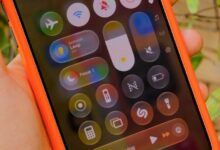
Google’s on-device tools include Rambler, which automatically cleans up real-time voice transcripts, and Magic Capture, which records short video segments and selects high-resolution still images. Circle to Search also operates directly within the native camera interface.
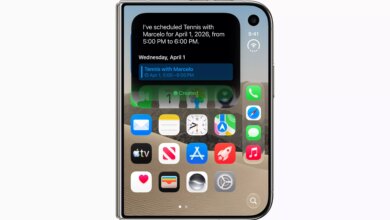
Apple’s iOS 27 introduces a redesigned Siri framework built around cross-app context processing. Using local data from messages, emails, photos, and active display content, it performs targeted multi-step actions across native and third-party apps. A specialized Siri camera mode processes physical visual input in real time.
Although Apple co-developed certain base AI models with Google, Siri processes server-dependent tasks through Apple’s Private Cloud Compute infrastructure. The upgraded Siri tools are launching initially in beta, with daily usage thresholds on server queries that increase for iCloud+ subscribers. Regional regulatory compliance measures have deferred the rollout of these AI features in European Union member states at launch.
Both smartphone series use LTPO OLED panels with variable refresh rates up to 120Hz to preserve battery efficiency during static display tasks. The Pixel 11 Pro has a 6.3-inch panel with a resolution density of 495 pixels per inch (ppi), while the Pixel 11 Pro XL uses a 6.8-inch display at 486 ppi.
Google lists peak outdoor display output at 3,600 nits and uses modified anti-scratch glass engineered to double scratch resistance compared with the previous model. The Pixel 11 Pro uses a standard punch-hole camera opening.
The iPhone 18 Pro has a 6.3-inch display, and the iPhone 18 Pro Max has a 6.9-inch display, providing approximately 4.5 percent more screen surface area than the Pixel 11 Pro XL. Both iPhone displays maintain 460 ppi pixel densities and a peak outdoor brightness rating of 3,000 nits.
Apple equips the front display with Ceramic Shield 2 glass and an anti-reflective coating, and enables dimming down to 1 nit for dark environments. The iPhone 18 Pro retains a resized Dynamic Island cut-out for the TrueDepth infrared array used for hardware Face ID authentication. Its updated Dynamic Island software interface supports up to three active Live Activity cards simultaneously.
Google redesigned the signature camera bar on the Pixel 11 Pro to integrate edge-to-edge back glass while balancing the chassis weight so the device lies stable on flat surfaces. Its aluminum frame comes in four matte finishes: Canyon, Fog, Olive, and Obsidian.
The standard 6.3-inch Pixel 11 Pro weighs 7.2 ounces (204 grams), while the 6.8-inch Pixel 11 Pro XL weighs 8.0 ounces (227 grams). Google’s devices are specified at 0.04 inches thinner than Apple’s models. The entry-level Pixel 11 Pro is slightly taller and narrower than the iPhone 18 Pro, while the Pixel 11 Pro XL is slightly shorter and narrower than the iPhone 18 Pro Max.
Apple’s iPhone 18 Pro uses an aluminum unibody frame connected to a Ceramic Shield rear glass panel. It is available in Black, Silver, Glacier, an icy blue finish, and Burgundy. The 6.3-inch iPhone 18 Pro weighs 7.44 ounces (211 grams), and the 6.9-inch iPhone 18 Pro Max weighs 8.78 ounces (249 grams), making the Pro Max nearly nine percent heavier than the Pixel 11 Pro XL.
The base 256GB Pixel 11 Pro starts at $1,099, which is $100 less than the base 256GB iPhone 18 Pro, priced from $1,199. In the larger tier, both the 256GB Pixel 11 Pro XL and the 256GB iPhone 18 Pro Max have identical opening retail prices of $1,299.
Market data indicates that ecosystem retention across iOS and Android remains high. Consumer platform choices remain tied primarily to connected hardware ecosystems, including smartwatches, audio devices, and proprietary accessory standard integrations, rather than standalone hardware component metrics.