Agrivoltaics faces a debt wall as banks demand new cash flows
Developers pivot to carbon credits and private debt as traditional bank lending tightens for dual-use solar farms
European lenders are tightening credit for dual-use solar farms, forcing developers to abandon traditional financing models and chase unproven revenue streams just to keep projects alive.
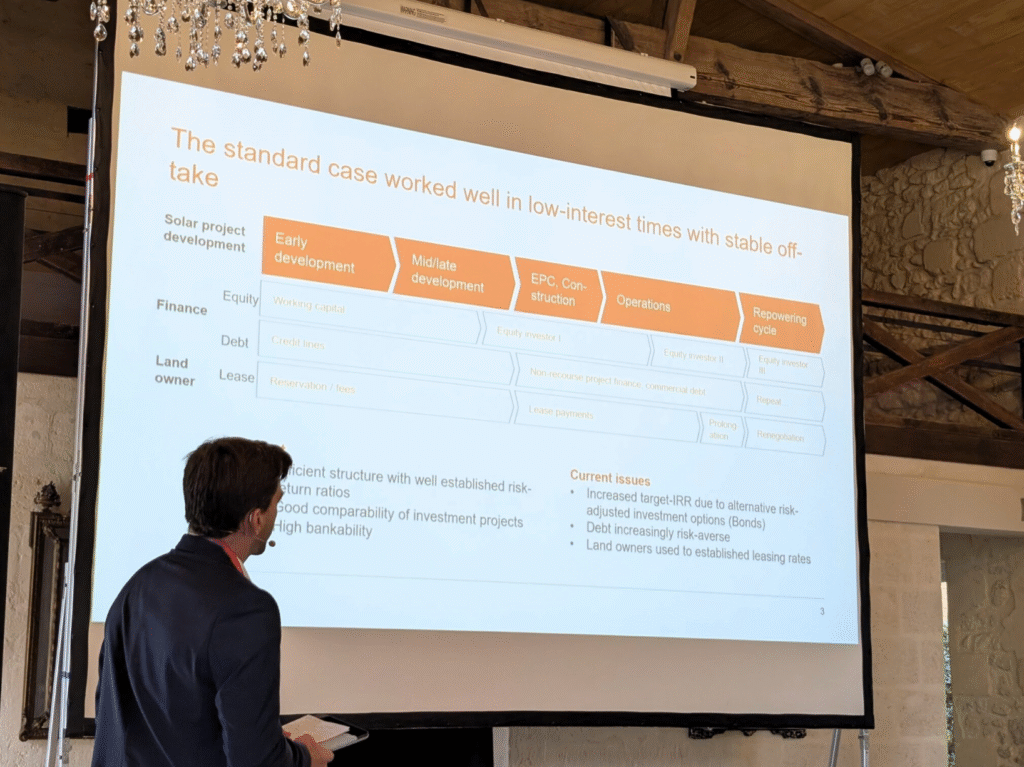
The squeeze is financial before it is technical. Higher borrowing costs have collided with erratic wholesale electricity prices, leaving banks unwilling to underwrite agrivoltaic installations using the same metrics applied to conventional solar arrays. The sector now faces a structural funding gap that standard power purchase agreements cannot close.
A typical agrivoltaic project currently derives 80% of its revenue from tariffs or support mechanisms and 20% from PPAs or market sales, financed through a split of 70% bank debt and 30% equity, according to Jochen Hauff, founder of the Think Resiliency think tank. That architecture is buckling. Rising interest rates have made commercial debt more expensive, while grid curtailment, negative pricing events and regulatory shifts have eroded cash-flow predictability, Hauff said during the AgriVoltaics Industry Forum Europe 2026 in Bordeaux, France, on October 13 and 14.
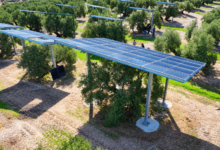
Farmers operating beneath these panels face their own margin compression. Diesel, fertilizer and labor costs have climbed, requiring equipment investments that compete directly with energy infrastructure for capital.
Banque Populaire du Sud evaluates these hybrid assets against four strict criteria: revenue predictability, contractual responsibility allocation, agricultural sustainability and resilience under adverse scenarios, renewable energy structured finance manager Laetitia Limongi said at the forum. A 10- to 15-year PPA does not provide the certainty of a 23-year support tariff. Without an established track record of reference projects, lenders lack the historical data to calibrate risk models accurately, often translating that uncertainty into higher interest rates and stricter covenants, Limongi added.
Developers are responding by attempting to restructure project economics entirely. Hauff outlined a forward-looking model that would reduce reliance on support mechanisms to 50%, drawing 30% from direct electricity sales and 20% from agricultural and environmental services. Financing under this framework would shift to 40%-50% bank debt, 30%-40% equity and 10%-20% private debt.
That missing 20% depends on monetizing ecological outputs. Soil carbon storage through cover crops or hedgerow planting can generate credits verified under standards such as France’s Low-Carbon Label scheme, provided the results are additional and measurable, Hauff said. Biodiversity conservation, water quality improvements and wetland restoration represent other potential revenue lines backed by public programs or ecological compensation markets.
Impact investors and specialist funds are willing to pay for natural asset monetization, complementing traditional bank lending without replacing baseline profitability requirements, Hauff noted.
Private debt introduces another layer of capital. But every alternative funding source ultimately confronts the same underwriting question: who commits to paying, for how long, and with what guarantees. Innovative business models fail if projected revenues rely on unverifiable assumptions or buyers lacking credit histories.
Banks will refine their risk models and adjust financing conditions only as agricultural and energy performance data accumulates across a wider base of operational projects, Limongi said.