Ford’s Mustang GTD Design Patent Threatens Aftermarket Body Kit Market
Patent grant strengthens Ford's hand against replica body kits; SEMA showdown looms
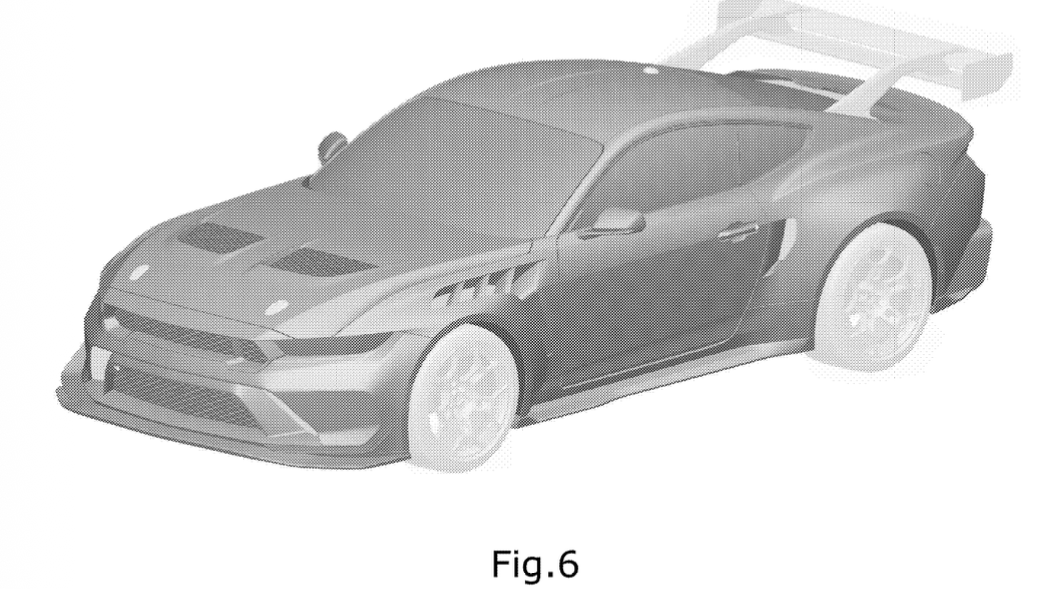
Ford’s newly granted design patent for the Mustang GTD’s exterior could reshape what aftermarket companies can legally sell to Mustang GT owners wanting the supercar’s aggressive look. The patent, numbered US D1,154,420 S and spotted by CarMoses, covers the GTD’s distinctive silhouette across seven pages of drawings — front, rear, sides, and top views — and extends to items ranging from actual vehicles to scale models.
For the modification community, the stakes are immediate. A $300,000 halo car’s styling is now legally protected intellectual property, and Ford has already demonstrated willingness to enforce it. Last year, the automaker forced automotive influencer TJ Hunt’s Streethunter Designs off the SEMA show floor in Las Vegas after the company unveiled a GTD-inspired body kit for the standard Mustang GT. The kit replicated vented front fenders, a louvered hood, reshaped rear quarters, and side intakes — core elements now covered by the patent.
Hunt argued his design differed meaningfully from the production GTD, particularly in person. Ford disagreed. A cease-and-desist letter escalated into a formal complaint to SEMA organizers days before the 2024 show, resulting in Hunt’s display vehicle being removed from the convention floor. No lawsuit has been filed since, but the patent grant strengthens Ford’s position considerably.


Design patents protect ornamental appearance, not functional elements. That distinction matters. Vented fenders and hood louvers serve aerodynamic purposes on the track-focused GTD. On a street-driven Mustang GT, they’re primarily aesthetic. Courts weigh whether an ordinary observer would confuse the copycat with the protected design — a test that grows stricter now that Ford holds a registered patent rather than relying solely on trade dress claims.
The aftermarket industry has long operated in a gray zone. Companies routinely sell “inspired by” body kits referencing everything from GT3 RS widebodies to wide-fendered Japanese classics. Most fly under the radar because OEMs calculate that litigation costs outweigh the damage from low-volume replicas. The GTD changes that calculus. With a nine-figure development program and a price tag positioning it against European exotics, Ford has stronger financial incentive to police its design language.
For individual owners modifying their own cars, the risk remains low. Design patent enforcement targets commercial sellers, not private builders. But shops producing fiberglass or carbon-fiber GTD-lookalike parts for resale now face a concrete legal barrier. The patent’s inclusion of “toy replicas” suggests Ford may also pursue die-cast and model manufacturers — a revenue stream the company likely wants to control through licensing.
Hunt’s Streethunter Designs has not announced whether it will redesign its kit to avoid the patented elements. Other aftermarket firms contacted for this story declined to comment on record, though several acknowledged reviewing their GTD-adjacent product plans. The SEMA Show in November will signal whether the industry adapts or tests Ford’s resolve.