Meta’s AI Agents Threaten the $243 Billion Ad Business Funding Their Creation
The $243 billion paradox: Meta builds agents that may replace the ads paying for them
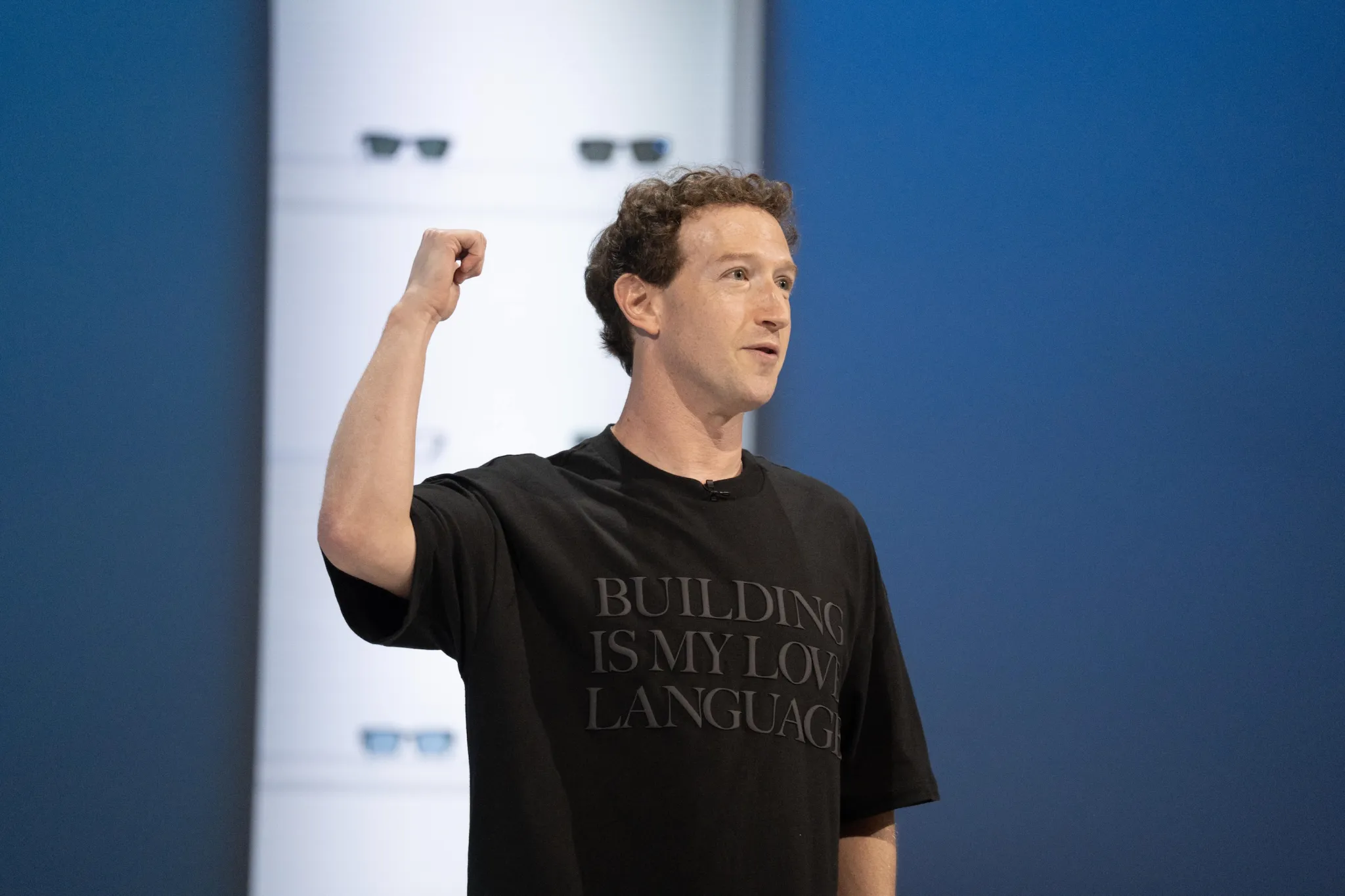
Meta’s pivot to AI agents capable of shopping, negotiating, and making decisions for users carries a structural contradiction: the technology could dismantle the advertising machine that pays for its development.
Advertising generated roughly 98% of Meta’s revenue last quarter. Research firm eMarketer projects the company’s worldwide ad sales will hit $243.46 billion this year, surpassing Google for the first time. That cash flow finances the $100 billion to $200 billion AI infrastructure buildout CEO Mark Zuckerberg described on the Cheeky Pint podcast released October 12.
But if Meta’s Muse agent — powered by the newly launched Muse Wonder model — successfully compares prices, reads reviews, and places orders without users ever seeing a feed, the impression-based ad model loses its audience.


“Who are the ads for?” Stripe cofounder John Collison asked Zuckerberg during the interview. Zuckerberg argued that businesses are clamoring to integrate with agents, not block them, and that agentic commerce could expand the total addressable market. He outlined three post-ad revenue streams: subscriptions (Muse charges $20 and $100 monthly tiers), a percentage of consumer savings, and performance-based fees from business agents that would function “just like the ad system.”
Wall Street has not pressed the cannibalization question. Bank of America analyst Justin Post last week flagged rising AI spending — not agent disruption — as Meta’s top risk, calling the company “back on offense with AI.”
Meta’s full-stack strategy — custom chips, proprietary data centers, and the five-gigawatt Hyperion campus in Louisiana — reflects Zuckerberg’s determination to avoid platform dependence after years of friction with Apple and Google. A one-gigawatt AI data center costs $50 billion to $60 billion to build and $15 billion annually to operate, costs Meta bears alone because it lacks a cloud business to amortize them. Bloomberg reported in July that Meta is building a cloud offering to sell compute capacity, which Zuckerberg confirmed on the subsequent earnings call.
Chief AI Officer Alexandr Wang, who leads the superintelligence lab that produced Muse Wonder, described the investment decisions as “the opposite of Lean Startup” — committed long before proof the technology works. Zuckerberg acknowledged asking Wang, “Are you sure this is going to work?” before writing the check.
For now, Zuckerberg uses Muse to order Instacart groceries for weekend baking with his three-year-old daughter, increasing his usage from twice a year to once or twice a week. Wang sources obscure teas. Whether those interactions replace ad-supported discovery or merely augment it remains the unanswered question beneath Meta’s most expensive bet.