Alef Aeronautics Taunts Tesla Over Flying Car Claims
The California startup holds an FAA certificate Tesla lacks, turning a social media jab into a regulatory reality check.
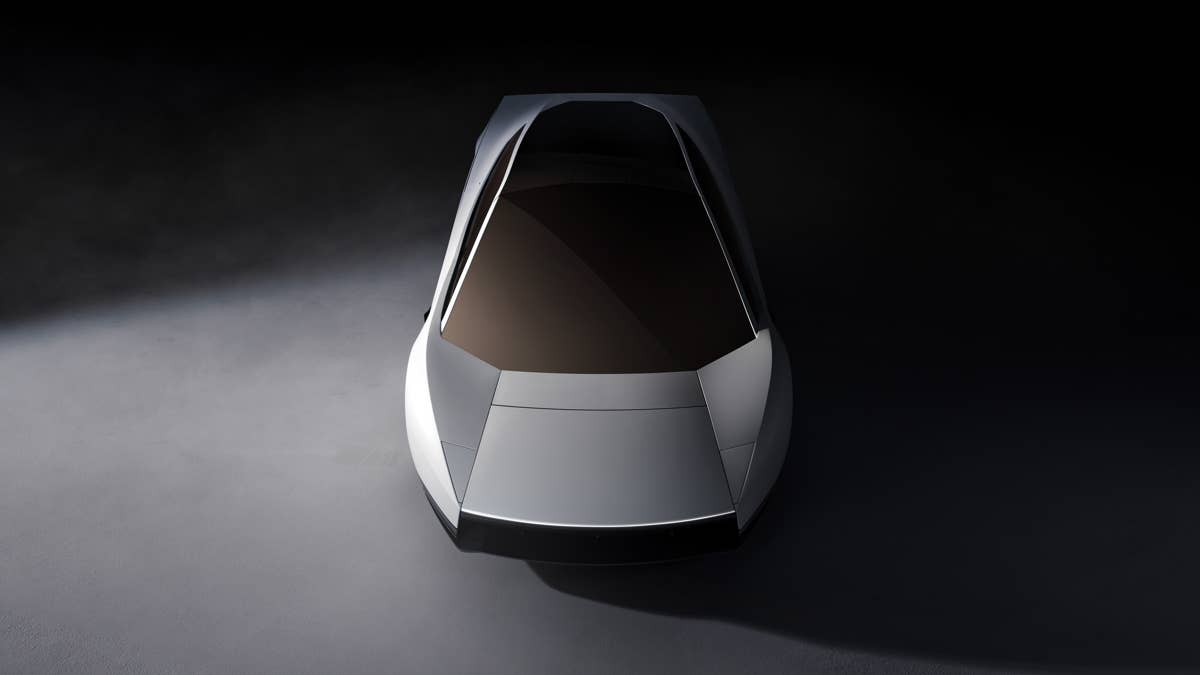
California startup Alef Aeronautics is publicly challenging Tesla’s claim that its next-generation Roadster can fly, posting a video of its own prototype sustaining powered flight over several vehicles — including a Cybertruck and an original Roadster — for significantly longer than the EV maker’s brief cold-gas thruster hops.
The taunt follows Tesla CEO Elon Musk describing the Roadster’s SpaceX-developed thruster maneuvers as “flying.” Alef responded on social media by welcoming Tesla to the “flying car race,” noting it has been developing its aircraft for 11 years. The exchange highlights a widening gap between two fundamentally different engineering approaches to getting a road-legal vehicle airborne.
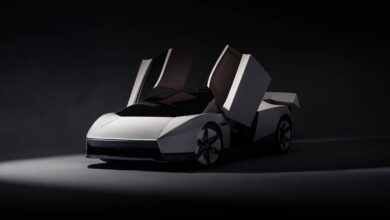
Tesla relies on cold-gas thrusters to launch the Roadster into short ballistic arcs. Alef uses eight electric-powered propellers, functioning essentially like a scaled-up drone. The propulsion difference dictates what each machine can actually do in the air. Alef’s planned production vehicle, the Model A, carries claimed specifications of a 220-mile driving range and a 110-mile flying range.
Regulatory progress currently favors the startup. The Federal Aviation Administration granted an Alef prototype a special airworthiness certificate, though flights remain restricted to limited locations for exhibition, research, and development purposes. Tesla has not secured FAA certification for any aerial capability on the Roadster. Without it, the thruster demonstrations remain closed-course stunts rather than approved transportation.
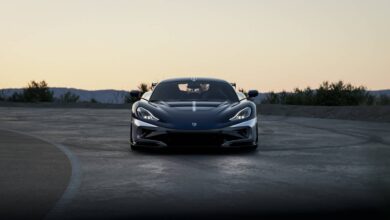
The Roadster does pack other hardware beyond the thrusters. During its unveiling, Tesla showed a fan-based suction system — conceptually similar to the downforce technology used by the McMurtry Spéirling track car — designed to let the vehicle drive upside down on a ramp. Tesla claims the standard electric powertrain paired with the thrusters achieves a 0-to-60 mph sprint in under 0.9 seconds, while the invitation-only Rocket version hits that mark in 0.59 seconds.

Both companies are taking money from buyers before either vehicle is street- or sky-legal. Tesla requires a $50,000 deposit for the Roadster’s Performance version and $250,000 for the Thrust version. Alef prices the Model A starting around $300,000 but asks for just $150 to reserve a spot, or $1,500 for priority placement.