

Tesla Roadster Flies Using SpaceX Thrusters at Texas Debut
The electric sports car used cold-gas thrusters developed with SpaceX to execute a controlled midair flip at a Texas test facility.
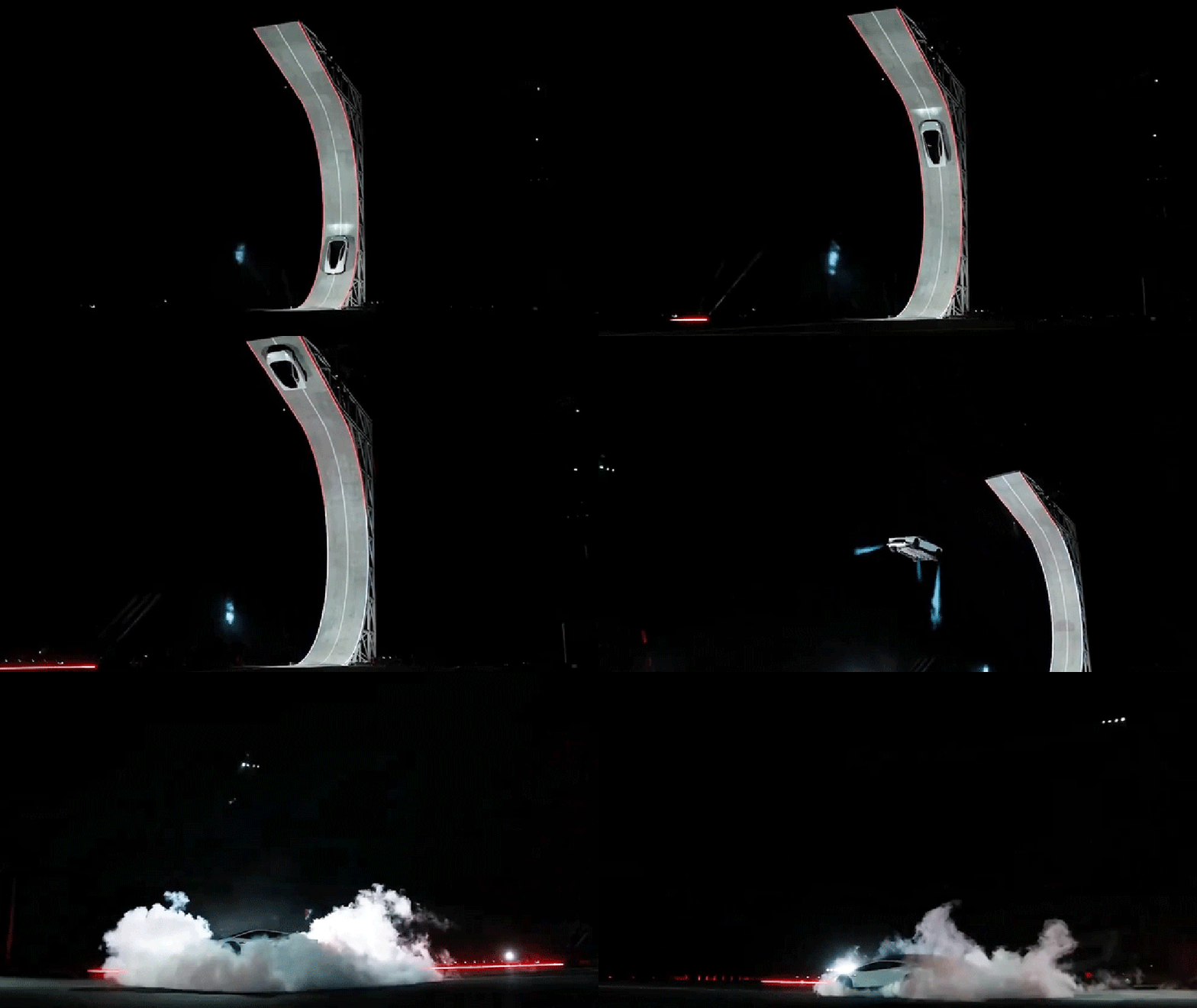
A next-generation Tesla Roadster launched itself off a curved ramp, flipped in midair using compressed-air thrusters, and landed safely during a livestreamed debut Oct. 15, 2026, at the SpaceX propulsion test facility in McGregor, Texas.
The demonstration pushed the electric sports car from zero to 60 mph in under one second before the vehicle traveled completely upside down along the ramp’s arc. Integrated cold-gas thrusters — hardware engineered through a collaboration between Tesla and SpaceX — then fired to propel the car into a controlled aerial maneuver.
Cold-gas thruster systems rely on the rapid expansion of pressurized inert gas rather than combustion. The technology is standard on spacecraft for attitude control and precise orbital adjustments but has no precedent in production road vehicles. Adapting aerospace-grade pneumatic propulsion for an automobile introduces engineering challenges related to pressure vessel weight, crash safety certification, and thermal management that fall outside conventional automotive regulatory frameworks.

Tesla described the vehicle on X as representing “a new moment in history – the best of the last human-driven cars,” signaling the company intends to position the Roadster as a peak analog driving experience before autonomous transportation dominates its future lineup.
The McGregor venue choice carries operational significance. SpaceX uses the 4,000-acre Texas site to test Raptor engines and Merlin rocket components. Hosting an automotive reveal at a rocket testing ground physically merges the two companies’ brands and underscores how deeply Elon Musk integrates his ventures to generate cross-platform spectacle.
Such theatrical engineering arrives while Wall Street debates whether Tesla’s market capitalization accurately reflects its near-term revenue potential. Market analyst Tom Hayes recently characterized the stock as priced for perfection, warning investors about downside risk despite praising Musk’s capacity for invention by comparing him to Thomas Edison.
Hayes’ caution reflects a broader tension among institutional investors. Tesla’s valuation routinely prices in successful execution across electric vehicles, energy storage, artificial intelligence, and robotics simultaneously. Demonstrations like the flying Roadster reinforce the innovation narrative that supports those multiples, yet they do not directly contribute to quarterly delivery numbers or automotive gross margins.
The original Tesla Roadster, produced from 2008 to 2012, was the first highway-legal serial production all-electric car to use lithium-ion battery cells. Its successor was initially teased in 2017 with promised sub-two-second acceleration figures. The nearly decade-long development cycle highlights the gap between Tesla’s prototype reveals and volume manufacturing timelines, a pattern that has repeatedly tested shareholder patience.
Federal Motor Vehicle Safety Standards currently lack specific provisions for passenger cars equipped with active pneumatic flight systems. Any street-legal version of the thruster-equipped Roadster would likely require novel regulatory engagement with the National Highway Traffic Safety Administration, assuming the hardware is intended for consumer use rather than serving exclusively as a closed-course demonstration platform.
Tesla has not announced pricing, production volumes, or a delivery timeline for the redesigned Roadster following the McGregor event.









