

TSMC Evaluates Texas Terafab Amid Record AI Chip Profits
The foundry giant dispatched evaluation teams to Texas while setting strict operational terms for any involvement in Elon Musk's planned Terafab complex.
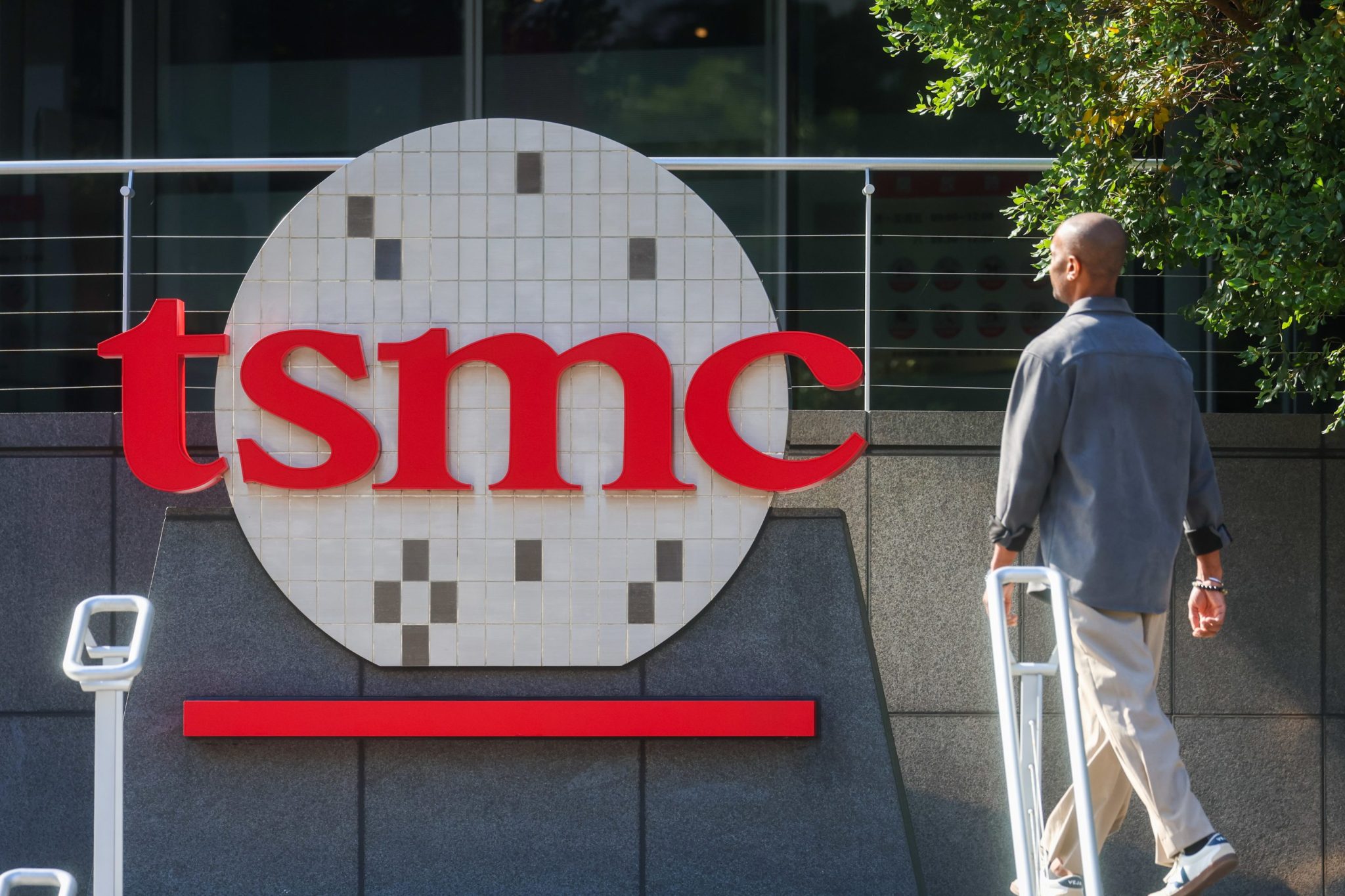
TSMC is actively evaluating manufacturing sites in Texas, marking a potential second U.S. state for the foundry giant as insatiable demand for artificial intelligence processors forces the company to accelerate its American expansion far beyond original projections.
Chairman and CEO C.C. Wei confirmed during an earnings conference Thursday that evaluation teams have been dispatched to Texas. The move signals a rapid broadening of TSMC’s U.S. footprint, which until recently was concentrated entirely in Arizona, where the Hsinchu, Taiwan-based company has pledged $265 billion in manufacturing investments, including a $100 billion commitment finalized in July.
The Texas deliberations intersect directly with Elon Musk’s proposed “Terafab” complex. While Musk stated earlier this month on X that his companies would build and operate the fabrication facility — suggesting TSMC might merely sublease space within it — Wei drew a firm operational boundary. Any manufacturing plant established in Texas under TSMC’s involvement must be operated by TSMC itself, reflecting the company’s strict control over its proprietary yield processes and cleanroom standards. Musk’s xAI venture has been aggressively securing compute infrastructure, making domestic advanced packaging and fabrication access a strategic priority.


This geographic scramble is fueled by unprecedented financial performance driven almost entirely by AI accelerators. For the third quarter, TSMC posted a record net profit of 763.1 billion new Taiwan dollars, equivalent to nearly $24 billion, representing a 69% increase from the same period last year. Revenue climbed 51% year-over-year to 1.49 trillion new Taiwan dollars, or roughly $46 billion.
“The AI market continues to be very strong,” Wei said. “The demand, actually, is still far above our capability today to supply, and we’re working very hard to narrow the gap.”
TSMC manufactures more than 90% of the world’s most advanced semiconductors, serving as the sole production bottleneck for AI hardware designed by Nvidia, Apple, AMD, and Broadcom. Because these U.S.-based clients are locked into TSMC’s cutting-edge nodes — specifically the 3-nanometer process and the upcoming 2-nanometer architecture expected to enter volume production soon — the foundry holds significant leverage in dictating how and where joint facilities operate.
To meet this structural deficit, TSMC has drastically revised its spending trajectory. The annual capital expenditure budget for this year now sits between $60 billion and $64 billion, up sharply from earlier estimates of $52 billion to $56 billion. Chief Financial Officer Wendell Huang indicated that outlays between 2026 and 2028 will significantly exceed the past three years, pointing toward a sustained super-cycle in semiconductor construction.
However, the boom is unevenly distributed across the industry. While hyperscalers and AI developers continue purchasing high-end logic chips at premium prices, traditional semiconductor segments face headwinds. Wei cautioned that consumer electronics and price-sensitive end markets are struggling under rising component costs and broader macroeconomic uncertainties, prompting the company to adopt prudent business planning heading into 2027.
TSMC currently operates its first U.S. fab in Arizona producing 4-nanometer chips, while a second Arizona facility is under construction targeting 3-nanometer and 2-nanometer production. The formal dispatch of site-evaluation teams to Texas represents the latest confirmed step in the company’s U.S. manufacturing strategy.









